
Residential Foundation Repair in Topeka
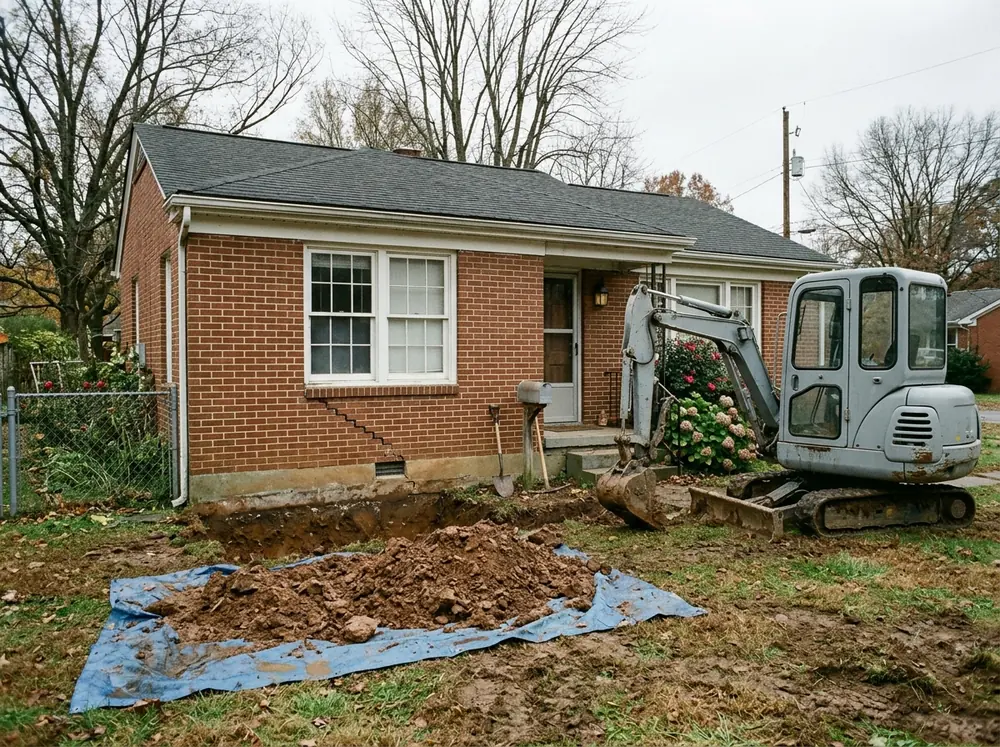
Topeka's houses have age on them. The median home was built in 1969, and more than a third went up before 1960, so a lot of block basements and pier-and-beam crawl spaces have been riding out the swing between wet and dry seasons for sixty years or more. Most calls come down to three problems: a house settling at one corner, a basement wall pushing in, or water where it shouldn't be. Each repair below lists the typical cost range from national guides, which are the only published numbers there are.
Steel Push Piers and Helical Piers
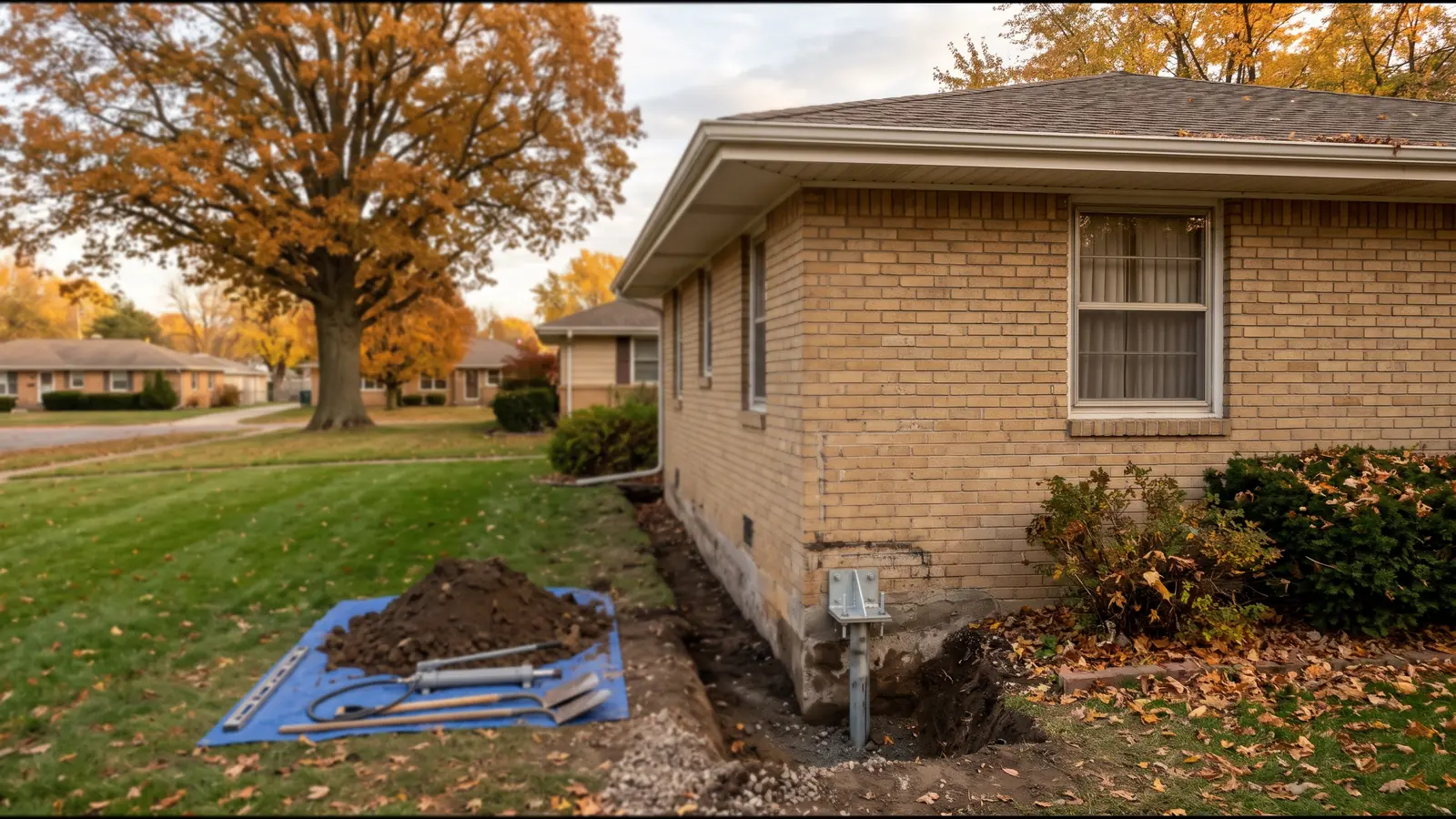
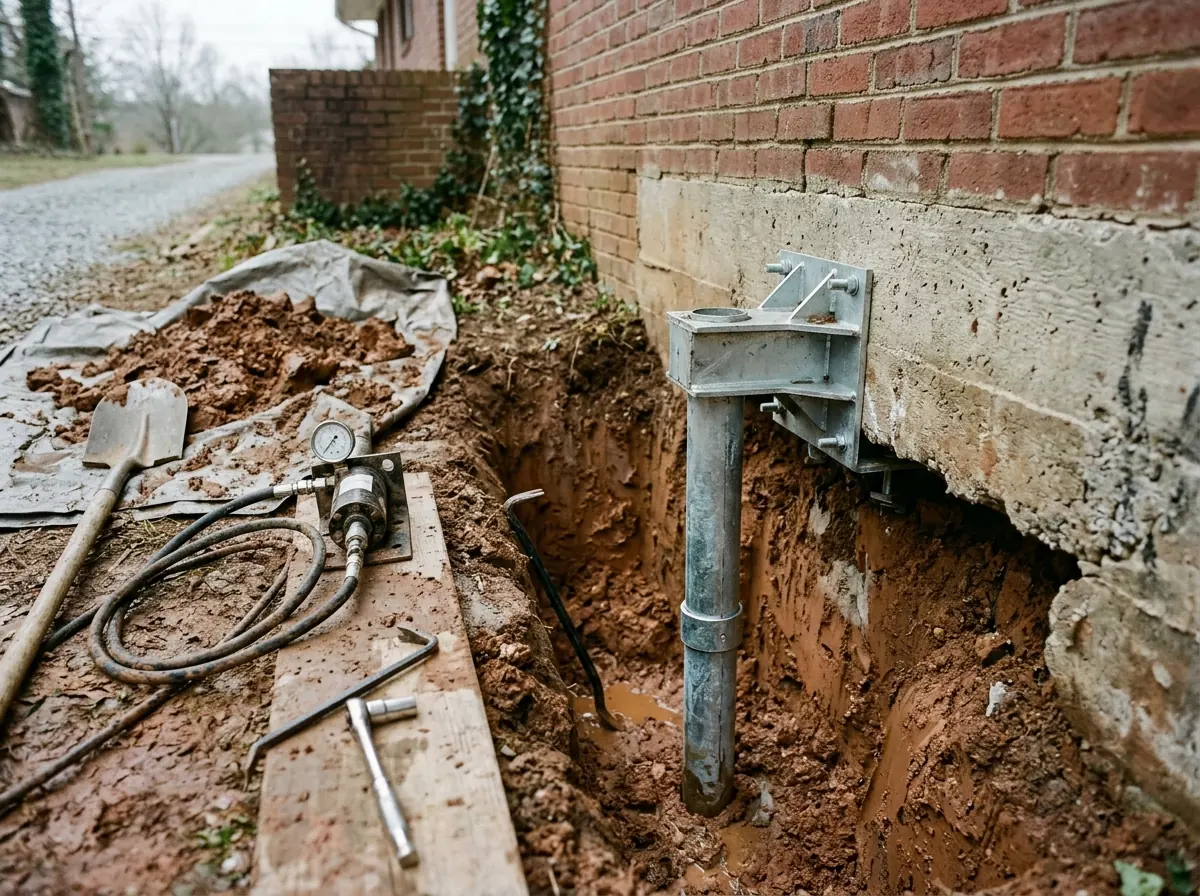
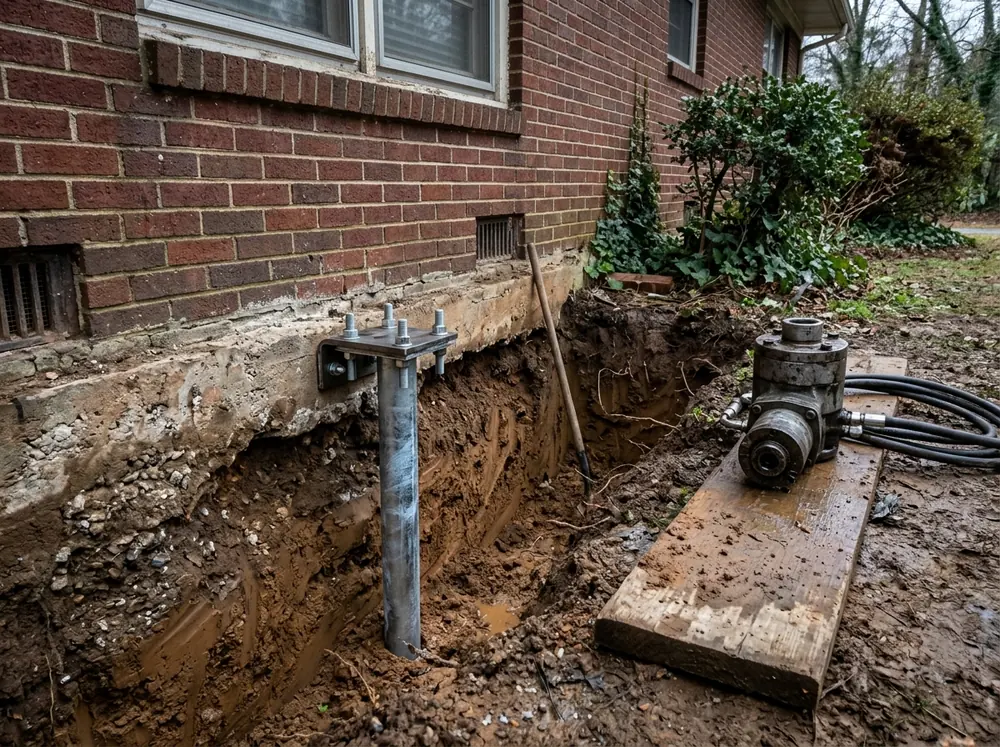
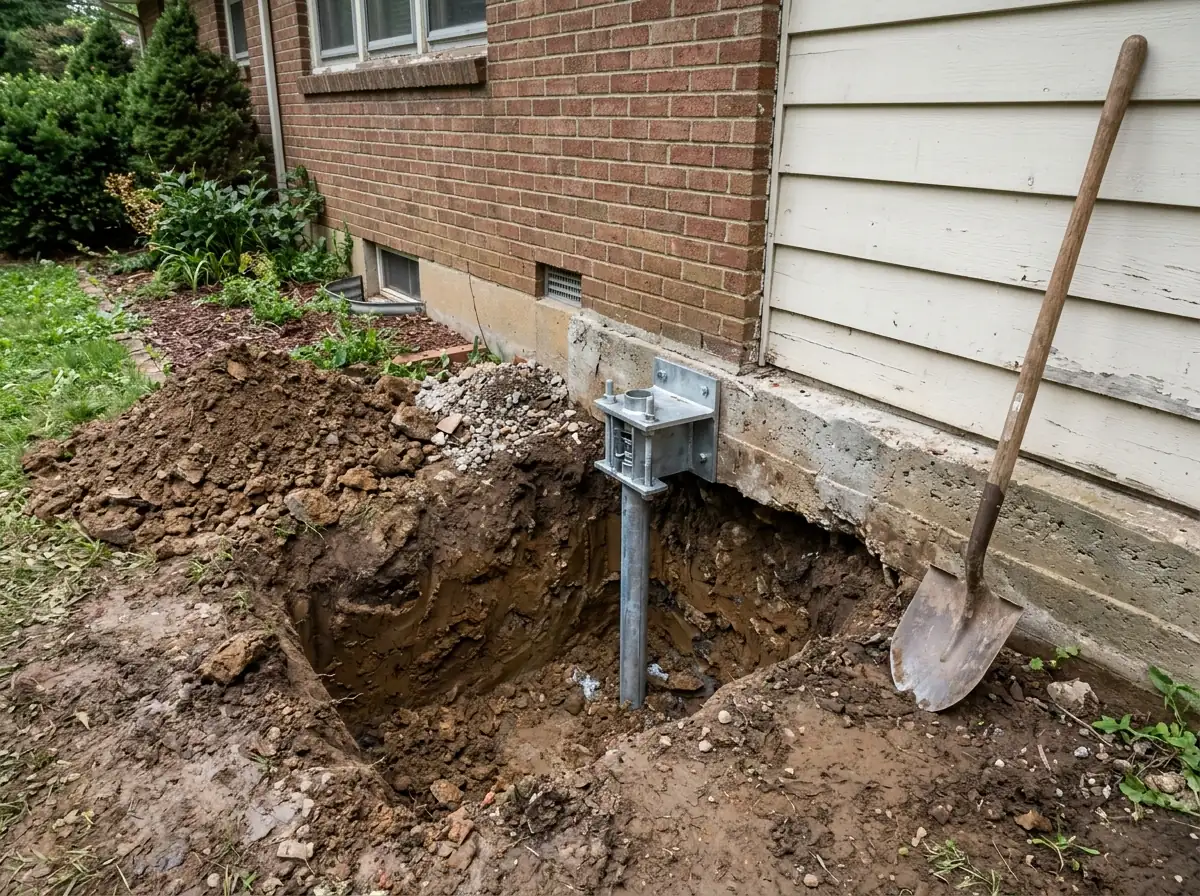
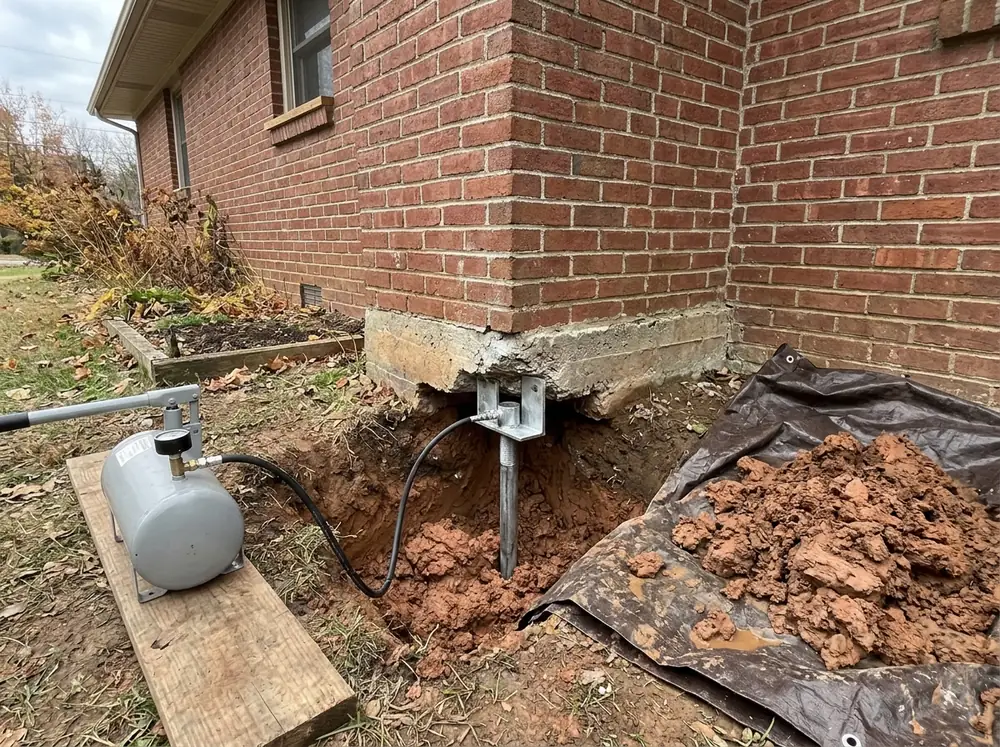
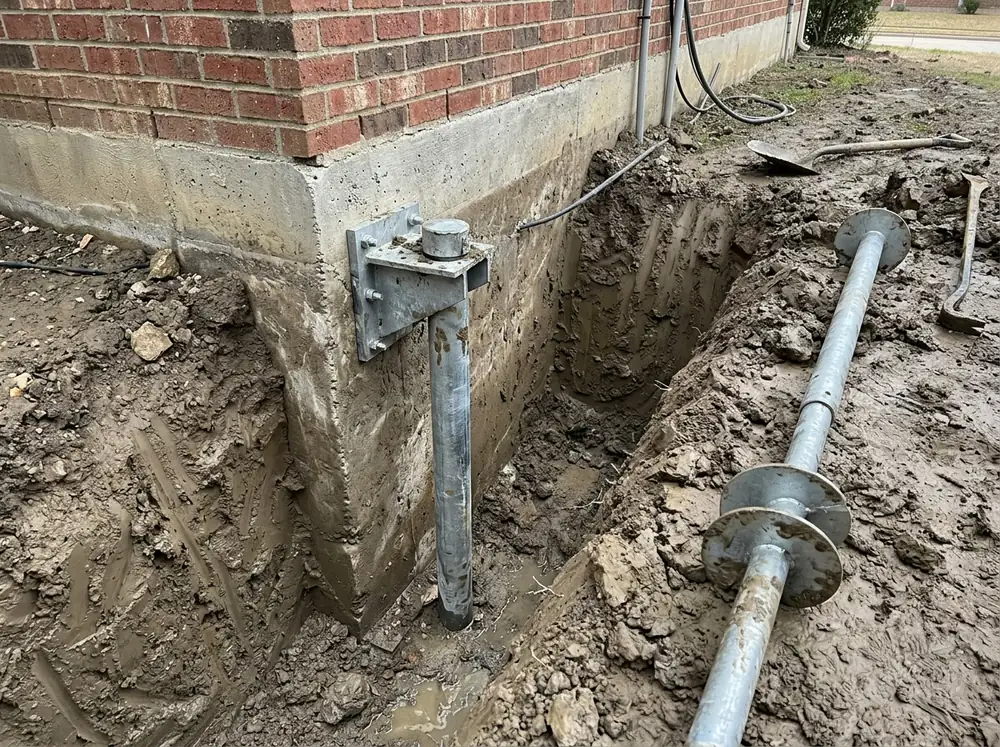
Piers carry a settling footing down to soil or rock that doesn't move. A steel push pier is pipe driven in sections by a hydraulic ram, using the house's own weight as the counterforce. A helical pier is screwed in, and the steel plates on its shaft bite into the soil. Push piers suit heavy two-story homes and rocky ground. Helical piers suit porches, additions and lighter loads, and they can't go through rock.
- Per pier: $1,000 to $3,000 is the usual range. Angi puts push piers near $2,000 and helical near $3,000.
- Whole job: about ten piers is typical for a full underpin, so $10,000 to $30,000. Two to four piers on one corner can run $2,000 to $12,000.
- Depth: clay can push piers deeper than planned. Some contracts add $20 to $25 a foot past a standard depth, so ask for a quote with no depth clause.
See foundation piers in Topeka for pier counts and depths, or helical piers for porches, additions and lighter loads.
Bowing Basement Wall Repair: Anchors, Carbon Fiber Straps and I-Beam Braces
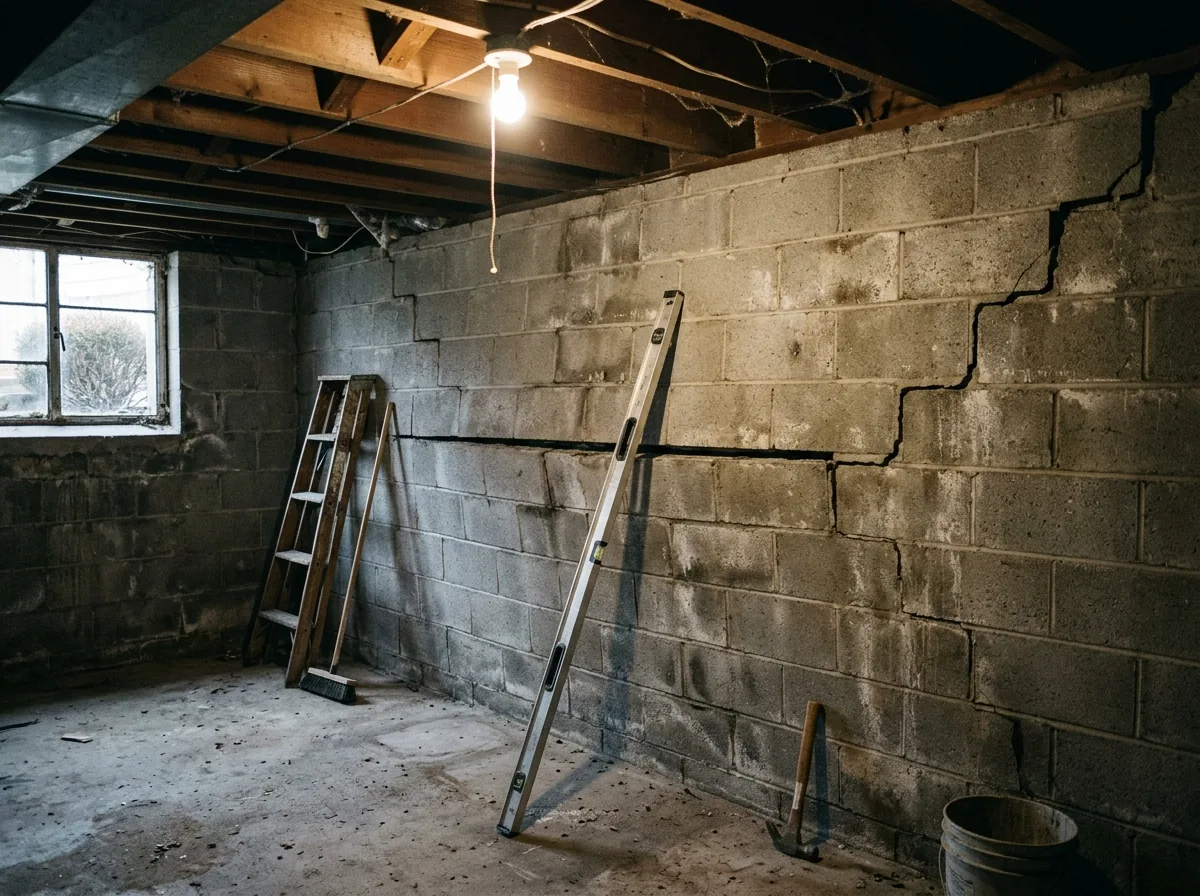
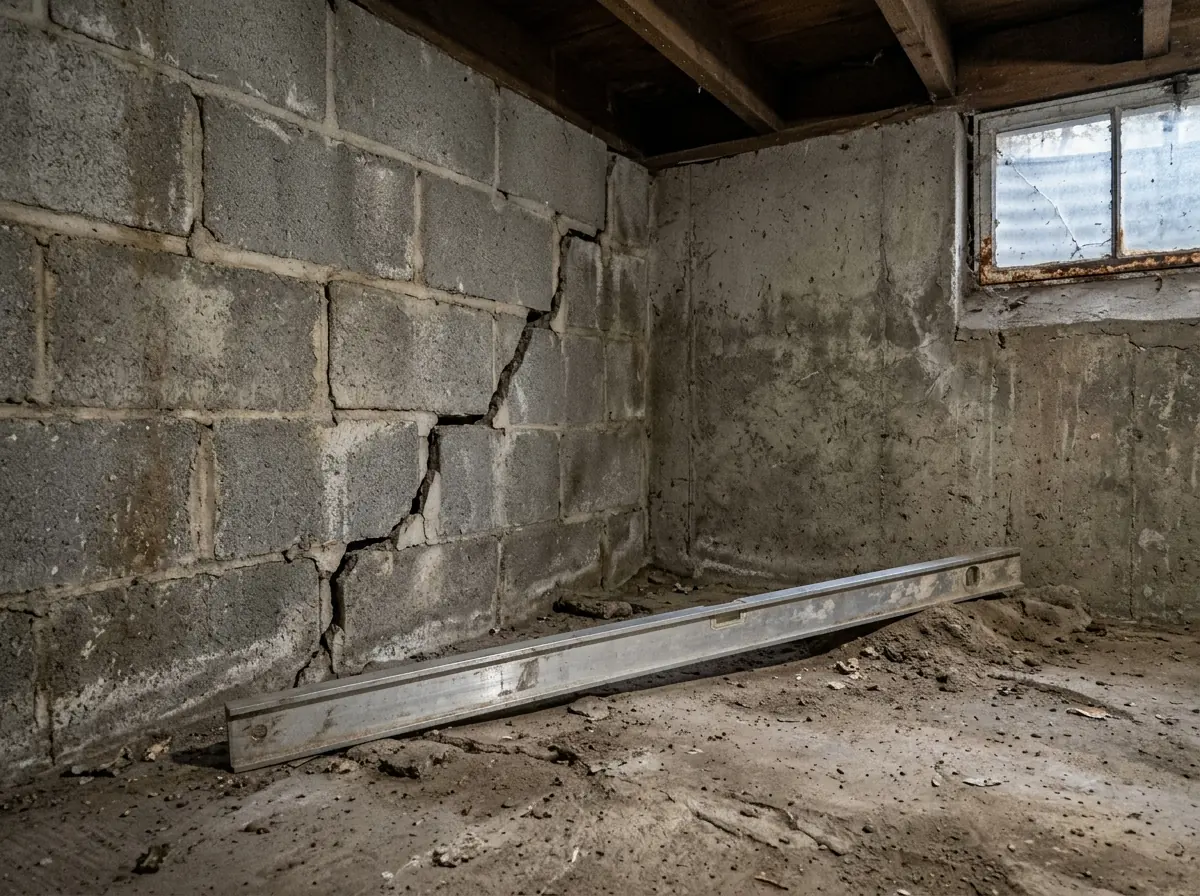
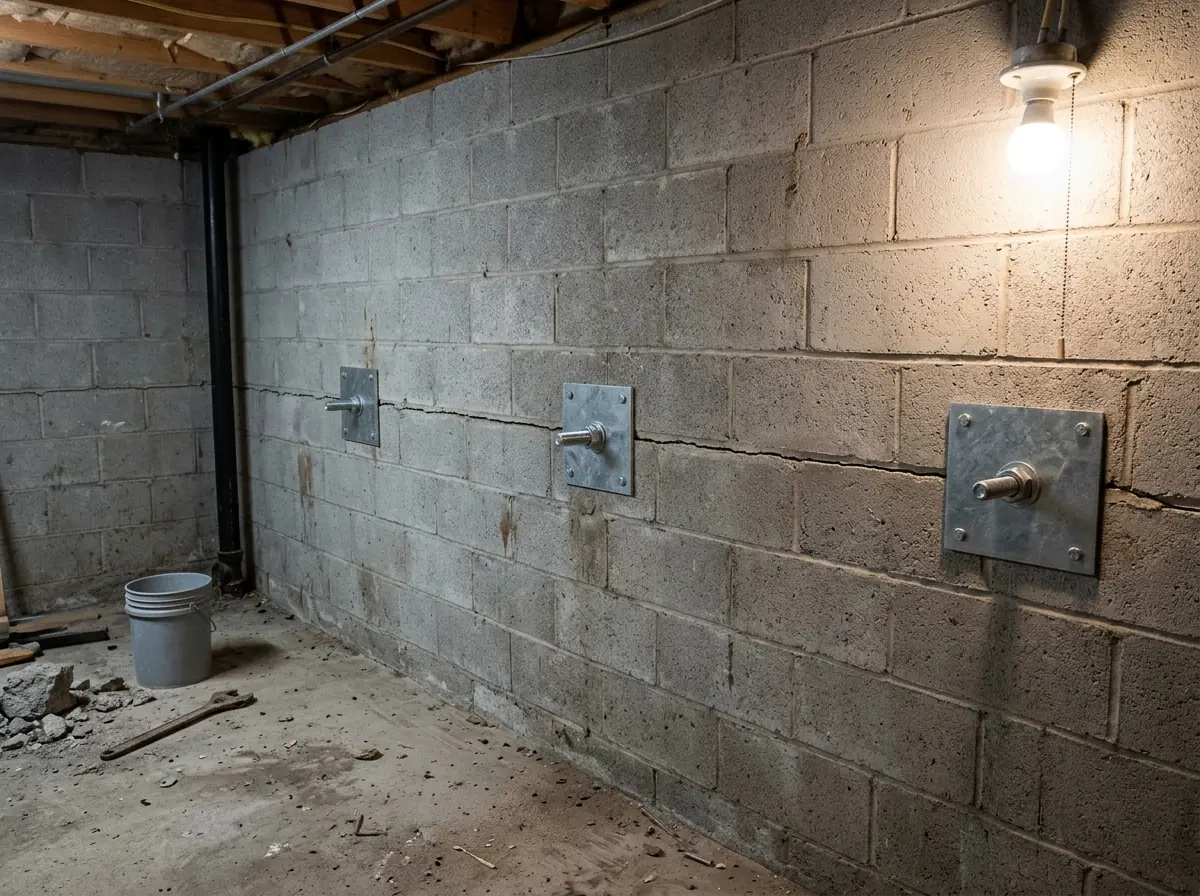
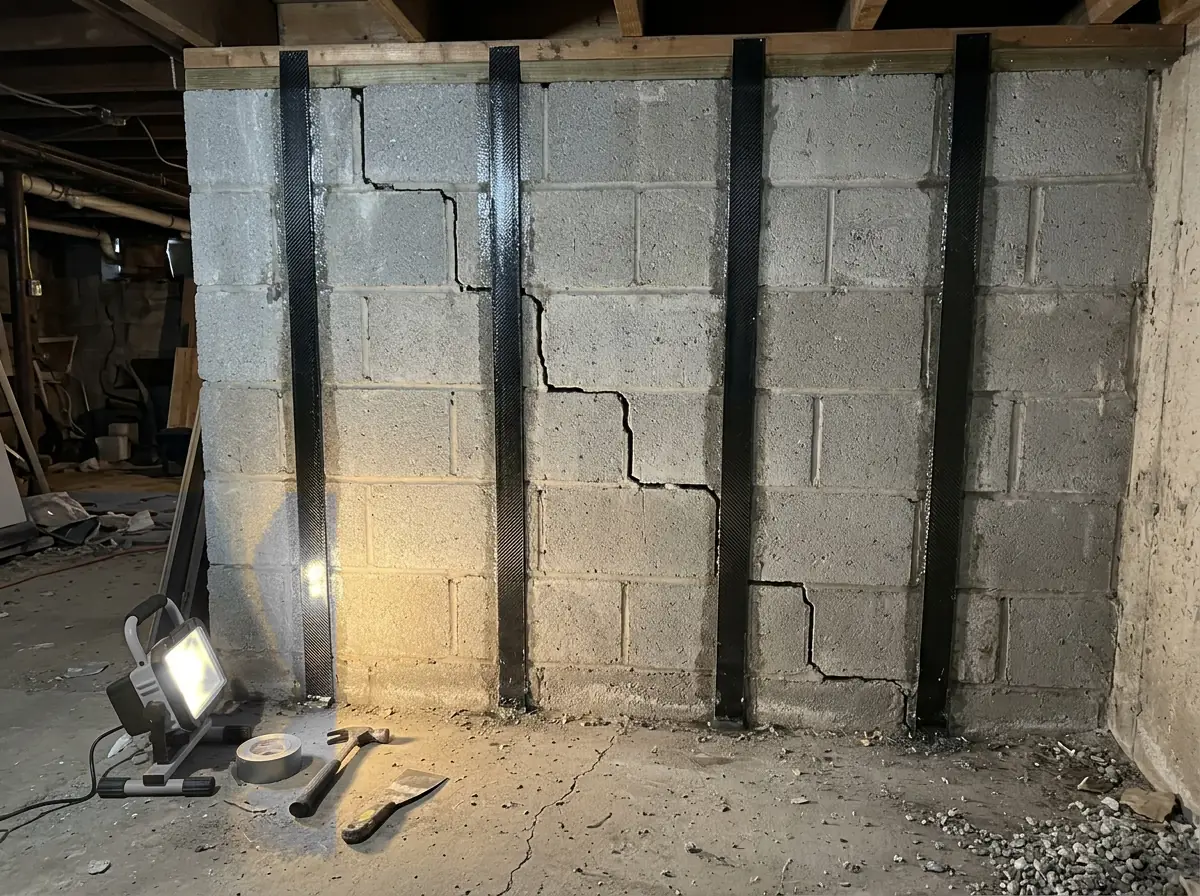
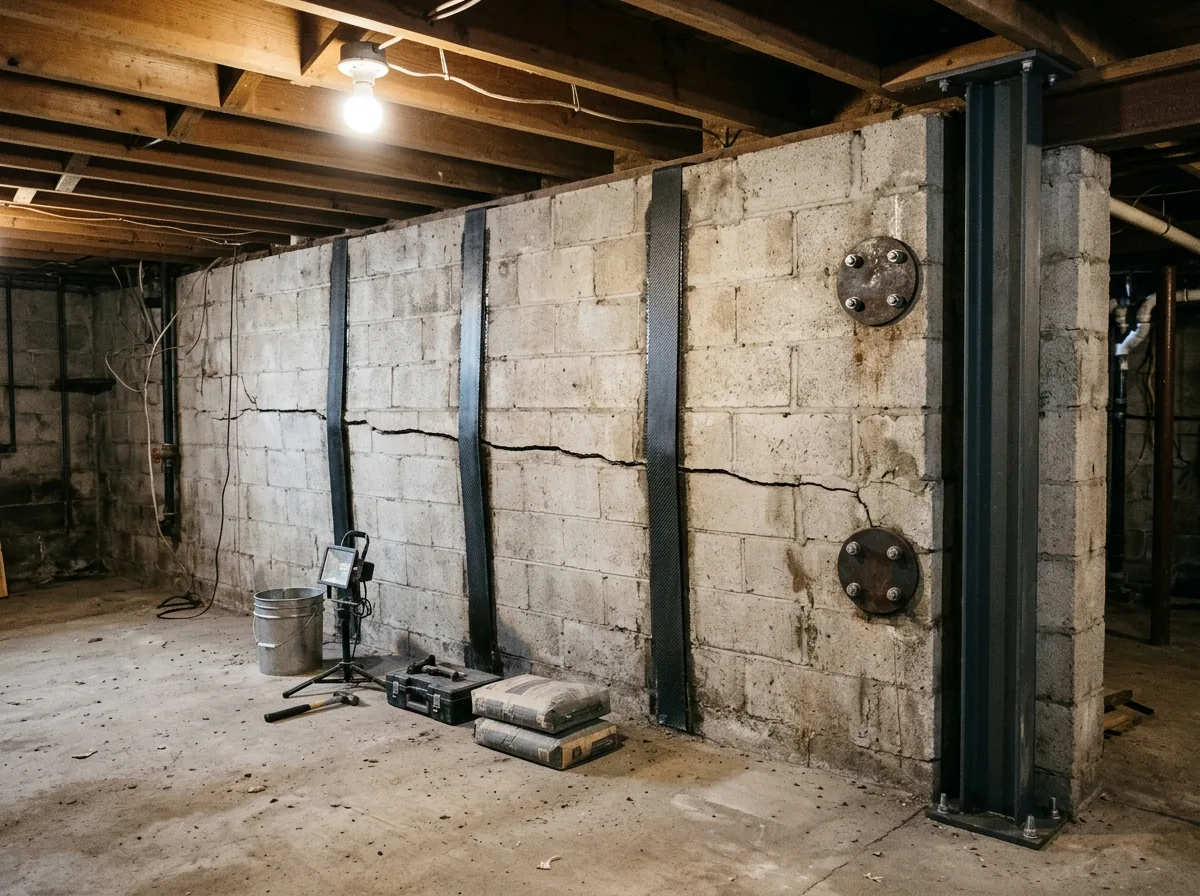
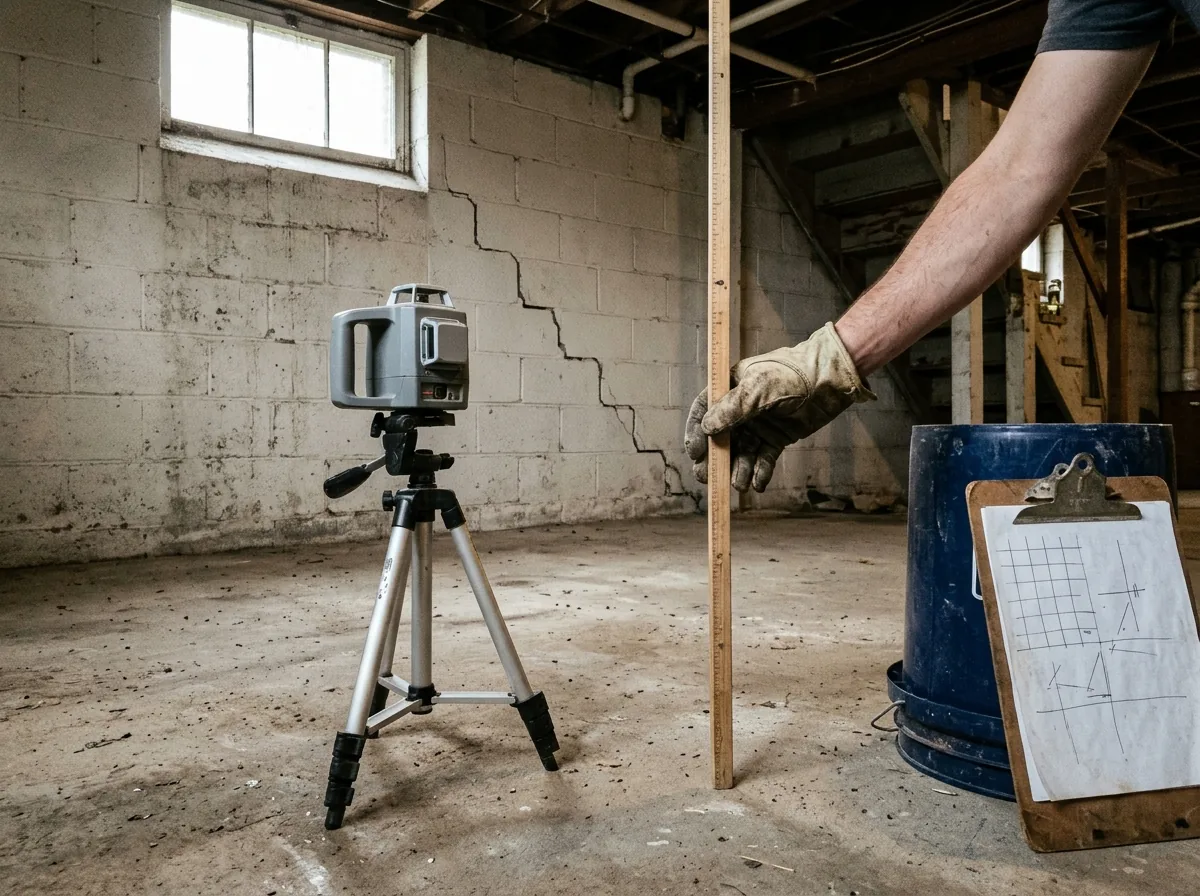
A horizontal crack along the middle of a block wall means the soil outside is pushing it in. Expansive clay is the usual reason: it swells when it's wet and leans on the wall, then shrinks back and leaves a gap that fills with more water and dirt. The fix depends on how far the wall has moved. Under 2 inches of bow, bracing usually holds it. From 2 to 4 inches the wall can often still be saved, at a higher price.
| Method | Cost each | Spacing and use |
|---|---|---|
| Wall anchors | $400 to $700 | About one every 5 feet; a steel plate inside ties to an anchor buried in the yard |
| Carbon fiber or steel straps | $350 to $1,000 | About one every 4 feet, with no digging outside |
| Helical tiebacks | $1,500 to $1,800 | For walls bowed 2 inches or more |
A 20-foot wall comes to roughly $1,600 to $2,800 with anchors or $1,700 to $5,000 with straps.
Bracing stops the movement. It doesn't push the wall back flat; straightening is a separate step at $250 to $300 a foot on top of the straps.
See basement wall repair to compare all three methods, then wall anchors or carbon fiber straps once you know which fits your wall.
Basement Wall Rebuild for Failed Block Walls
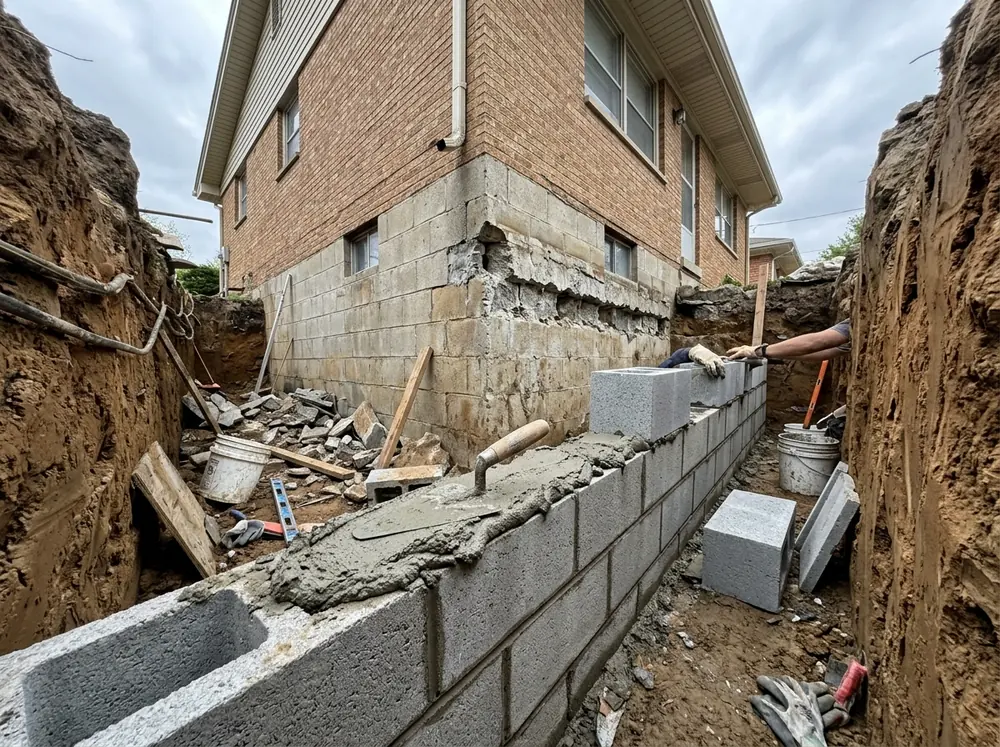
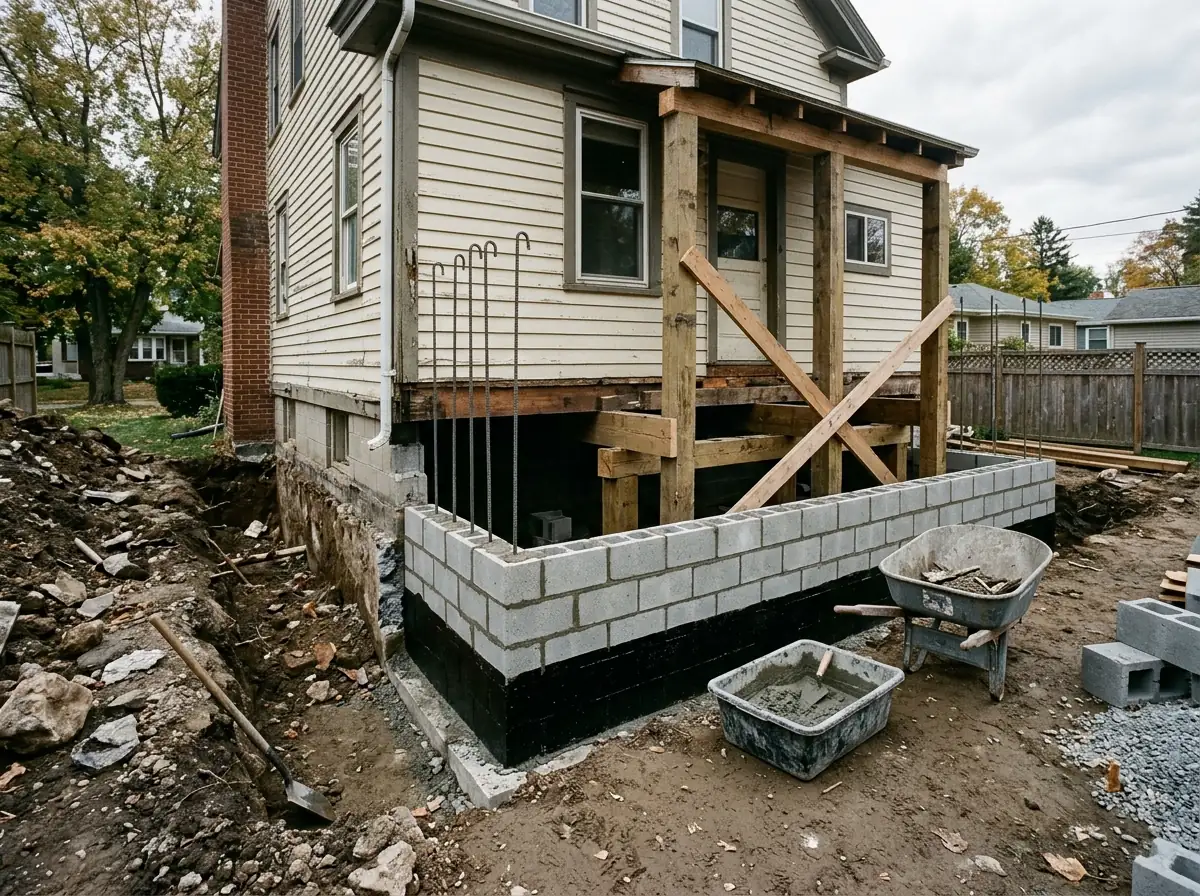
Past a certain point, a block wall has sheared or bowed too far to brace. Then the soil comes out down to the footing, the house is shored up, and the old block is replaced course by course. The new wall is built to the engineer's design, and dampproofing and a drain go on the outside before backfill. It's the biggest job on this list, needs a city permit, and often needs an engineer's design. Ask for the drawings and the shoring plan in writing before anyone digs.
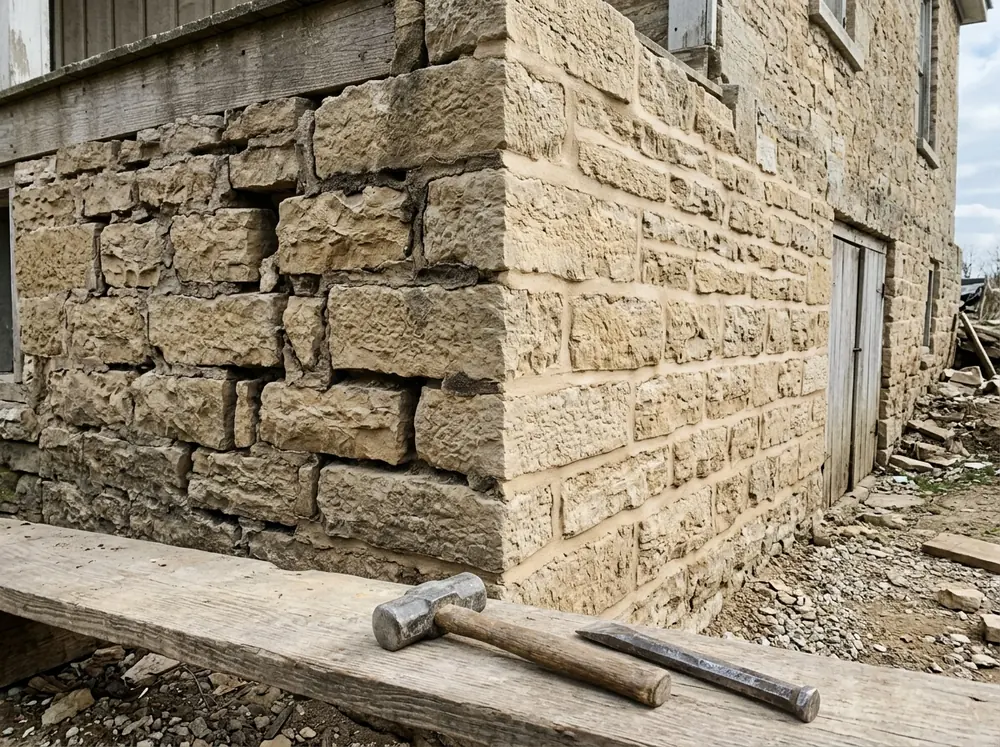
See basement wall replacement for the rebuild itself, and stone foundation repair if your basement walls are limestone or brick.
House Leveling and Settlement Correction
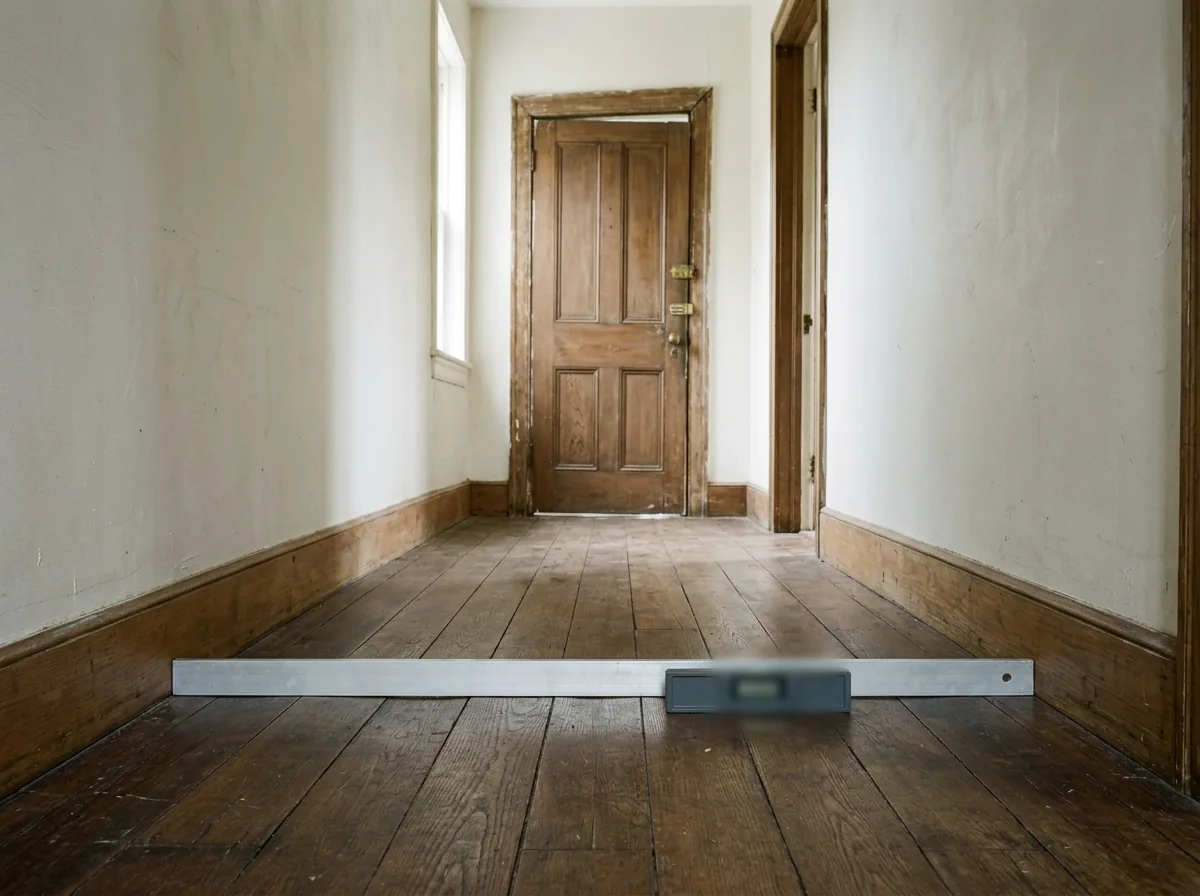
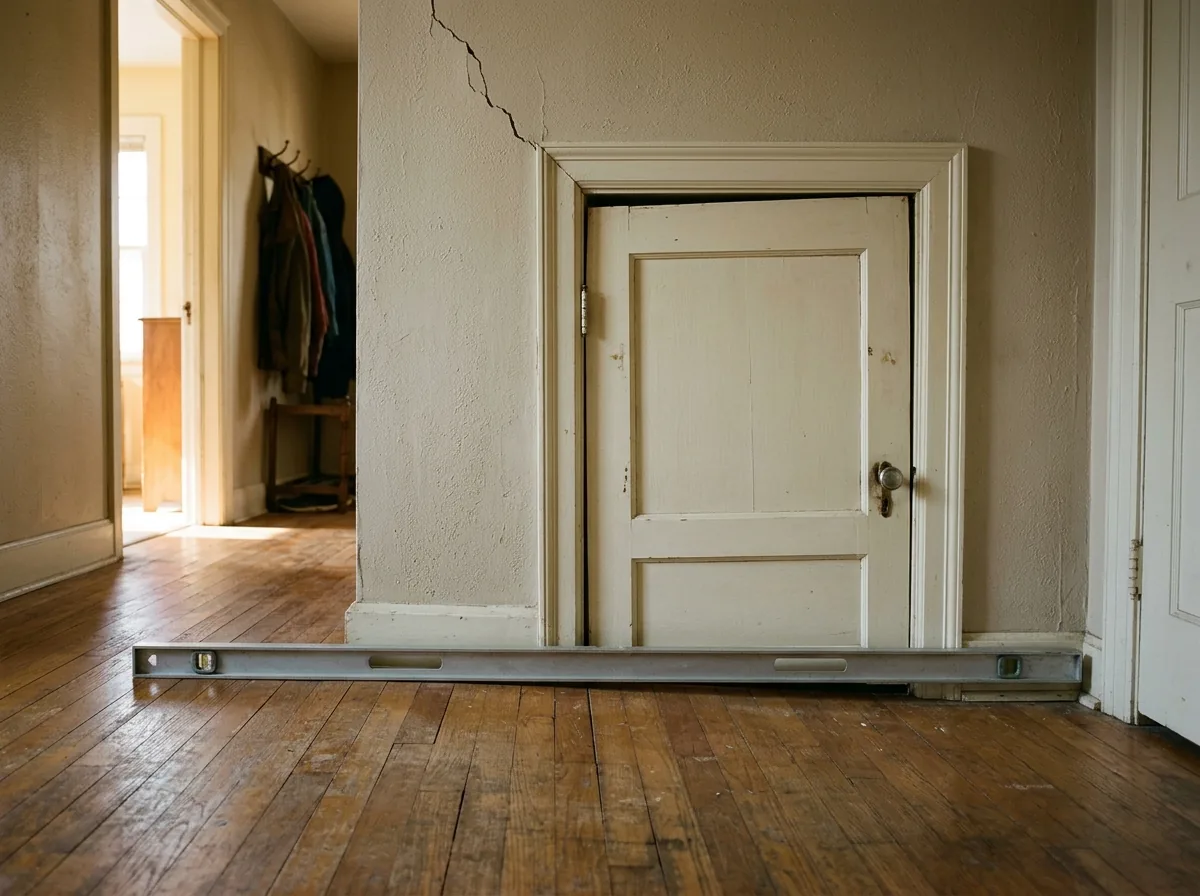
Doors that stick all year, a floor you can feel slope, and drywall cracks running off the corners of door frames are the classic signs. Doors also swell in a humid Kansas summer, so watch whether the sticking comes and goes with the weather. Leveling lifts the low side back up on piers while someone reads elevations across the floor. Cost guides put a full lift and level at $20,000 to $23,000. Ask before signing which cracks and doors are expected to close and which won't. A house that has sat out of level for years doesn't always come all the way back.
Crawl Space Repair: Support Jacks and Sistered Joists
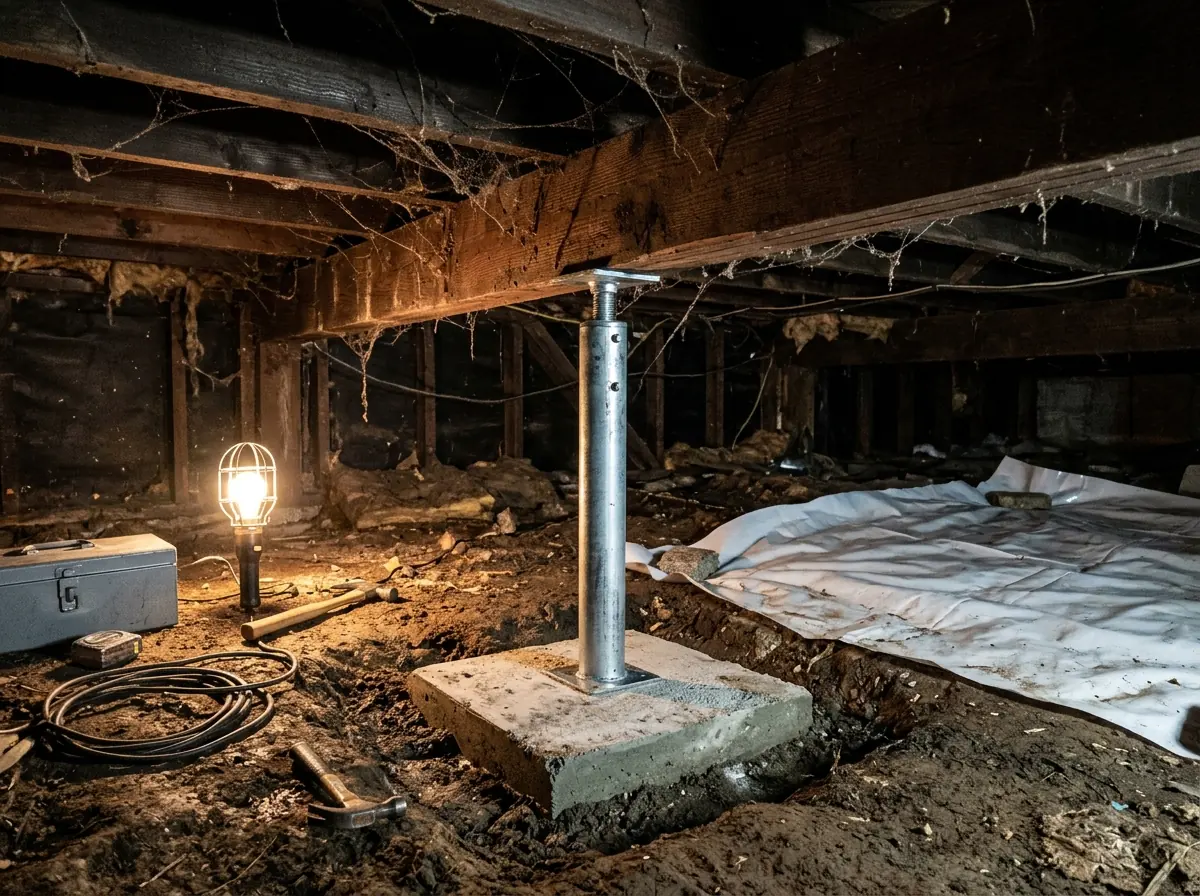
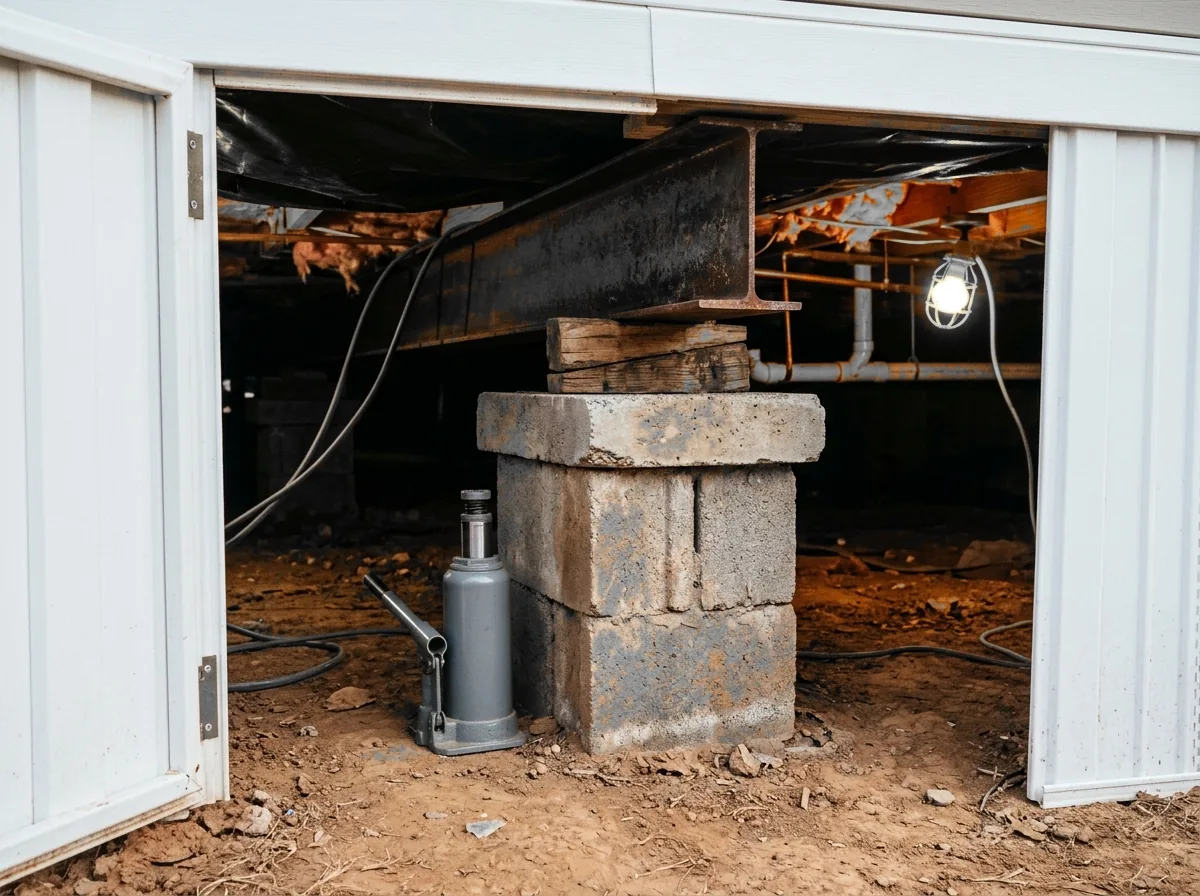
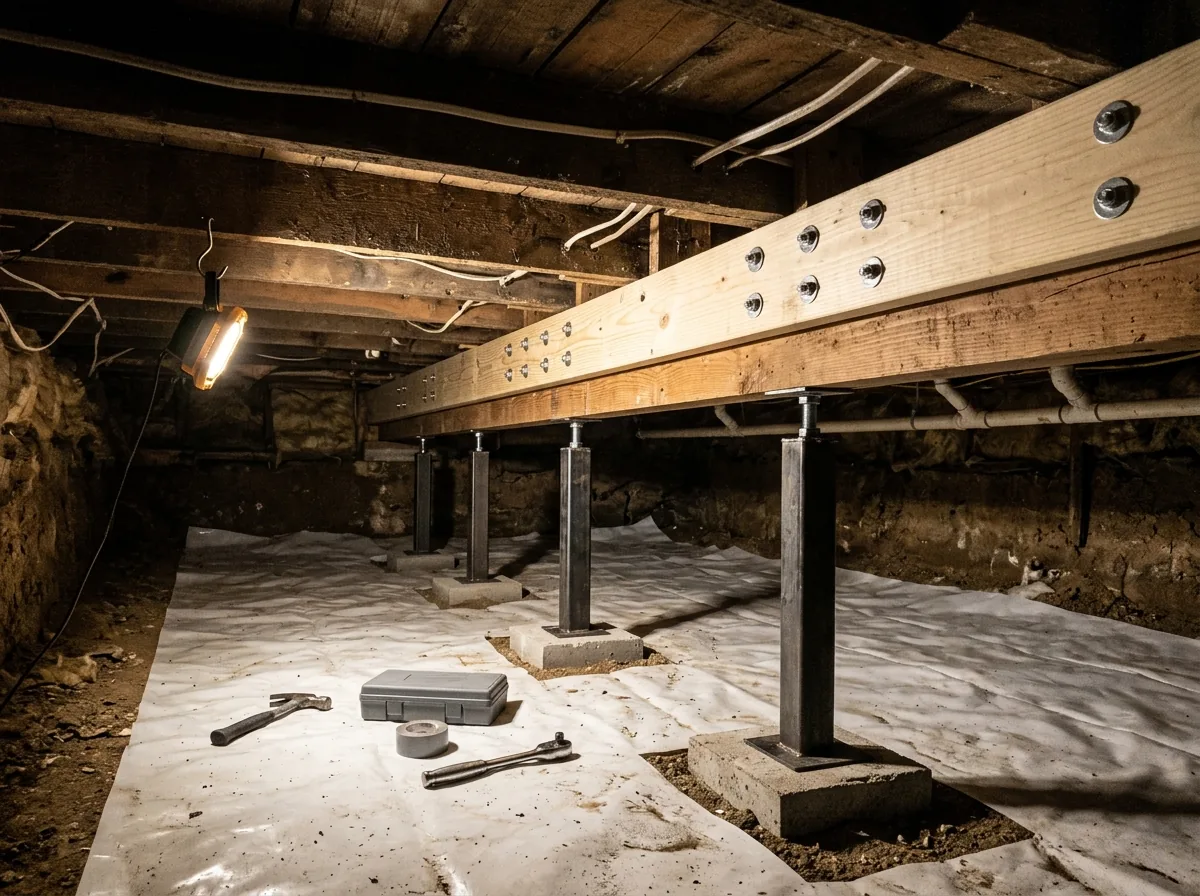
A bouncy or sagging floor over a crawl space is usually a girder with too few posts under it, posts sitting on dirt, or joists that have cracked or rotted. The repair is new adjustable steel posts on proper footings, sistering fresh lumber alongside weak joists, or replacing a beam. Cost guides put crawl space structural repair at $2,500 to $8,000, a replacement support beam at $1,500 to $4,000, and reshimming at $1,200 to $2,000. Fix the moisture in the same visit, or the new wood ends up in the same damp air that ruined the old.
See crawl space repair for posts, beams and joists.
Basement Waterproofing in Topeka
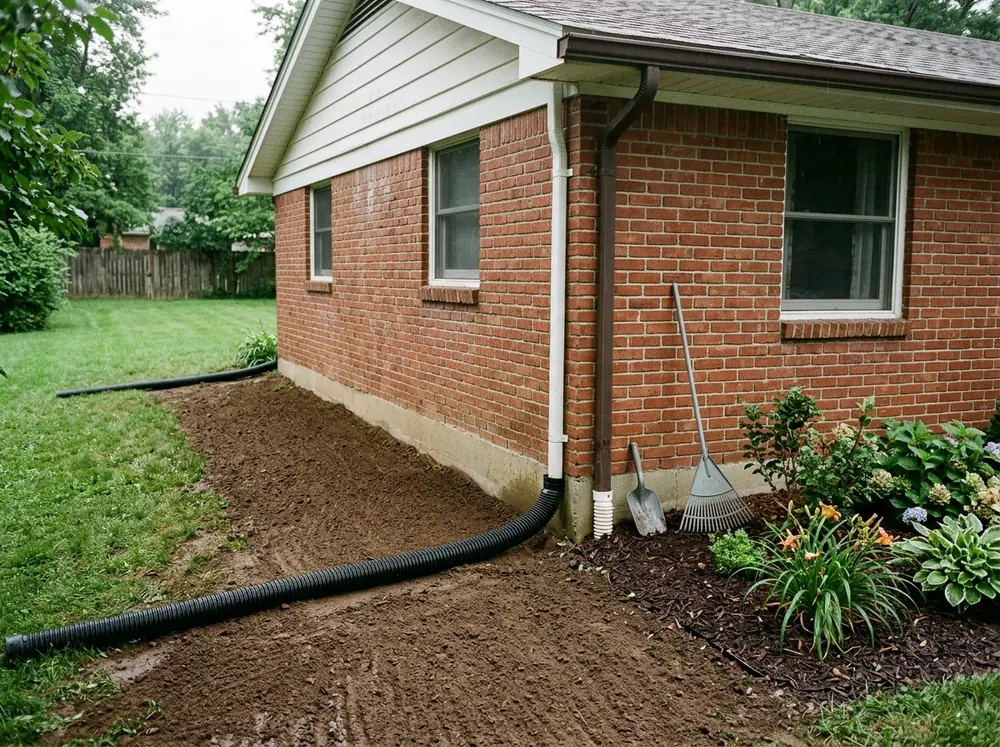
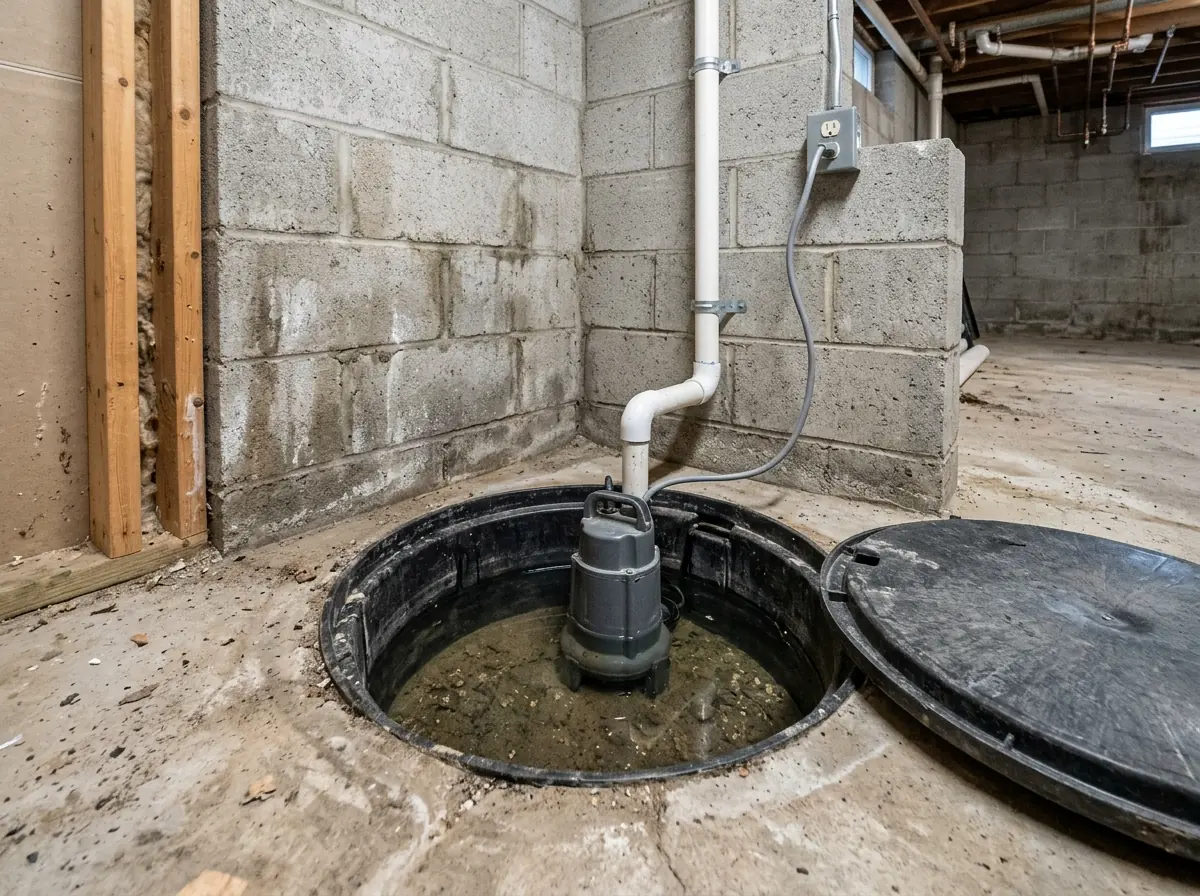
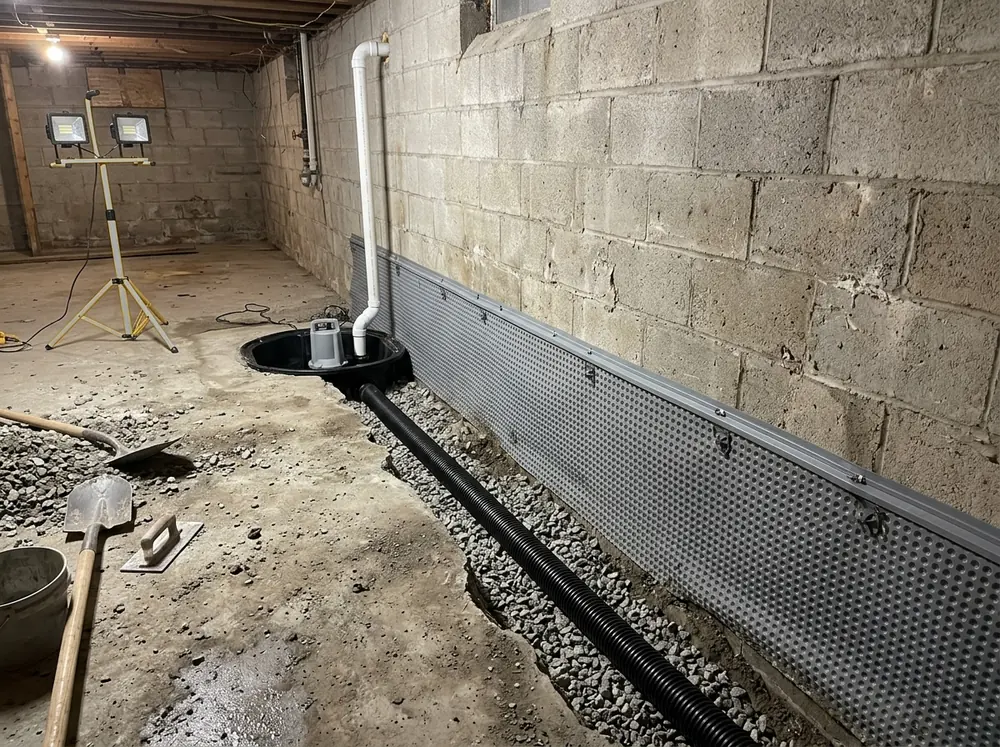
Check the outside first. Downspouts that empty right at the wall and soil sloping toward the house are the cheapest things to fix, and they're worth ruling out before paying for a drain system. When water still comes in, the usual answer is an interior perimeter drain to a sump pump, with a dimpled membrane on the lower wall. An exterior membrane means digging the whole wall out. Angi's 2026 average for foundation waterproofing is $4,600, with most jobs between $1,500 and $15,000. Sump pump installs alone run $500 to $2,000.
See basement waterproofing for the full system, or sump pump installation if the pump is the weak link.
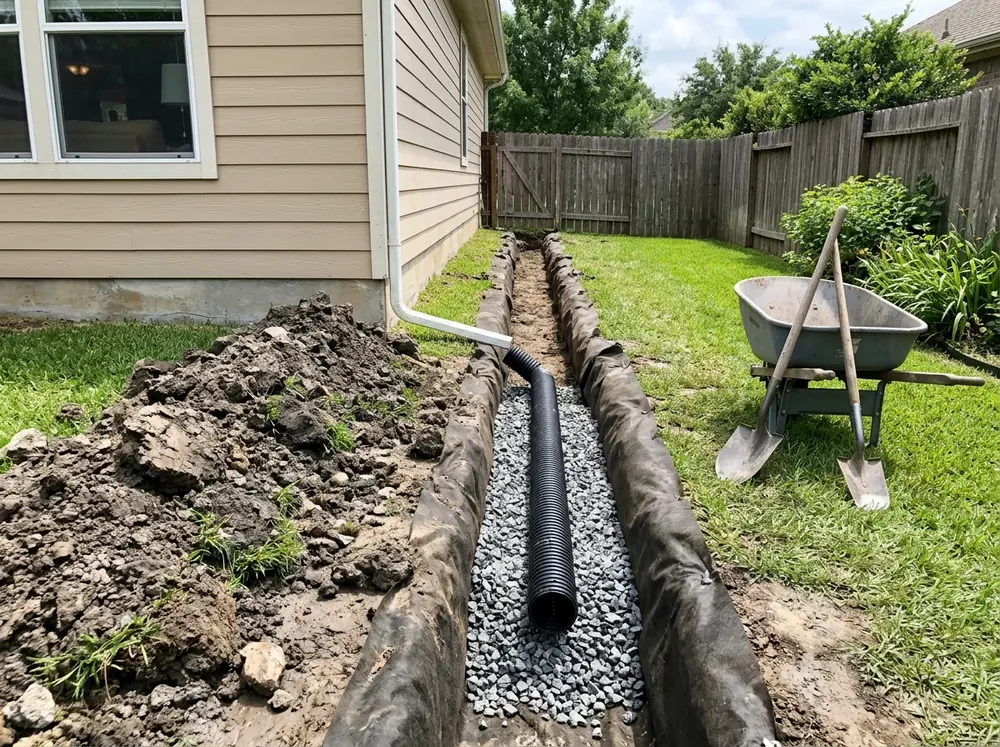
Interior Drain Tile and French Drains
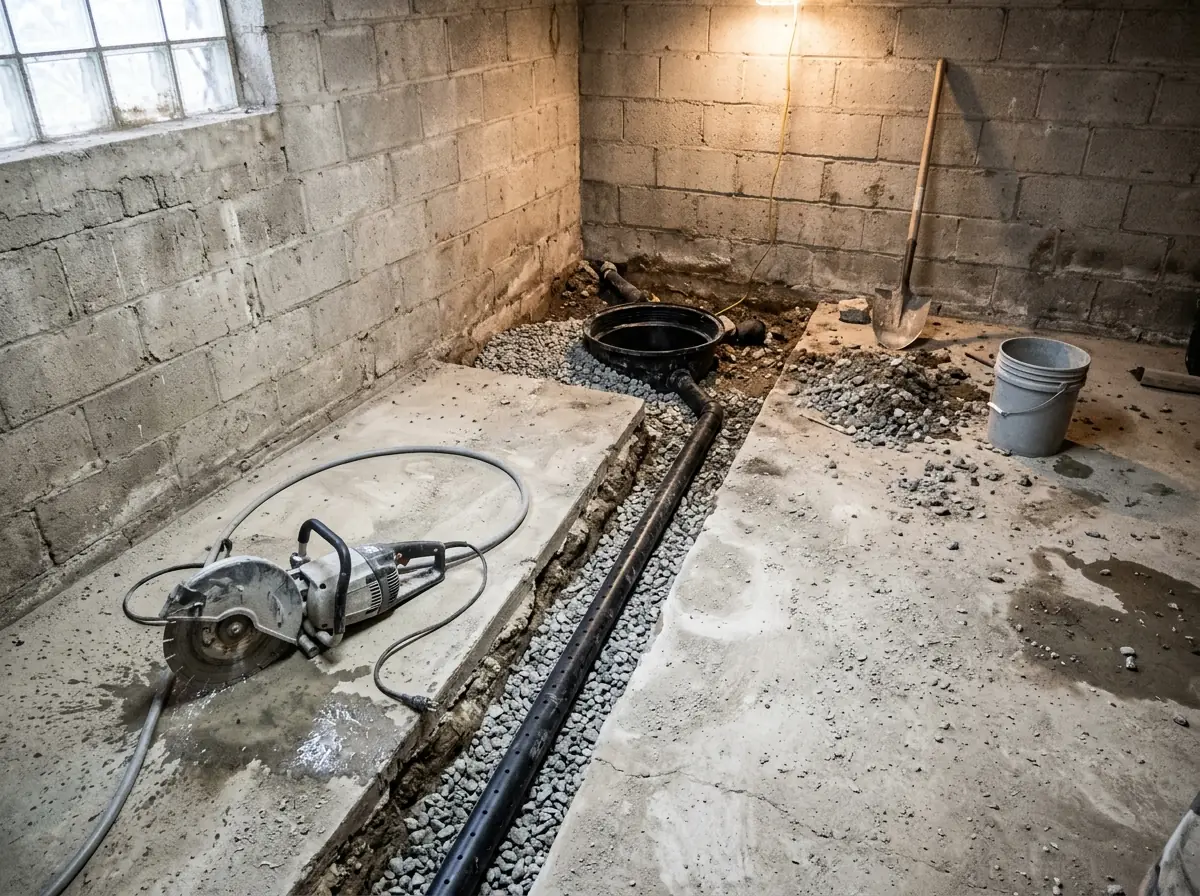
A French drain is a gravel trench with a perforated pipe that carries water away before it reaches the wall. Outside, it runs along the house or across a soggy yard. Inside, it's cut into the basement floor along the footing, which is why interior drains cost more: the concrete has to come out and go back. Cost guides put French drains at $10 to $100 a linear foot, or $500 to $5,000 for a 50-foot run, and interior systems at $40 to $100 a foot.
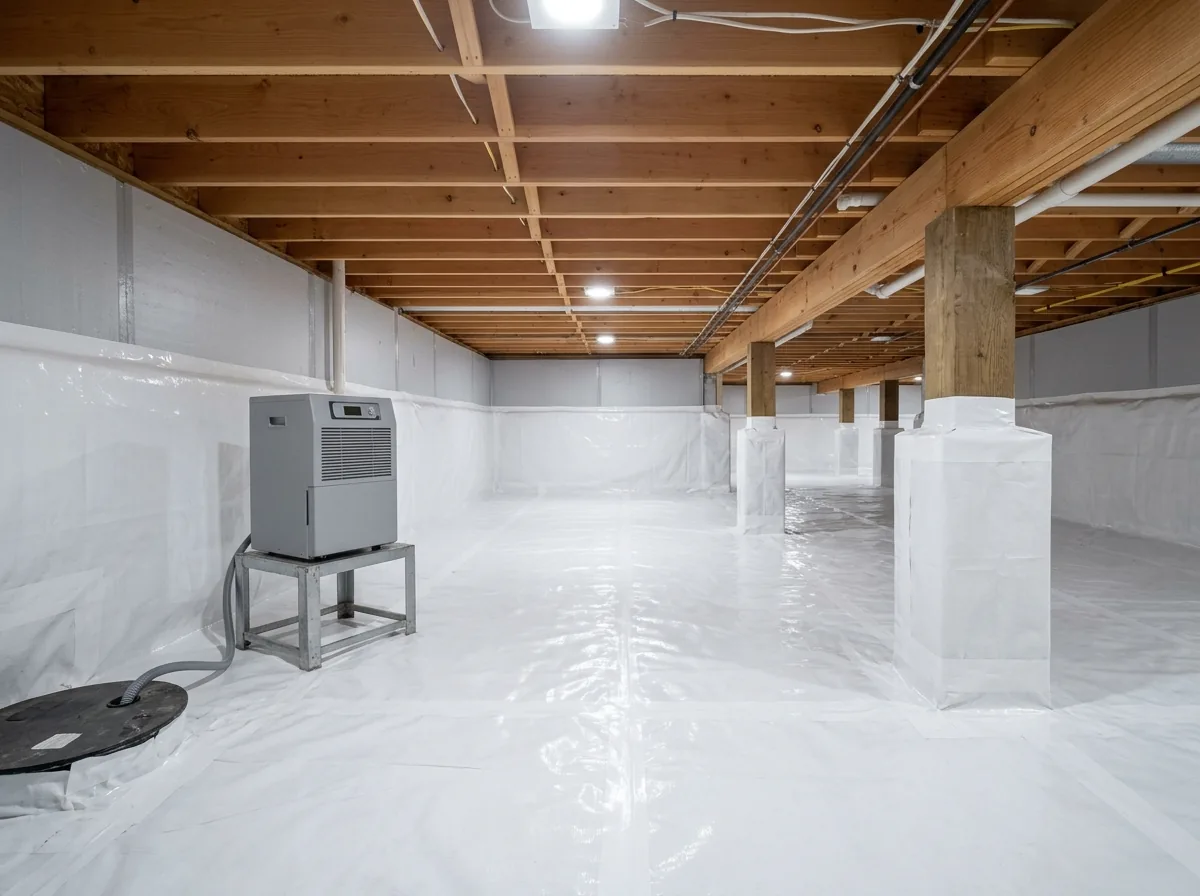
Crawl Space Encapsulation
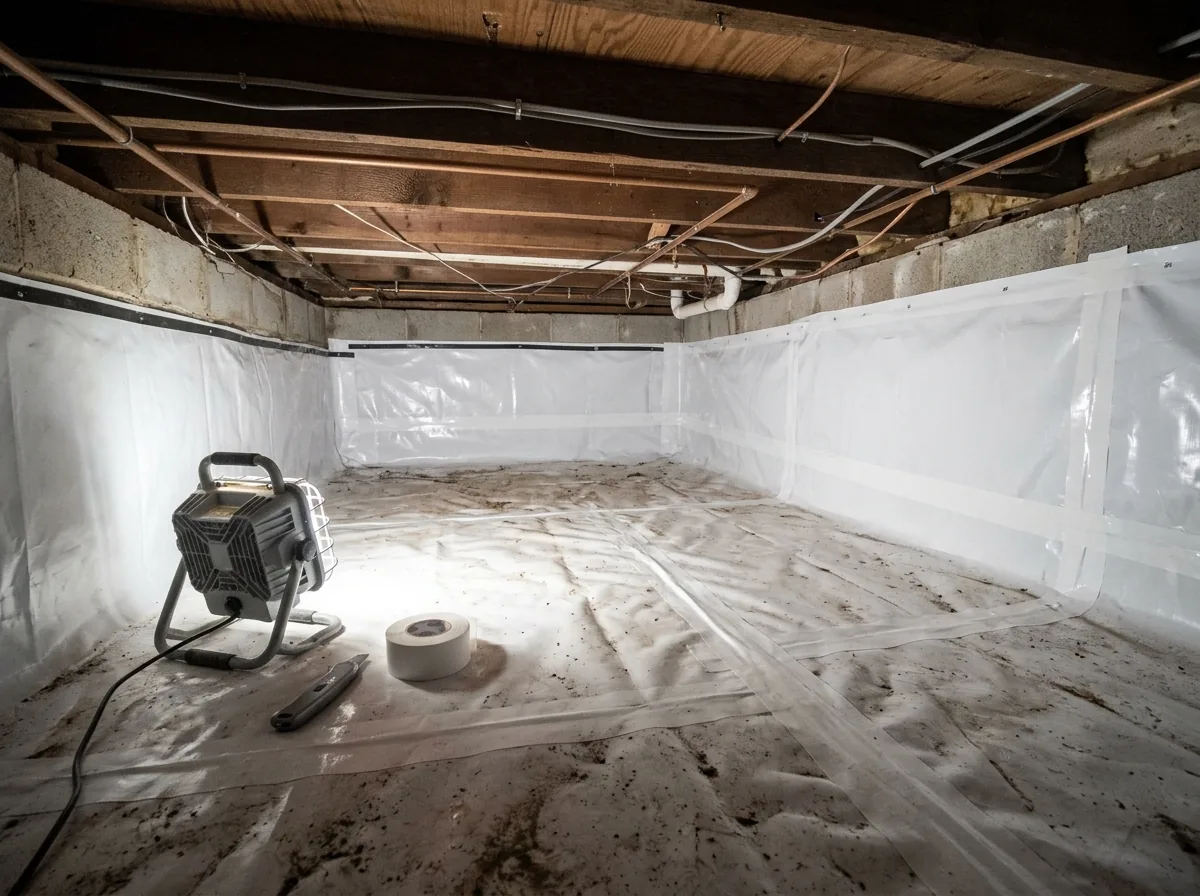
Encapsulation seals the crawl space: a heavy vapor barrier over the ground and up the walls, the vents closed off, and a dehumidifier to hold the air dry. It's the moisture half of crawl space work, and it protects the structural half. Angi puts the average at $5,500, with most jobs between $5,000 and $15,000. Basic work runs $2 to $4 a square foot and more involved jobs $3 to $10. A dehumidifier alone is $800 to $1,200.
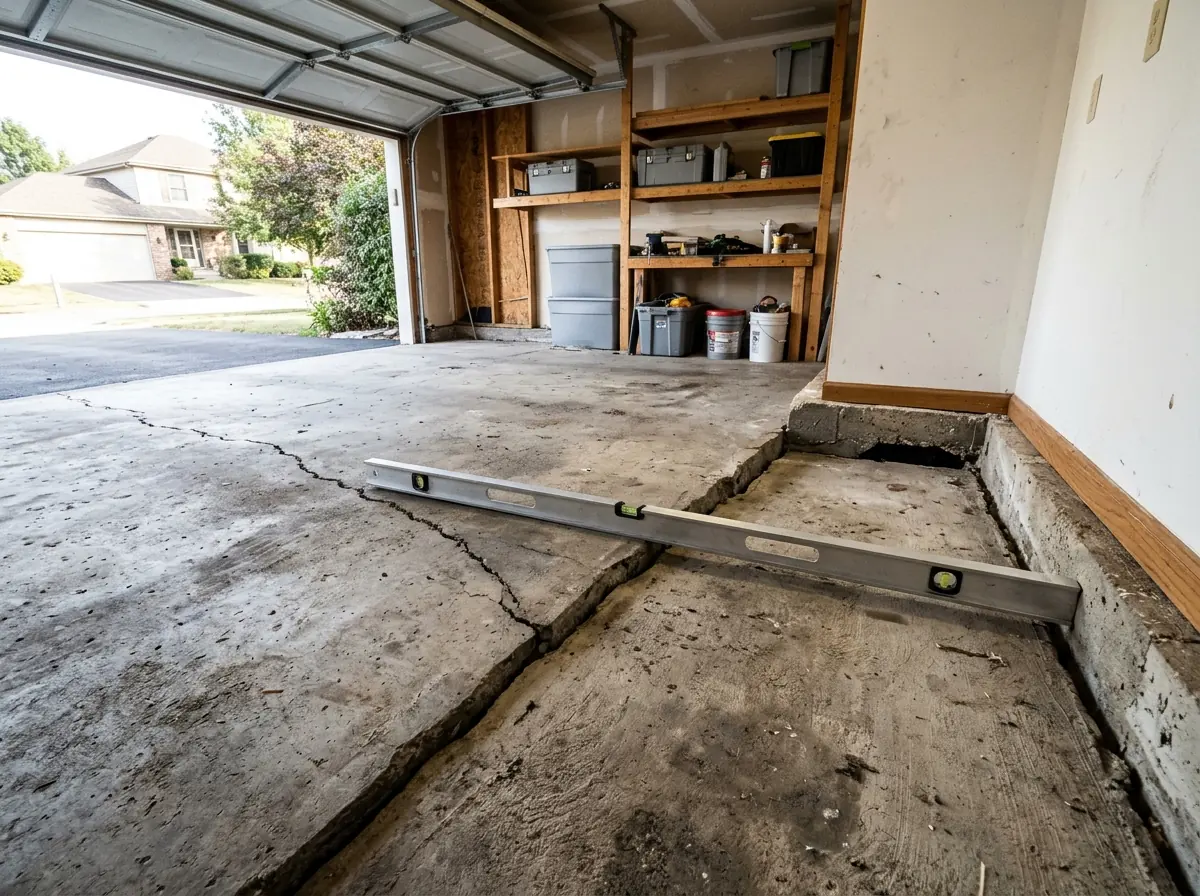
Slab Foundation Repair
Slab-on-grade houses and attached garages settle differently from basements. The slab cracks and one side drops, and you see it as a gap under the baseboard or a step in the floor. Shallow cracks with no height change are usually cosmetic. A slab that keeps dropping needs support under it: slab piers through the floor, or lifting the slab with grout or foam where the soil underneath is stable enough to hold it.
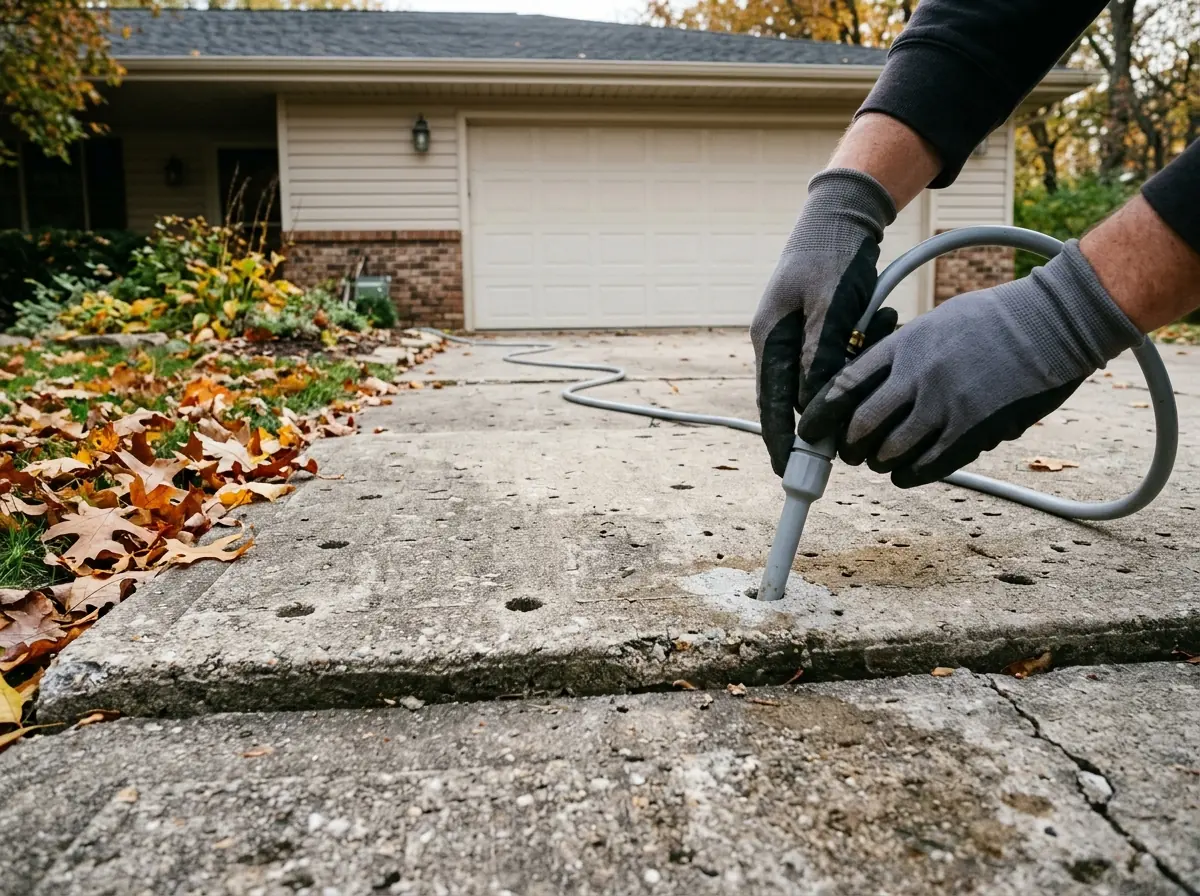
Mudjacking and Polyjacking for Sunken Concrete
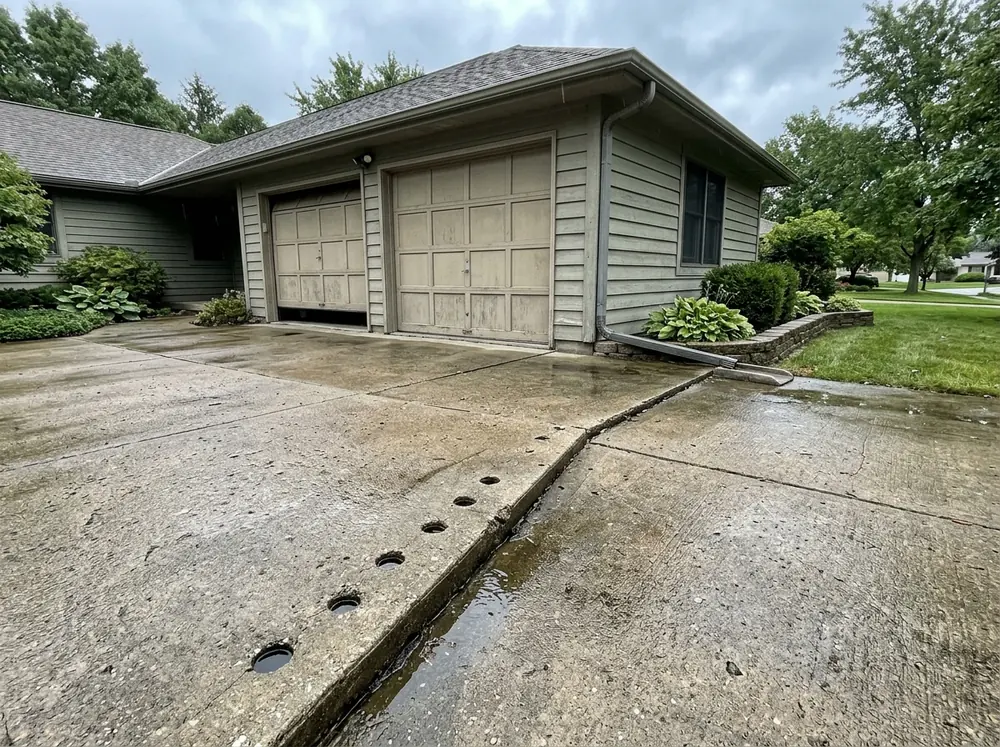
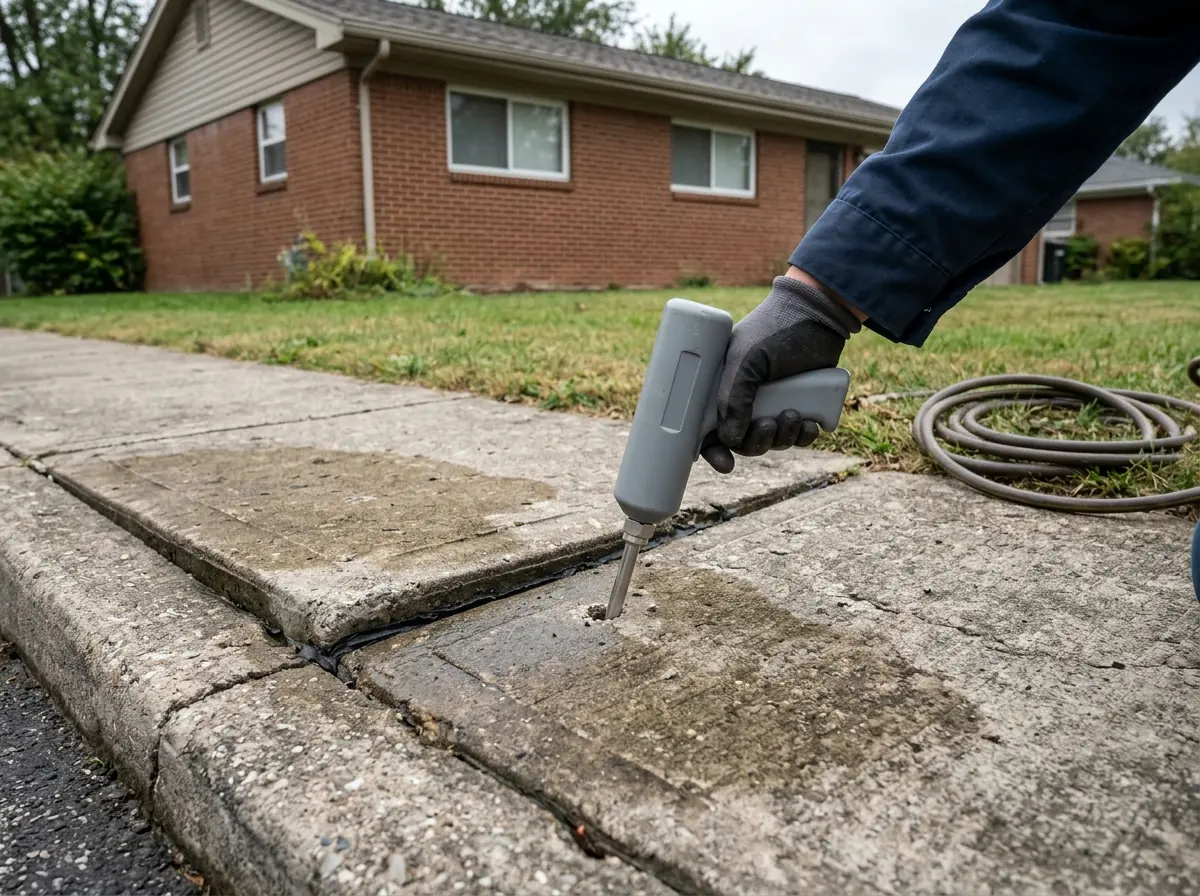
Driveways, garage aprons, porches and sidewalks in Topeka sit on the same swelling clay as the houses, so they sink for the same reasons. Small holes are drilled through the sunken slab and a cement slurry is pumped under it until it rises. Polyjacking does the same job with expanding polyurethane foam.
- Mudjacking: most jobs run $500 to $1,300, or about $3 to $9 a square foot with $300 to $700 minimums.
- Polyjacking: about $5 to $25 a square foot, often double or triple the mudjacking price.
- Cure time: about 24 hours before you drive on mudjacked concrete, about 15 minutes for foam.
Lifting only works on a slab that's still in one piece. A slab broken into rubble gets replaced, not raised.
See mudjacking in Topeka for slurry lifts, or concrete leveling for the foam method.
Foundation Crack Repair: Epoxy and Polyurethane Injection
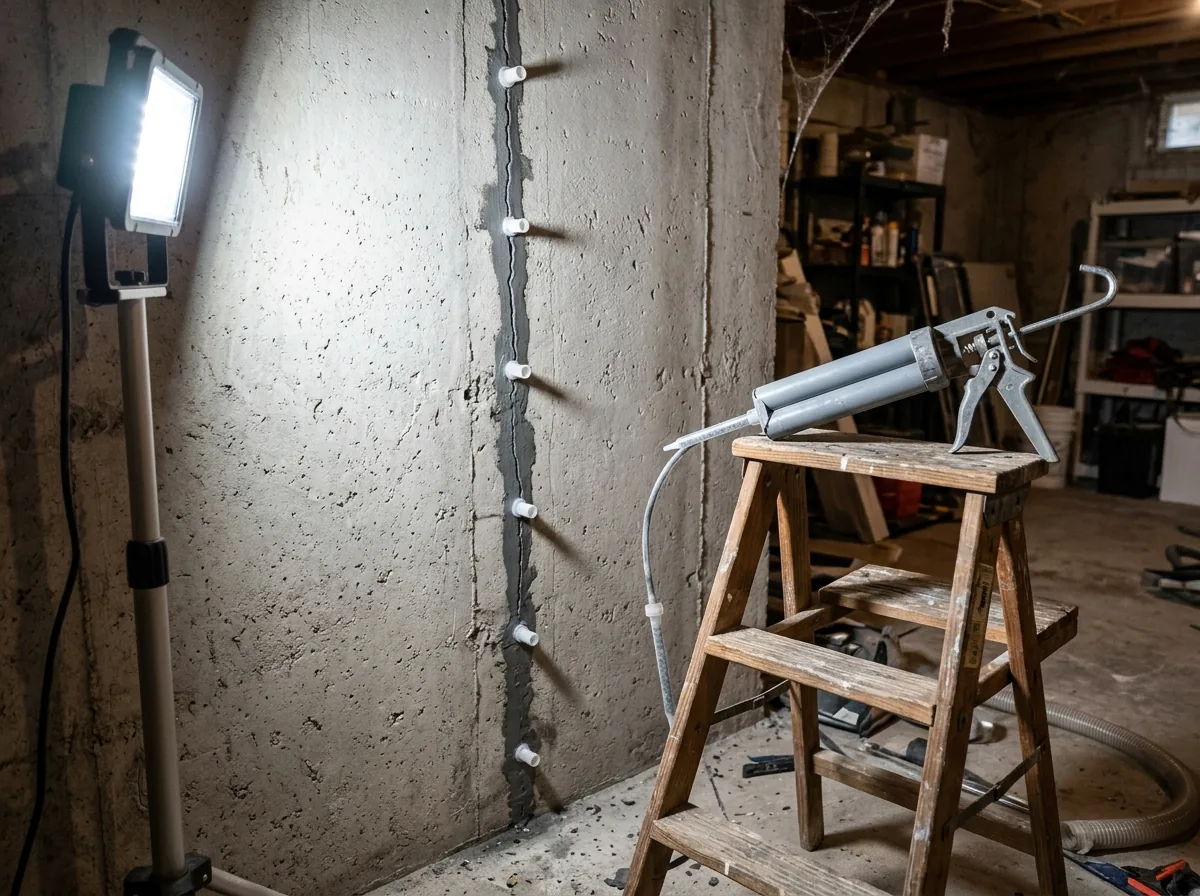
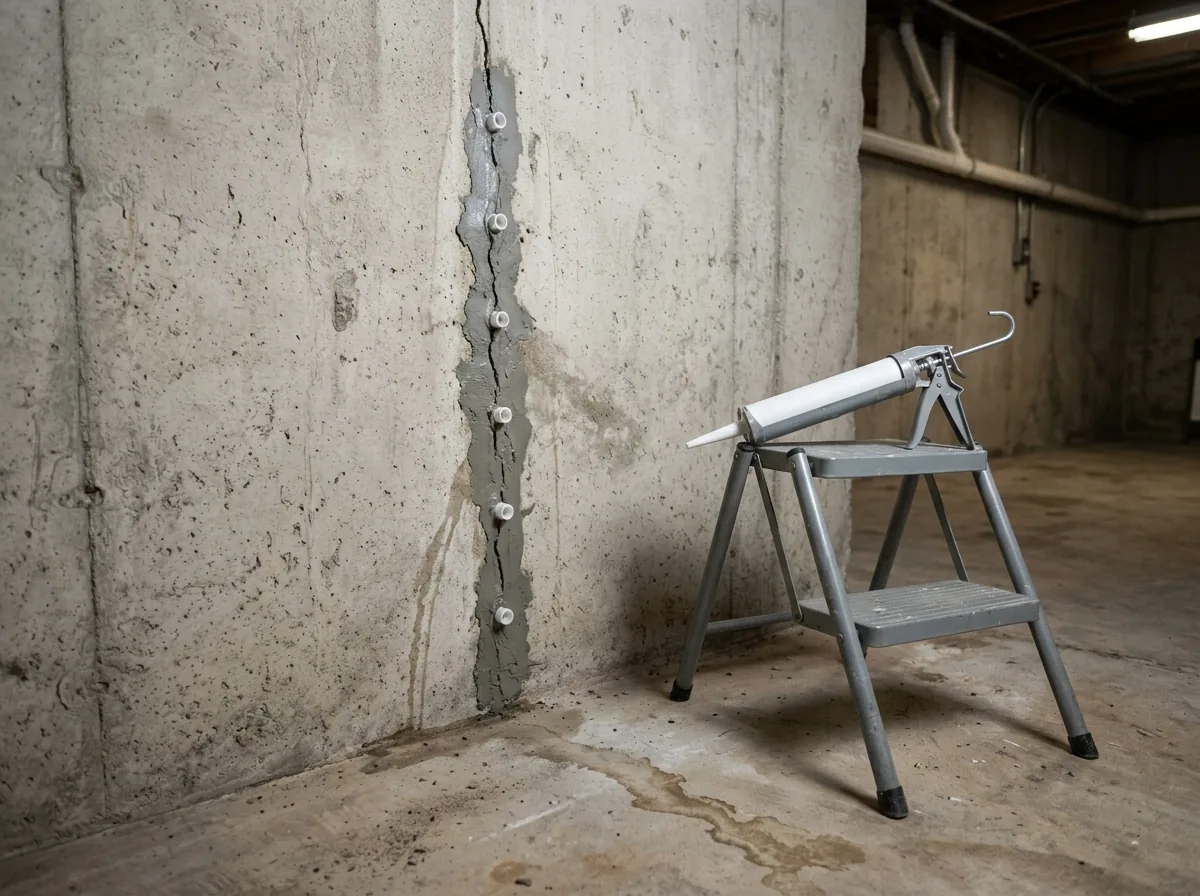
A vertical hairline crack in a poured wall is common and usually not structural. If it leaks, injection seals it from inside: ports go along the crack and epoxy or polyurethane is pumped in to fill the crack. Epoxy bonds the concrete back together; polyurethane stays flexible and stops water. Most crack repairs cost $250 to $800. Cracks wider than a quarter inch, horizontal cracks and stair-step patterns in block are different. Those are signs of movement, and sealing them without fixing the cause just hides it.
Foundation Repair Cost in Topeka
Most foundation repairs cost $2,225 to $8,133, with a national average of about $5,175, according to Angi and HomeAdvisor's 2026 data. Small fixes like crack injection sit at the bottom of that range. Piering a whole house or rebuilding a wall can run several times the top. No published survey covers Topeka alone, so the useful comparison is two or three written quotes for the same method.
| Repair | Typical cost (national guides) |
|---|---|
| Crack repair | $250 to $800 |
| Bowing wall bracing | $4,500 on average; most jobs $500 to $10,000 |
| Settling or sinking | $4,500 to $25,000, depending on pier count |
| Piers | $1,000 to $3,000 each; about ten for a full underpin |
| Slab lifting | $500 to $1,300 for most mudjacking jobs |
| Lifting and leveling a house | $20,000 to $23,000 |
| Foundation inspection | $300 to $750; a structural engineer's report $350 to $800 |
What moves the price: how many piers, how deep they go before they hit load-bearing soil, whether the yard has to be dug out or the work happens inside, access for the equipment, and whether an engineer's design and a permit are part of it. Leave room for surprises; one cost guide suggests $1,000 to $2,500 for hidden obstacles.
Commercial Foundation Repair by Property Type
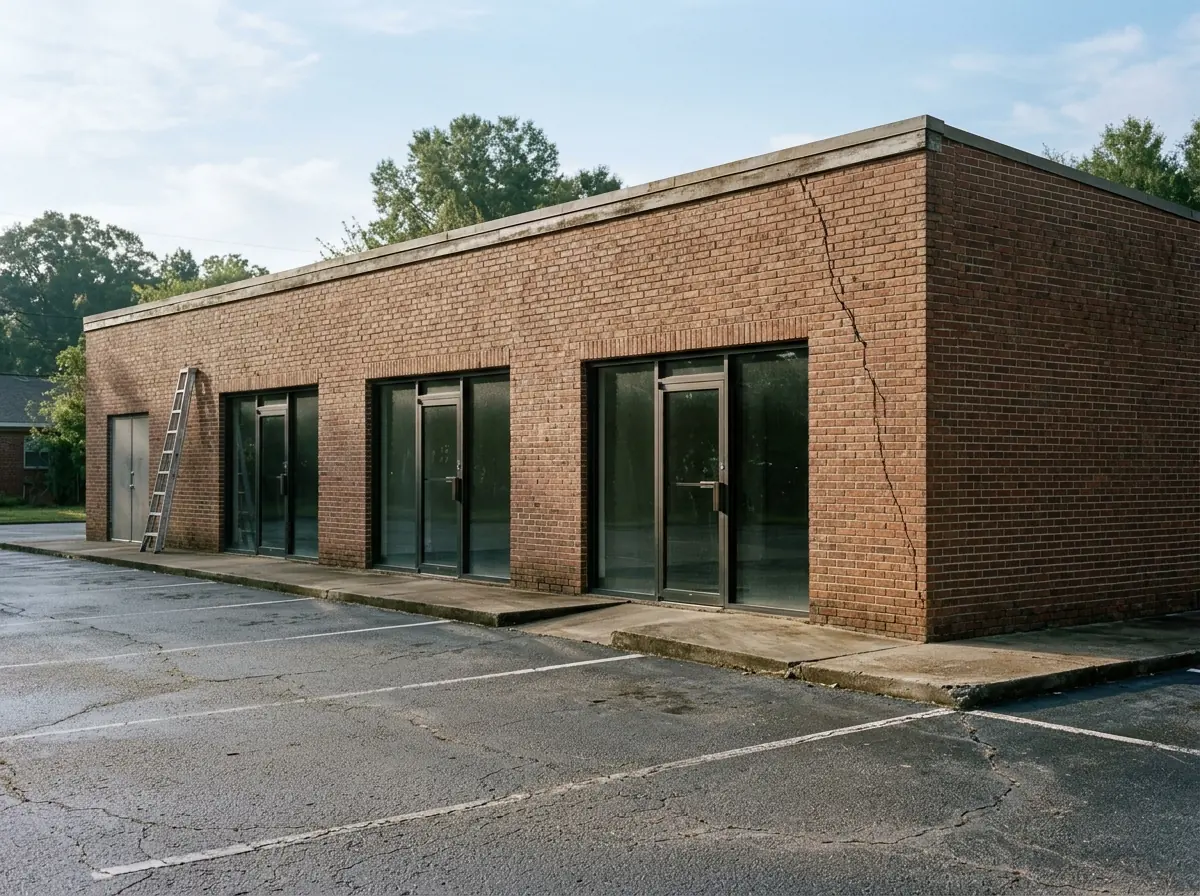
The same methods apply to buildings that aren't single-family homes. What changes is who has to be kept happy while the work happens, and what paperwork the owner needs afterward.
Rental Houses and Landlord Portfolios
Tenants stay in place, so access windows and noise matter. Ask for a written scope you can hand a lender or insurer, plus photos of the piers before backfill.
Apartments and Multifamily Buildings
Breezeway slabs, stair landings and shared basement walls move like any other foundation. Slab lifting and wall bracing can usually be phased one building or stairwell at a time.
Retail, Office and Warehouse Slabs
Sunken floor slabs, dock aprons and sidewalks at storefronts are slab-lifting jobs. Foam's 15-minute cure lets a section reopen the same day.
Churches, Schools and Older Masonry Buildings
Stone and brick foundations on older buildings need a contractor comfortable with masonry as well as piers. Work around service and school calendars.
Specialty Foundation and Concrete Work
Some jobs sit at the edge of foundation repair but come up in the same visit.
Radon Mitigation After Slab Work
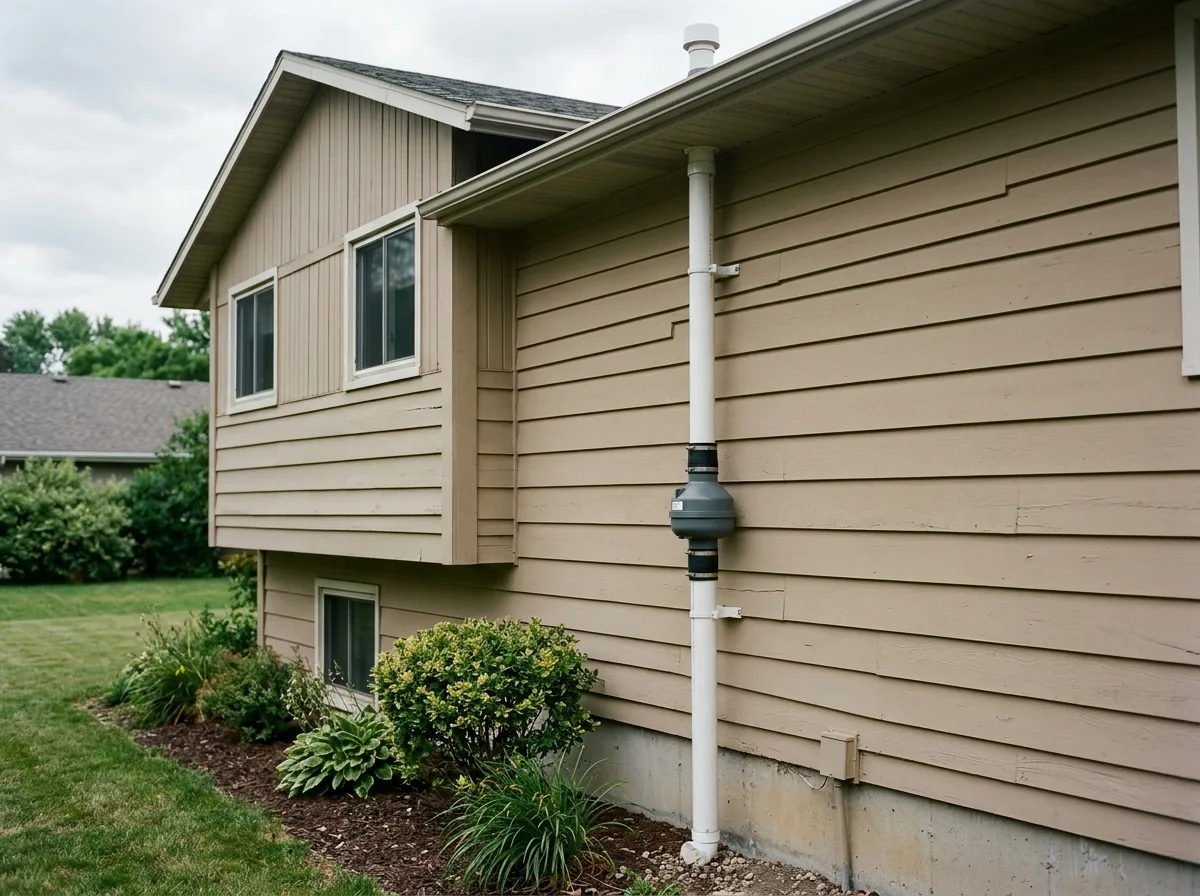
The Kansas Radon Program estimates about one in four Kansas homes may have elevated radon, and levels vary from house to house. Cutting a basement floor for a drain or piers is a good moment to add a sub-slab vent pipe. Test after the work is done.
See radon mitigation.
Sump Pump Installation and Replacement
A pump, basin and discharge line typically cost $500 to $2,000 installed. A battery backup keeps it running when a storm takes the power out.
Egress Window Openings
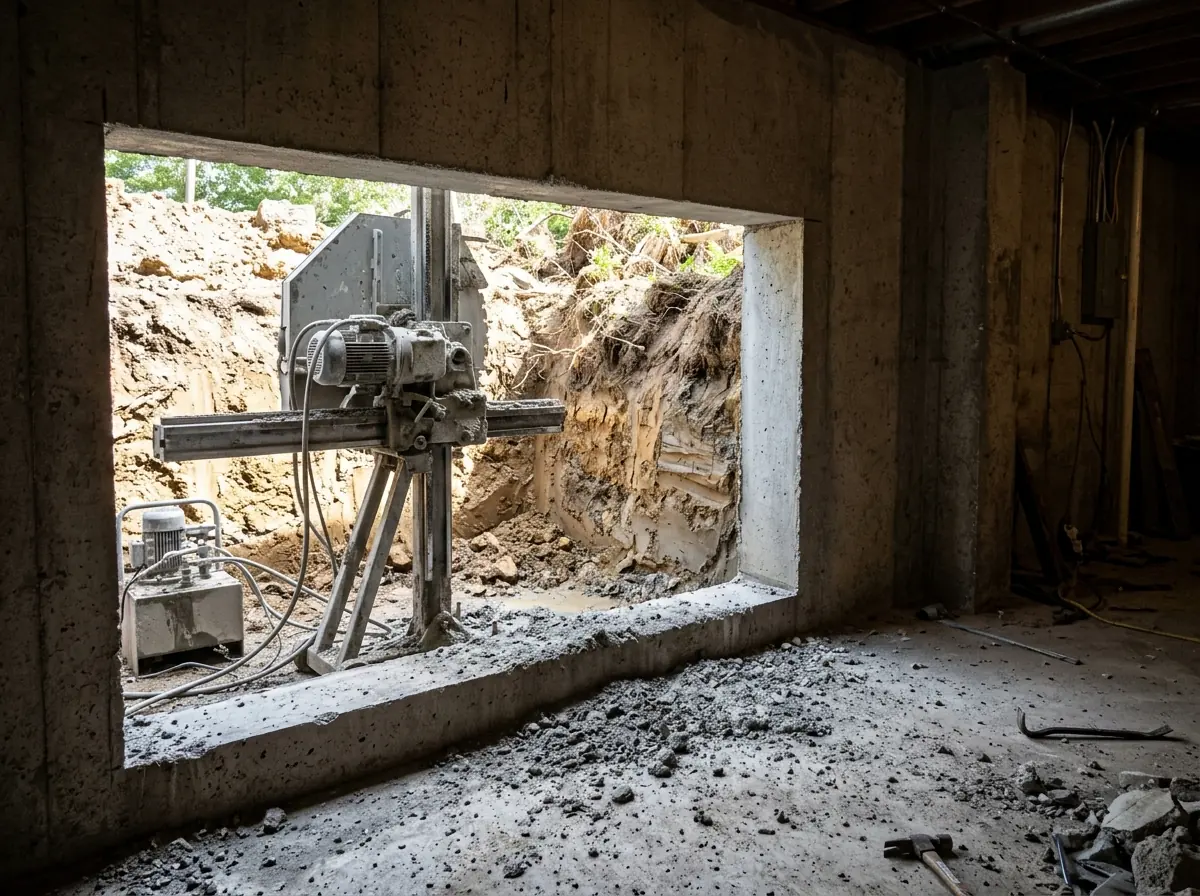
Topeka's adopted code requires an escape opening in basements and in every basement bedroom: at least 5.7 square feet clear, 24 inches high and 20 inches wide, with the sill no more than 44 inches above the floor. Cutting one through a foundation wall is structural work.
Leaning Chimney Stabilization
A chimney on its own footing can settle and pull away from the house. Piers under the chimney footing stop it in the same way they stop a settling corner.
Retaining Wall Repair
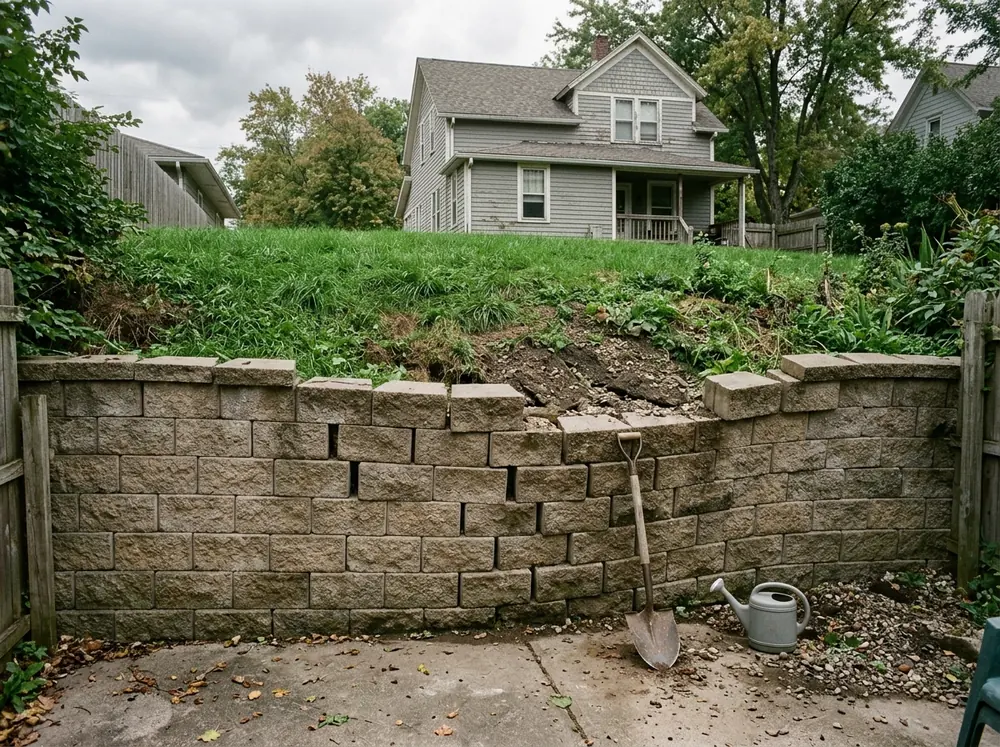
A leaning or bowing retaining wall can often be fixed for $200 to $1,500. Tearing one out and rebuilding it runs $6,000 to $14,000 by one cost guide, and ask whether better drainage behind it is part of the fix.
Manufactured Home Leveling
A manufactured home on a skirted block foundation sits on piers and shims that settle with the soil. Reshimming brings it back to level; cost guides put pier-and-beam reshimming at $1,200 to $2,000.
See mobile home leveling.
Why Topeka Foundations Move: Clay, Shale and Freeze-Thaw
Most of the trouble starts in the soil. More than half of Shawnee County's mapped acres are soils that USDA's soil survey rates high or very high for shrink-swell, and Martin silty clay loam, the county's most common soil, is one of them. The Kansas Geological Survey describes these clays as heaving and shrinking from season to season and cracking foundations, driveways and sidewalks along the way.
Below the soil, eastern Shawnee County has clay glacial till over alternating shale and limestone, with river sediment along the Kansas and Wakarusa valleys. That's why pier depth varies so much from one Topeka house to the next.
The weather pushes both ways. Topeka averages about 36.5 inches of rain a year and 17 inches of snow. Wet springs swell the clay against basement walls, and a dry late summer shrinks it back from the footing. In a long dry spell, watering evenly around the foundation keeps the clay from pulling away from it. Frost adds the third force. Topeka's code puts the frost line at 36 inches and rates the weathering here as severe.
How a Foundation Repair Request Works
- STEP01
Call or Send the Form
Tell us what you're seeing: the crack, the bow, the door that won't close, the wet corner. We pass it to one independent local contractor, and the call costs you nothing.
- STEP02
Inspection and Elevation Readings
A good contractor walks the outside and the basement or crawl space, measures wall deflection and takes floor elevation readings. Some contractors inspect for free; paid inspections typically run $300 to $750.
See foundation inspection in Topeka for what an inspection or engineer's report covers.
- STEP03
Written Scope, Engineer Letter and Permit
Ask for the method, the number and location of piers or anchors, the price, the timeline and the warranty in writing. Topeka requires a permit for structural repairs, pulled by a city-licensed contractor. Bigger jobs may need an engineer's design.
- STEP04
Install Day
Most repairs take one to five days on site. Expect digging along the foundation for piers, or work inside the basement for anchors, straps and drains.
- STEP05
Final Readings, Cleanup and Warranty Papers
Ask for after readings to compare with the first ones, photos of the work before backfill, the city's final inspection, and the warranty document, including whether it transfers when you sell.
What Topeka Expert Foundation Repair Does for You
One Contractor per Request
Your request goes to one independent Topeka contractor. Your number isn't sold to a list of five companies who all call at once.
The Method Explained Before the Price
Piers or mudjacking, anchors or straps: you should know why one fits your house before you compare numbers.
Everything in Writing
Method, quantities, price, permit and warranty go on paper before any work starts.
Get a free foundation repair estimate in Topeka
- The call and the inspection request cost you nothing
- Your details go to one Topeka contractor, never a lead list
- Ask for piers, anchors and price on paper before any digging
- Method explained first: piers, anchors, straps or mudjacking
Before You Sign: Permits, Engineers and Timing in Topeka
Topeka adopted the 2021 International Residential Code in December 2023. It requires a permit to alter or repair a building and exempts only nonstructural repairs, so piers, wall anchors and underpinning need one. Only a city-licensed contractor, or an owner-occupant doing the work on their own single-family home, can pull it. A license requires $300,000 per occurrence of liability insurance. If the house was built before 1978, the contractor also has to certify that you received the EPA lead pamphlet before the permit is issued.
An independent structural engineer is worth the $350 to $800 when contractors disagree on the method, when you're buying or selling, or when a wall has moved more than 2 inches. The report usually comes one to ten days after the visit.
Timing: inside work can happen any month. Digging is easier when the ground isn't frozen or soaked. A wall that's still moving shouldn't wait for spring, though. And most homeowners stay in the house the whole time.
Foundation Repair Across Topeka
Topeka Expert Foundation Repair takes requests from homes and buildings inside Topeka city limits. About one Topeka home in seven was built in 1939 or earlier, and the median house dates from 1969, so the requests run from old masonry foundations to the block basements and crawl spaces of postwar neighborhoods. Each one goes to an independent local contractor; ask for their Topeka contractor license number when they call.