
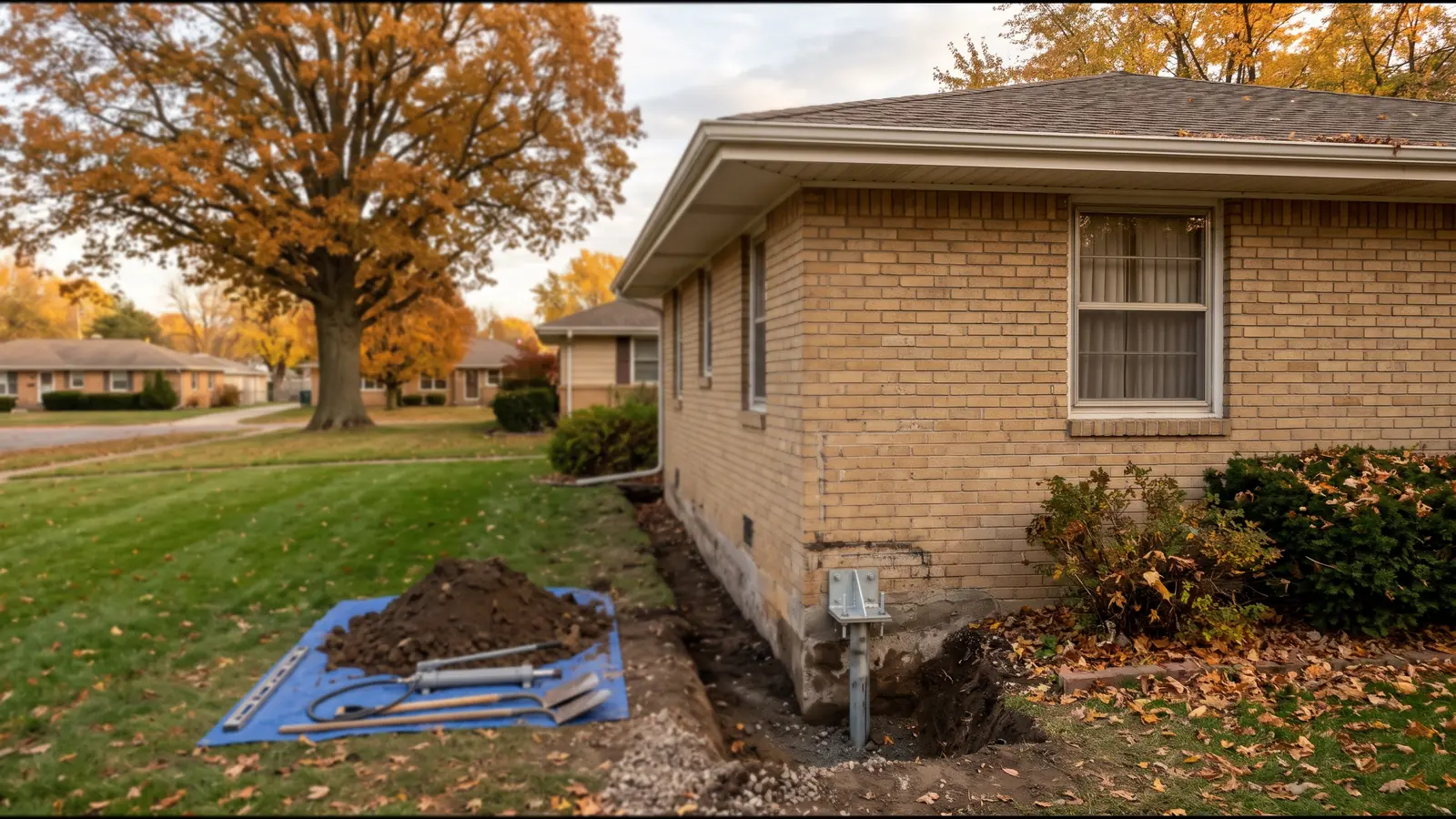
Foundation Piers by Bracket and Pier Type
Which pier fits depends on how heavy the wall is, how deep firm ground sits, and how much room there is to dig beside the footing. Clay that swells when wet and shrinks when dry is behind a lot of Topeka settlement (the homepage covers the local soils), and the ground under it changes enough that pier depth on one street can differ from the next.
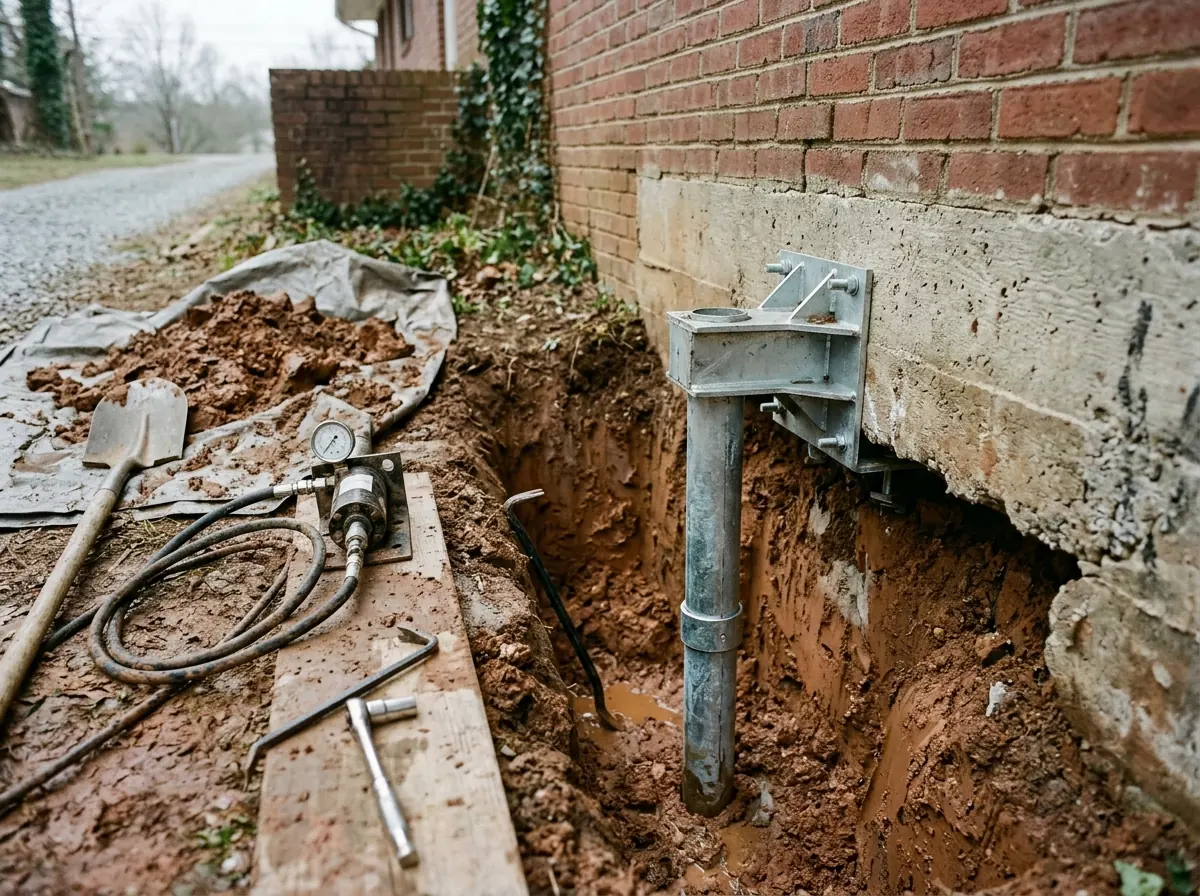
Steel Push Piers on Standard Brackets
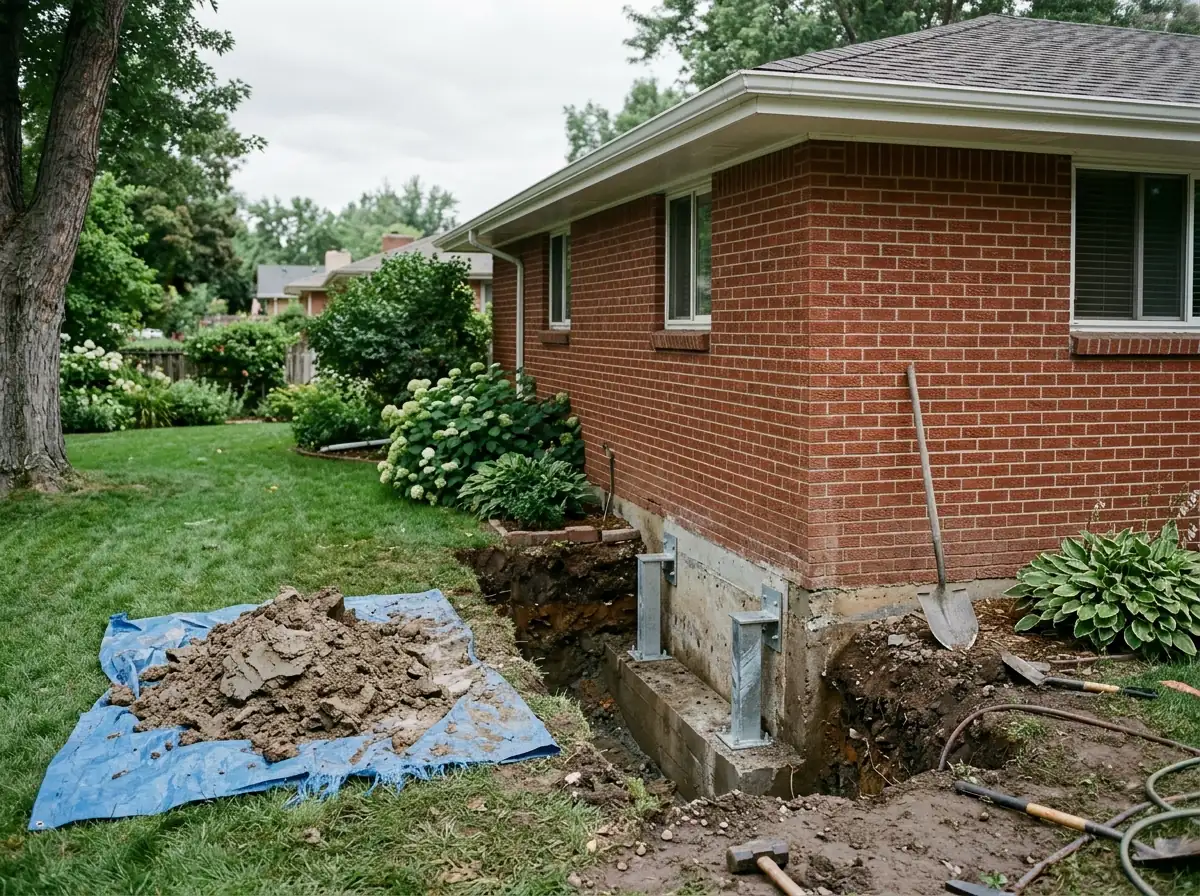
A steel bracket is fixed under the footing, and galvanized pipe is pushed down through it in short sections by a hydraulic ram. The pipe keeps going until it reaches load-bearing strata, then the house's weight is transferred onto it.
- Per pier: about $2,000 in Angi's 2026 guide; Forbes (2024) averaged steel at $1,500.
- Where they fit best: guides say push piers are most popular where bedrock is less than about 40 feet down.
- Lift: one pier maker says a push pier system can often lift the house back toward level as well as stopping it.
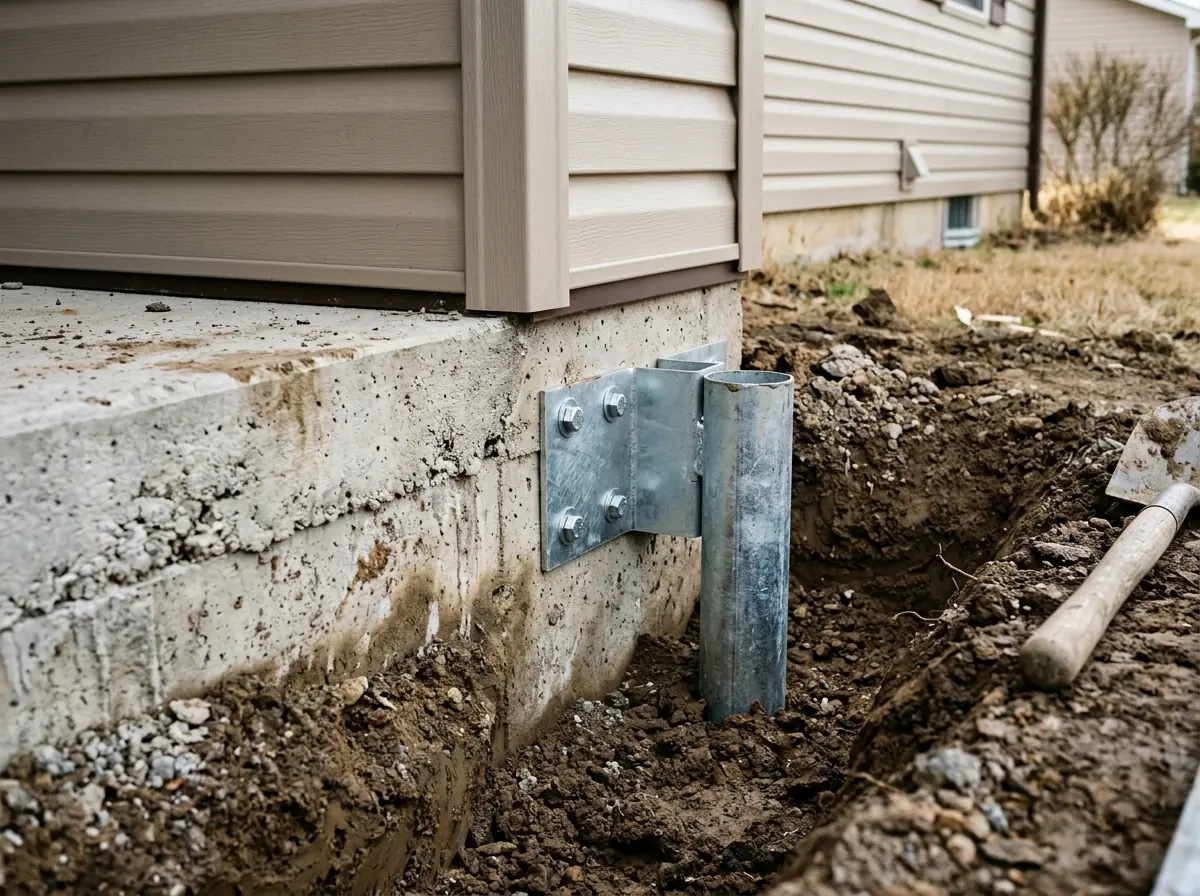
Low-Profile Brackets Under Shallow Footings
A standard bracket needs room under the footing. Some footings are too shallow for it: a thickened slab edge, an old porch footing or the perimeter of an attached garage. A low-profile bracket sits flatter against the concrete. In one system's ICC-ES evaluation report, the low-profile bracket is made for footings whose bottom sits about 6 to 10 inches below grade. Ask which bracket the quote uses, and why, if your house is a slab ranch.
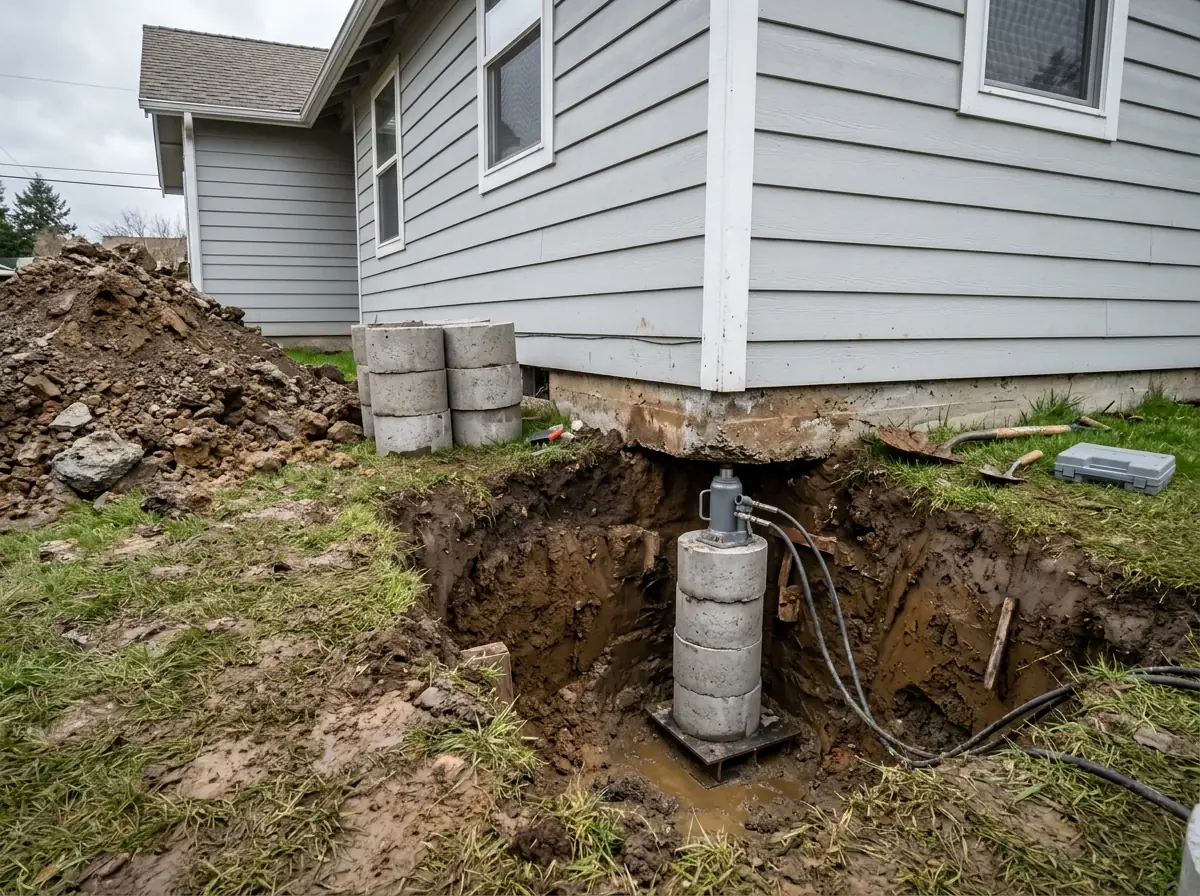
Pressed Concrete Pilings
Pressed pilings are short precast concrete cylinders stacked and pushed under the footing one at a time. Angi puts concrete piers at about $1,000 each, the cheapest pier type, and says they usually reach five to 10 feet down. That depth suits sheds, detached garages and, in some cases, a house. Before choosing on price, ask how deep the soil movement runs on your lot, because a piling that stops inside moving clay can move with it.
One Corner or a Whole Wall Line
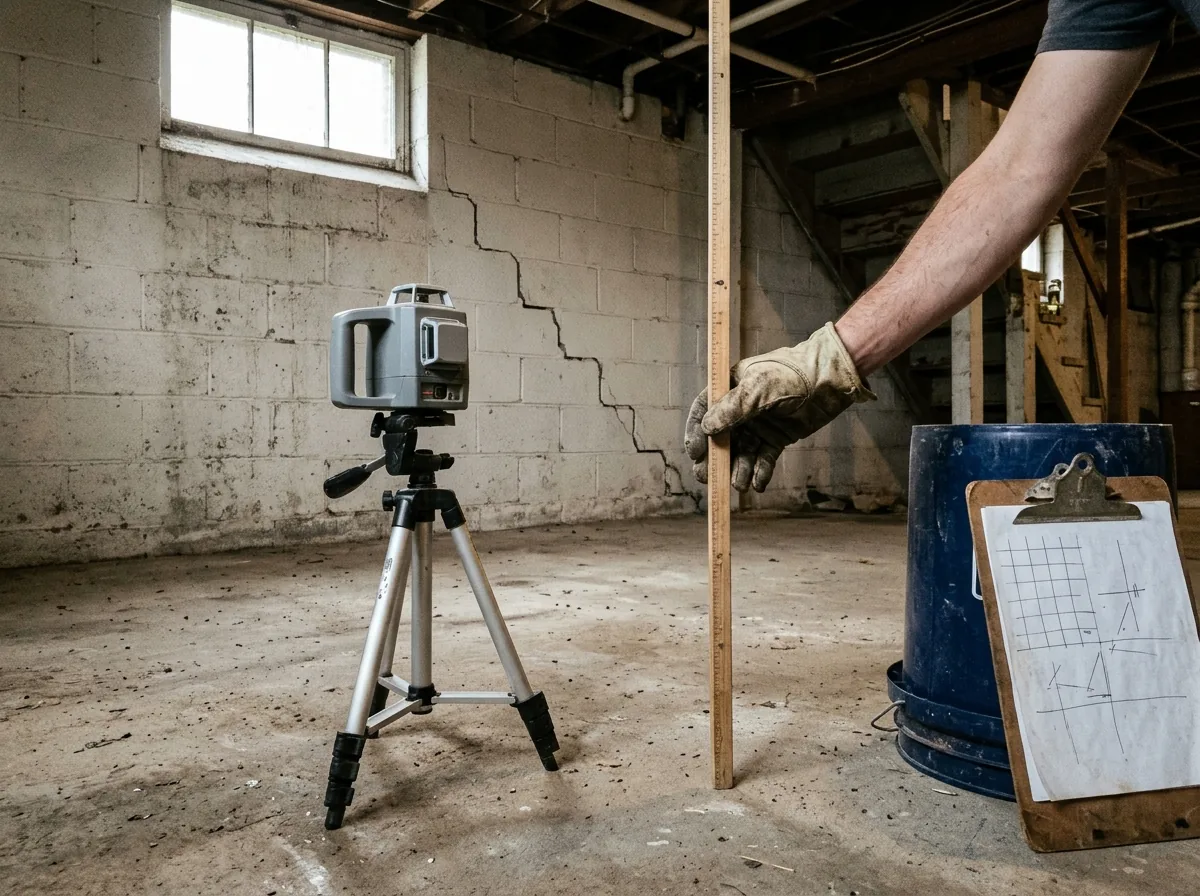
When the cracks all lead to one corner, the pier plan can stay small. A wall that dropped along its length, or a house sinking on two sides, needs a full line of piers. HomeGuide's ranges show how fast the count drives the bill:
- 5 to 8 piers (moderate settlement): $6,000 to $25,000.
- 8 to 10 or more piers (severe settlement): $10,000 to $30,000 or more.
- 15 or more piers across several areas: $15,000 to $45,000 in Angi's numbers.
Why Topeka homeowners and property owners call Topeka Expert Foundation Repair
- The call and the inspection request cost you nothing
- Your details go to one Topeka contractor, never a lead list
- Ask for piers, anchors and price on paper before any digging
- Method explained first: piers, anchors, straps or mudjacking
Foundation Pier Costs: What Moves the Quote
Labor is most of the bill. Angi estimates it at about 80% of an underpinning job, so the things that slow the crew down matter more than the steel.
Access
Trees, decks, fences and tight side yards can force hand digging instead of a small excavator.Foundation type
A pier-and-beam house over a crawl space is usually the cheapest to underpin. Basements and slabs need deeper or wider digging.Soil
Dense clay is slower to dig than sandy soil, and Angi notes that clay can call for more piers.Depth
Some quotes charge extra past a standard pier depth; the homepage explains the depth clause.Engineering
A larger job may need an engineer's plan. Foundation inspection covers when one is needed and what it costs.
Piers are structural work, so expect a city permit (permit rules are on the homepage).
Questions to Ask Before Foundation Piers Go In
Ask for the pier log
One pier system's ICC-ES evaluation report has an inspector check each pier's planned and actual depth and its driving pressure. Ask for that record, plus photos of the brackets before backfill.Ask whether the plan is to stabilize or lift
Engineers' guidelines say repairs can't make a house perfect. House leveling explains which cracks and doors tend to close after a lift.Ask whether helical piers were considered
They screw in rather than push, and they suit lighter loads; helical piers has the cost comparison.Ask what happens to the water
A footing that sank next to a downspout will keep getting wet; basement waterproofing starts with grading and downspouts.Ask whether the warranty transfers to a buyer,
and get it in writing (warranty norms are on the homepage).
See house leveling if the floors upstairs are already out of level.