
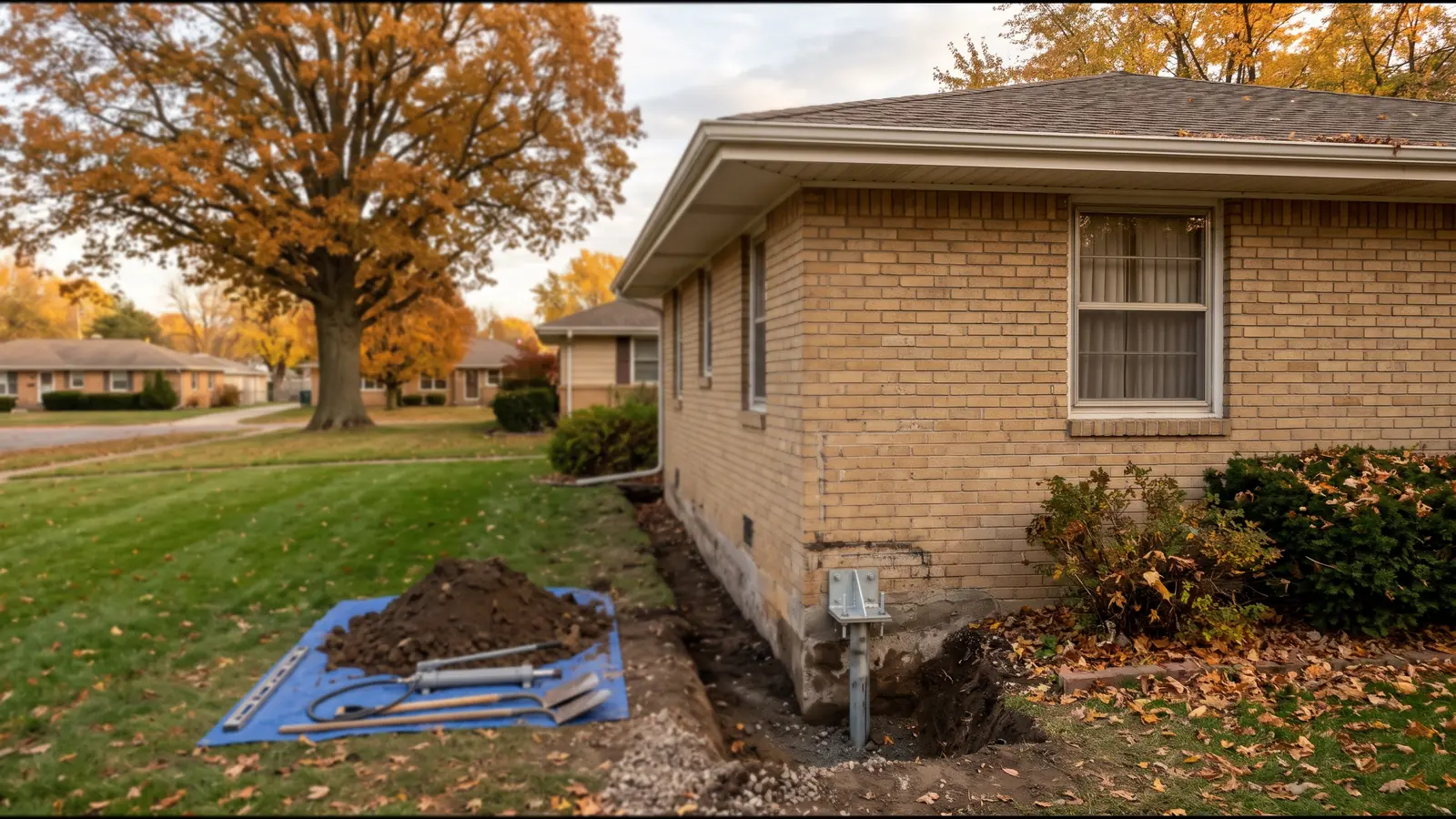
Crawl Space Encapsulation Parts and What Each One Does
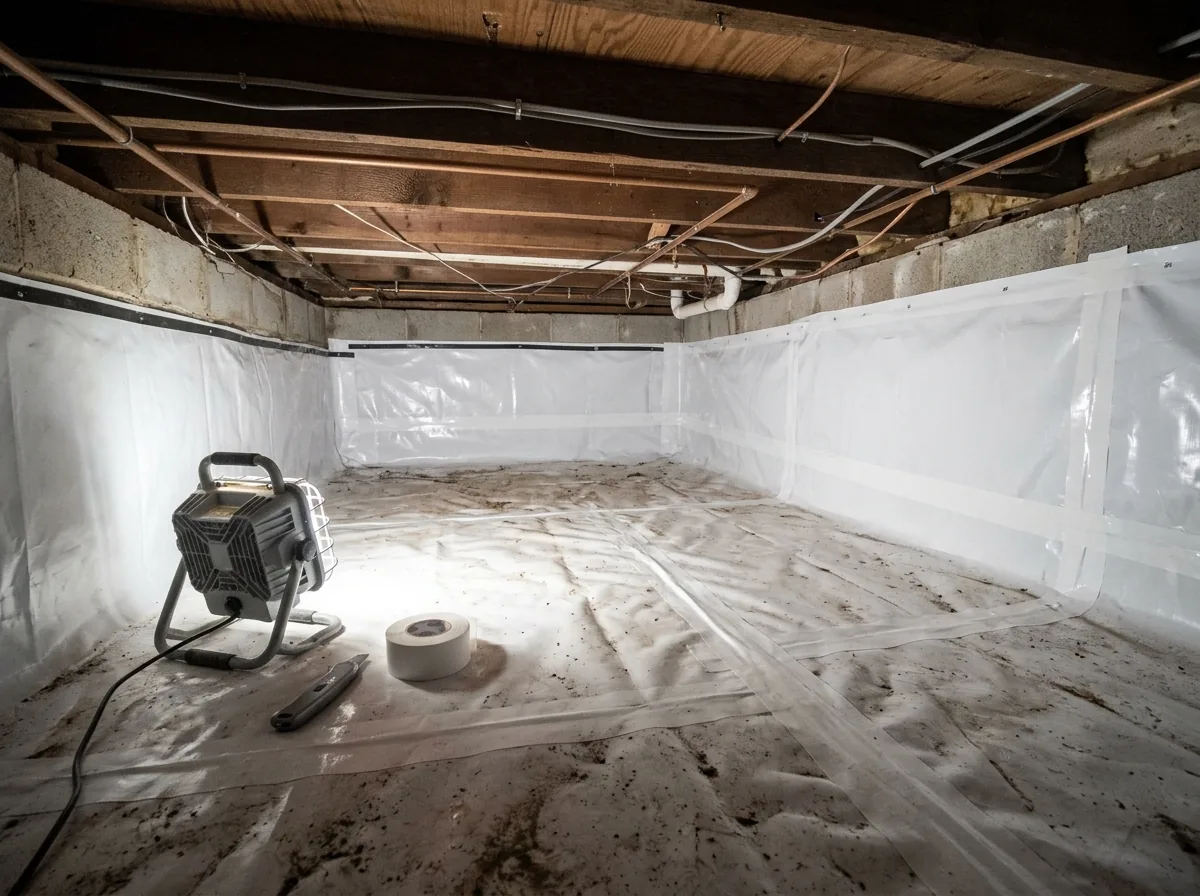
Vapor barrier liners
The liner is the base of the job. It covers the dirt so ground moisture can't rise into the floor framing. Topeka builds to the 2021 IRC, and its rules for an unvented crawl space are specific:
- Material: a continuous Class I vapor retarder over all exposed earth.
- Seams: lapped at least 6 inches and sealed or taped.
- Edges: run at least 6 inches up the stem wall and sealed to the wall or its insulation.
- Installed cost: about $2 to $4 a square foot, or $1,200 to $4,000 for the liner.
Ask for the liner thickness and how far up the walls it goes in writing. Thicker plastic costs more per roll, and HomeGuide notes that thicker barriers last longer.
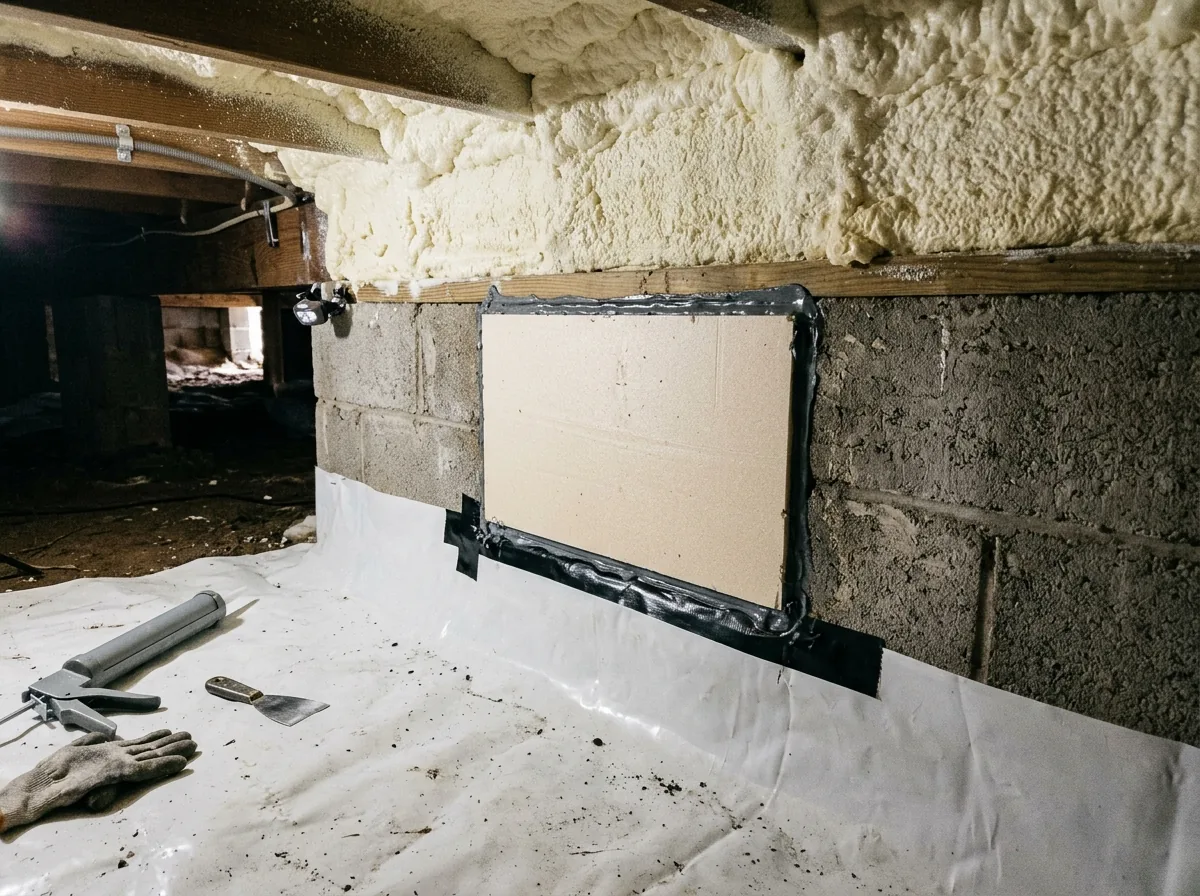
Sealed vents and rim joists
A vented crawl space is built with about 1 square foot of opening for every 150 square feet of floor. Encapsulation closes those openings and the gaps around pipes and wires; national guides put sealing vents and holes at $150 to $450. Closed-cell spray foam is one way to insulate the walls and the rim joist, the band of wood on top of the wall. For a 1,000-square-foot crawl space with 3-foot walls, foam on the walls runs about $850 to $2,100.
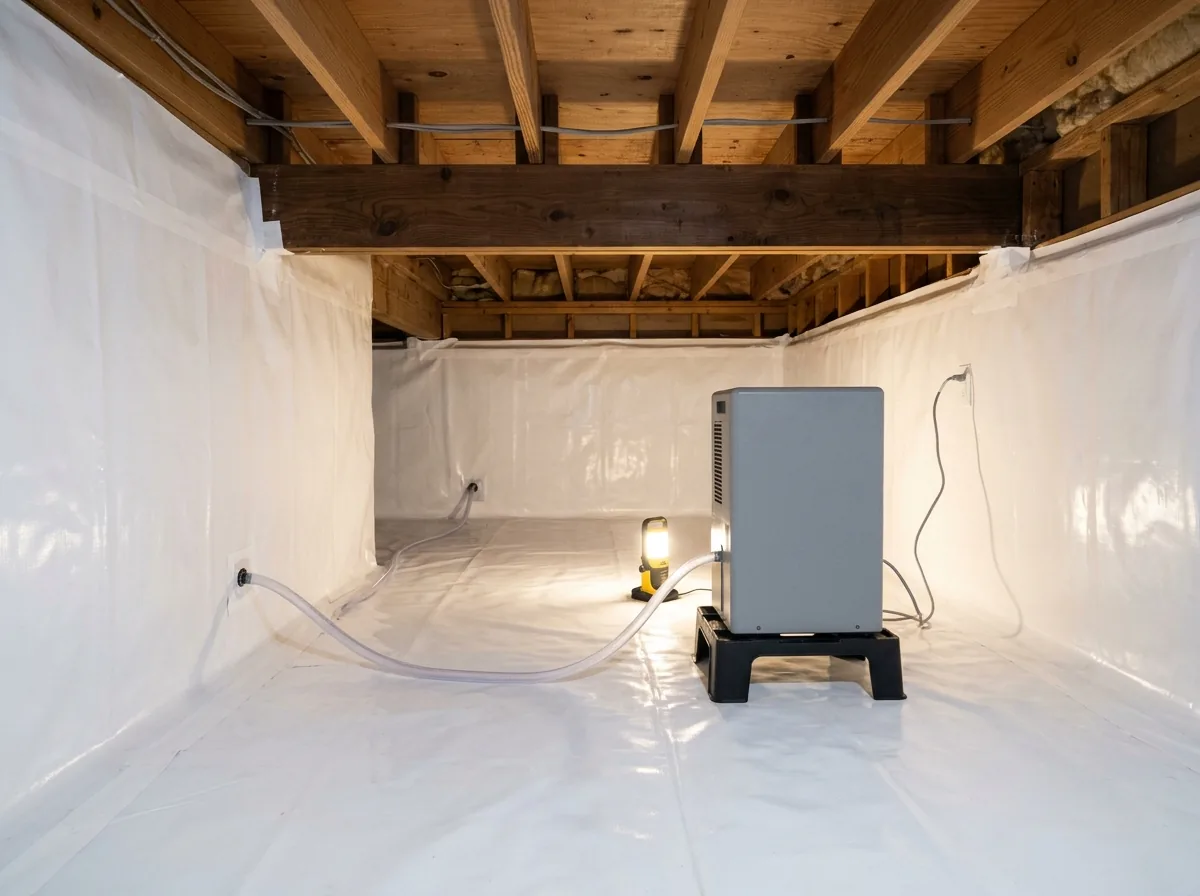
Crawl space dehumidifiers
Closing the vents means the air needs another way to stay dry. The code accepts one of these: continuous exhaust at 1 cubic foot per minute for every 50 square feet of floor, conditioned air supplied at that same rate, or a dehumidifier sized to the manufacturer's specifications. The unit alone costs $300 to $2,000, and it's $1,000 to $3,000 installed. Ask where its condensate drains.
Crawl space drains and sump pits
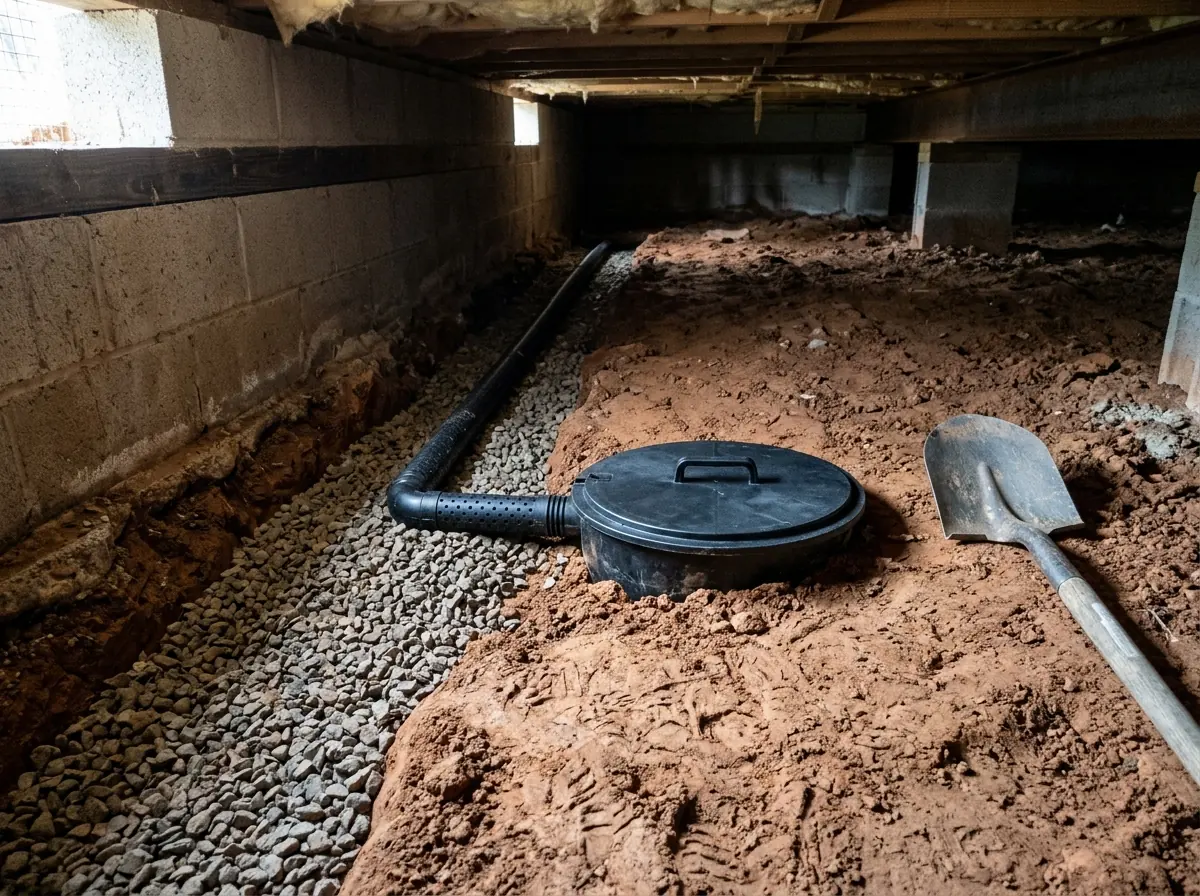
Where water seeps in or the water table sits high, HomeGuide recommends a perimeter drain to a sump before the plastic goes down. National guides price an interior crawl space drain at $2,000 to $8,000, less than a basement drain because the trench goes through dirt instead of concrete. The pit, the pump and where it discharges are covered under sump pump installation.
Why Topeka homeowners and property owners call Topeka Expert Foundation Repair
- The call and the inspection request cost you nothing
- Your details go to one Topeka contractor, never a lead list
- Ask for piers, anchors and price on paper before any digging
- Method explained first: piers, anchors, straps or mudjacking
Crawl Space Encapsulation Cost by Square Footage
HomeGuide's ranges for a full job, by crawl space size:
| Crawl space size | Full encapsulation |
|---|---|
| 1,000 square feet | $3,000 to $10,000 |
| 1,500 square feet | $4,500 to $15,000 |
| 2,000 square feet | $6,000 to $20,000 |
An inspection beforehand runs $100 to $250. Most quotes include light cleaning; mold, pests and standing water cost extra. Mold removal alone runs about $1,500 to $4,000 in a crawl space.
Before You Sign an Encapsulation Quote
Which code option
Ask whether the quote meets the unvented crawl space rule with a dehumidifier, an exhaust fan or conditioned air, and get it named on paper.Structure first
Sagging joists, rotted sills and posts on dirt should be fixed before the liner covers them. See crawl space repair.Access
The code wants a floor hatch of at least 18 by 24 inches or a wall opening of at least 16 by 24 inches. Ask how the access will be sealed without being blocked.Radon
Radon systems for crawl spaces work much like the sub-slab kind, so test before the liner goes in; radon mitigation has the numbers.Paperwork
Ask for the liner spec, the dehumidifier model, and whether the warranty transfers to a buyer.
See French drain installation when the water is coming from the yard toward the house.