
Helical Piers for Old Footings, New Additions and Decks
The same steel shaft does three different jobs around Topeka houses. What changes is what it's attached to and how much digging comes first.
Retrofit Helical Piers Under an Existing Footing
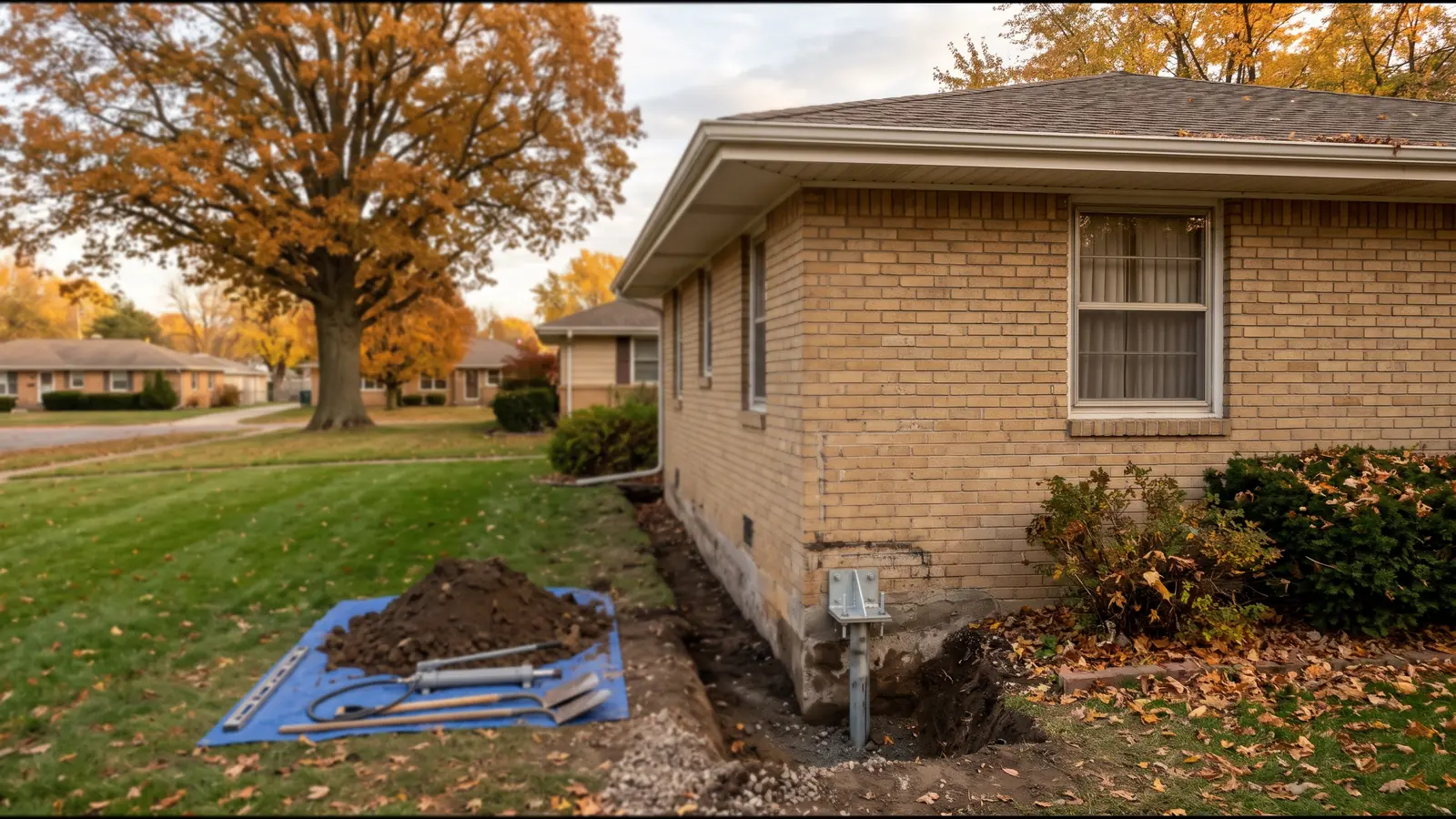
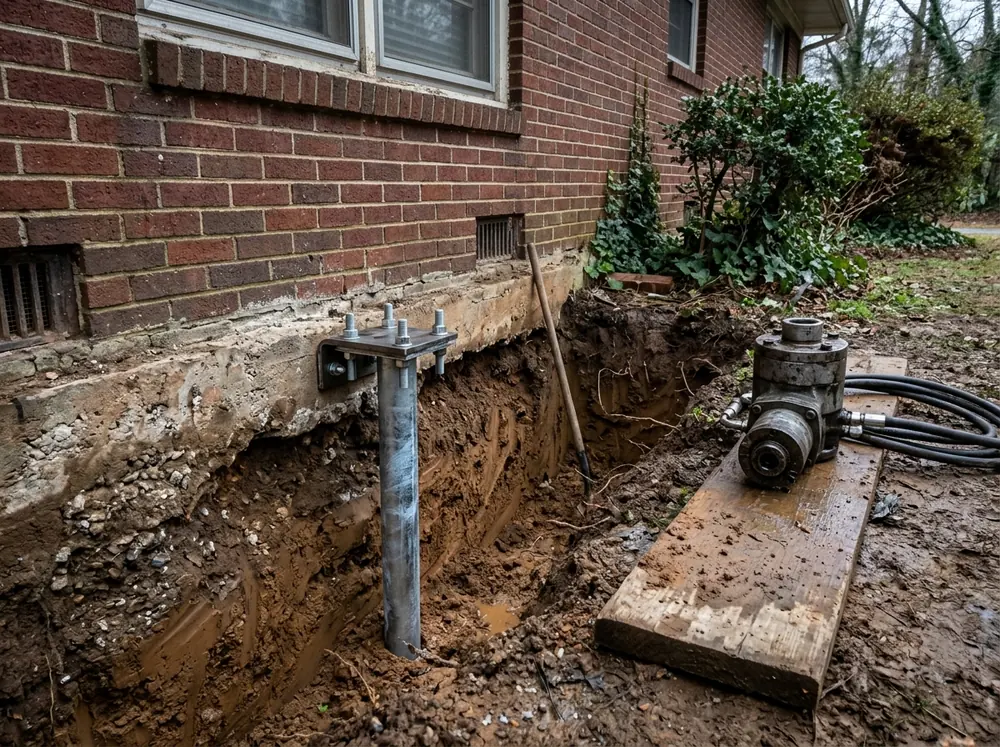
This is the repair job: a corner or wall line has settled, and the footing needs something under it that won't move. A pit is dug at each pier spot down to the bottom of the footing. The shaft is screwed in beside it, extension sections are added as it goes down, and a bracket under the footing transfers the house load onto the steel.
- Per pier: $2,000 to $4,000 installed, most near $3,000. Forbes splits it as $1,500 to $2,000 for parts and $1,000 to $1,500 for labor.
- Tight spots: piers dug by hand because a machine can't reach run $200 to $500 more each.
- Things in the way: a deck, patio or landscaping over the pier line may have to come up first, so ask whether putting it back is in the price.
New Helical Piles for Additions and Garages
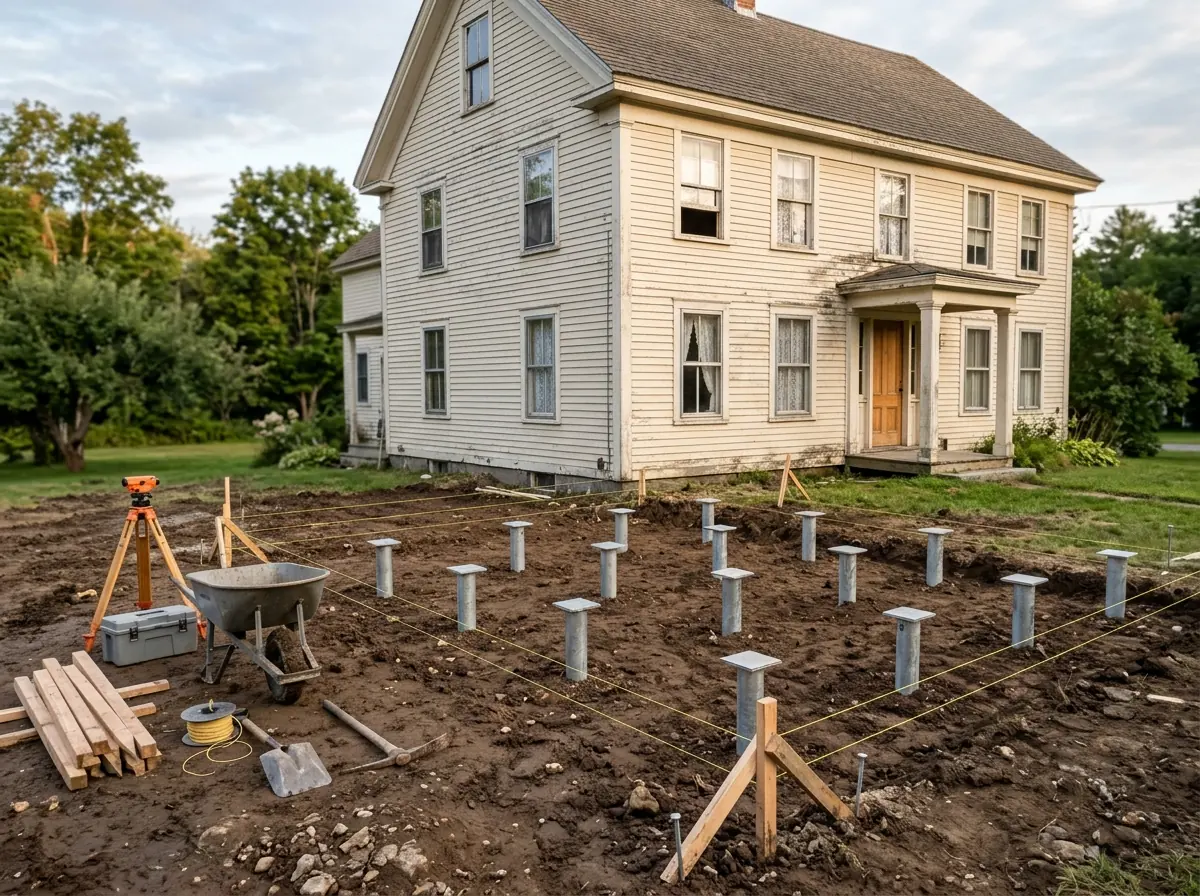
On new work there's no old footing to dig beside, which is why cost guides say helical piles cost much less for new construction than for underpinning. The piles go in first and the addition's beam or grade beam sits on their caps. Concrete footings need several days of dry weather to dig and pour; helical piles don't depend on the weather.
Topeka's amended code still expects continuous concrete footings, but it allows other approved engineered systems that carry the loads. So a helical layout for an addition is an engineered design the city has to approve. Footings also have to sit below the city's 36-inch frost line, so the homepage is worth a read on why Topeka soil moves.
Helical Piles for Decks and Porches
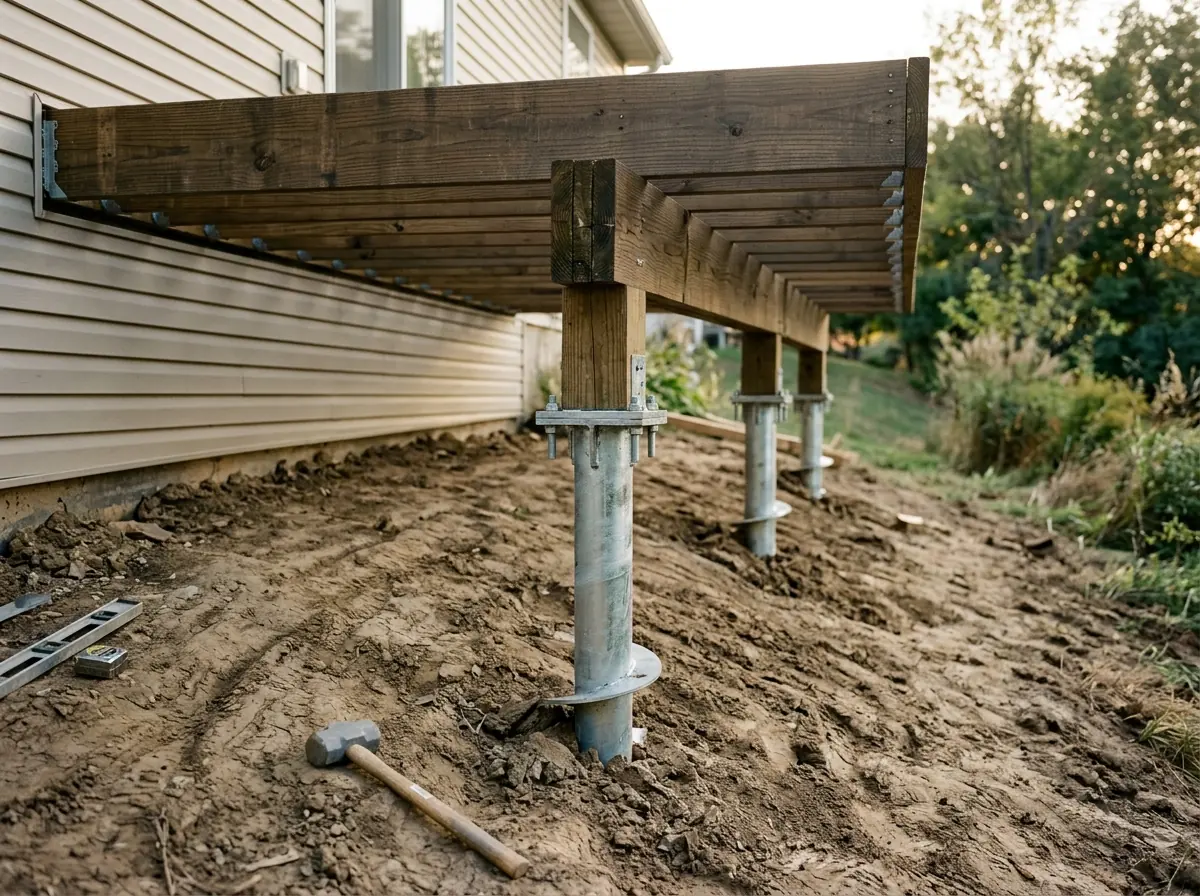
Decks and porches are the cheapest helical work: about $300 to $500 a pile installed, and a small deck may only need three. Guides like them on sloped lots where pouring concrete footings would be awkward. A front porch that has dropped away from the house is the same job on a smaller scale. Some piles get an augered hole and a concrete cap, which slows the install a little.
Why Topeka homeowners and property owners call Topeka Expert Foundation Repair
- The call and the inspection request cost you nothing
- Your details go to one Topeka contractor, never a lead list
- Ask for piers, anchors and price on paper before any digging
- Method explained first: piers, anchors, straps or mudjacking
Helical Pier Capacity: Ask to See the Torque Log
A helical pier's best feature is that its capacity is measured while it goes in. The International Building Code sets a helical pile's working load from the lowest of several checks: plate bearing on the soil, correlations with installation torque, load tests, and the strength of the shaft, couplings and plates. The evaluation criteria pier makers certify against put the torque rule in one line: ultimate capacity equals a factor (Kt) times the final torque, and the allowable load is half of that.
Kt by shaft
10 for 1.5- and 1.75-inch square shafts, 9 for 2.875-inch round, 8 for 3-inch round, 7 for 3.5-inch round.Worked example
a 2.875-inch round shaft finishing at 5,000 ft-lb gives 45,000 lb ultimate and 22,500 lb allowable.Soil report
a geotechnical report runs about $1,000 to $5,000 and sets the depth and torque targets when the soil isn't well known.
So ask for an install log with each pier's final torque and depth. If a pier stopped short of its target torque, you want to know why before the pit is backfilled.
Helical Piers or Push Piers: What Decides It
Helical piers are screwed in rather than pushed down against the house's weight, so they suit porches, additions, decks and lighter loads. Cost guides list rocky soil and very heavy loads as poor fits, and some local codes restrict them. A heavy two-story house on rock-studded ground is push pier territory. Angi's per-pier averages run about $1,000 more for helical than for push piers.
A few quote checks that apply either way:
Depth clause
HomeGuide lists $20 to $25 or more per extra foot and Forbes $25 to $35, so ask for a no-depth-clause price.Digging and locates
Exterior pits mean utility locates first; the basement wall replacement page has the Kansas 811 rules.Warranty
Ask whether it transfers to a buyer, and compare it with the norms listed on the homepage.
See foundation piers when the house is heavy enough that push piers driven to rock make more sense.