
Stone Foundation Repair Types for Older Houses
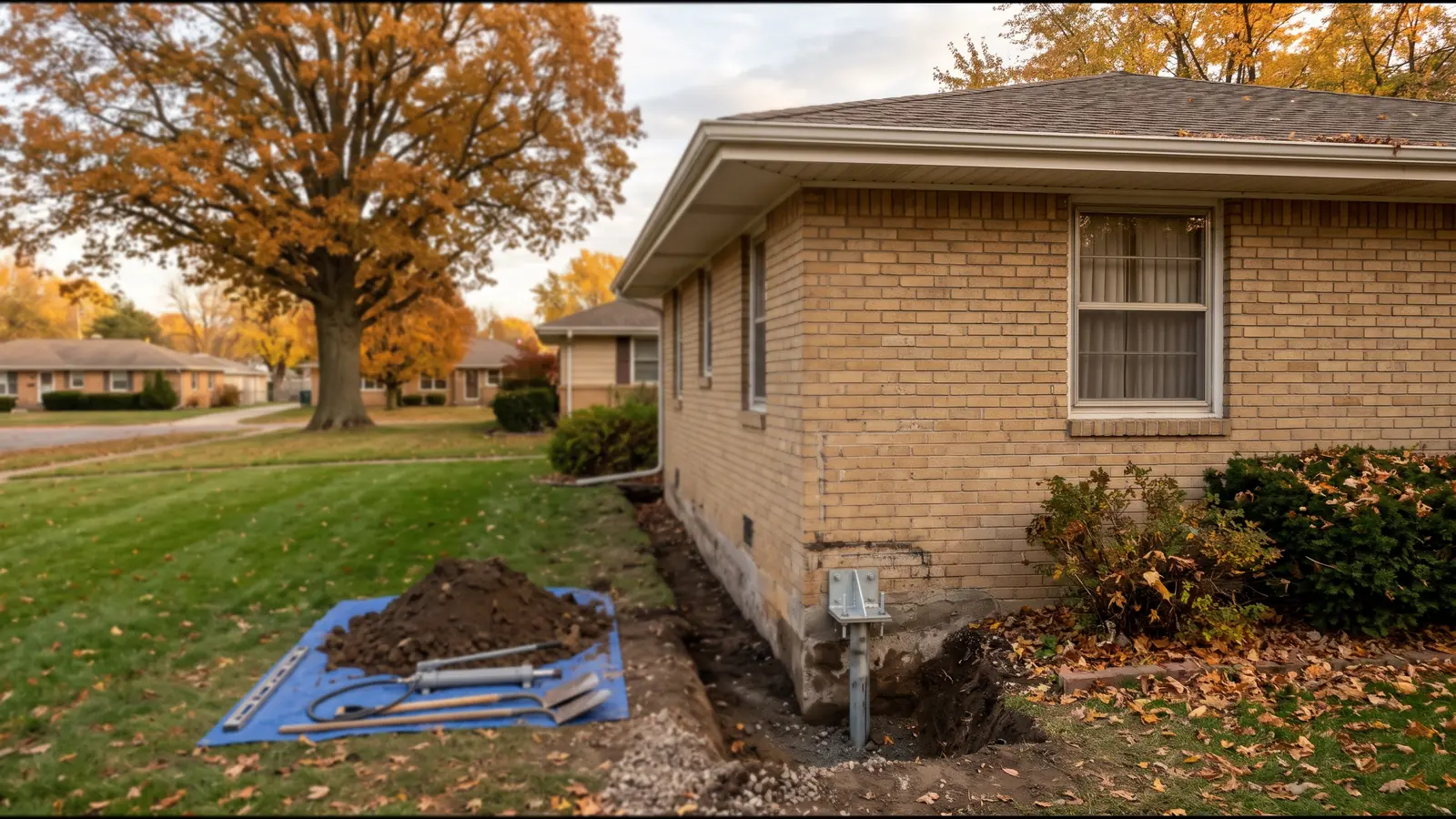
Stone has been a Kansas building material since the earliest settlers, the Kansas Geological Survey says, mostly limestone, with glacial boulders used in some structures. Topeka's oldest houses, the ones from before 1940 that the homepage counts, are where these foundations turn up.
Limestone and Fieldstone Repointing
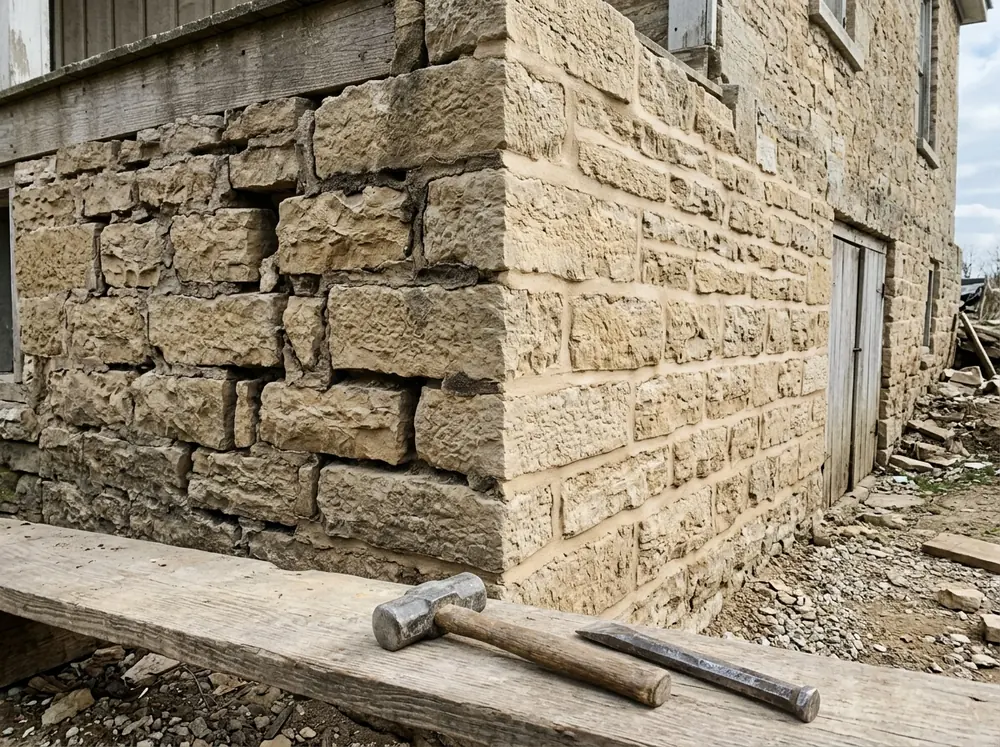
Repointing works only on the joints: old mortar is raked out and new mortar packed in, while the stone itself stays put. The Park Service's guide is specific about how:
- Mortar strength: softer and more vapor-permeable than the stone, and no harder than the original mortar.
- Old mortar: before about 1930 it ranges from pure lime and sand to mixed lime and Portland cement; straight Portland cement mortar is very hard and shrinks as it sets.
- Raking out: to 2 to 2-1/2 times the joint width; on wide stone joints that can be several inches.
- Tools: hand chisels and mash hammers do the least damage; power tools in unskilled hands can wreck old masonry.
- Weather: wall temperatures between 40 and 95 degrees F, so the mortar neither freezes nor dries too fast.
Because the joints between irregular stones curve, masons chisel them out by hand, and HomeGuide says that's why stone repointing costs more than brick. Ask for a small test patch somewhere out of sight before the whole wall is done.
Rebuilding Loose or Bulging Stone Sections
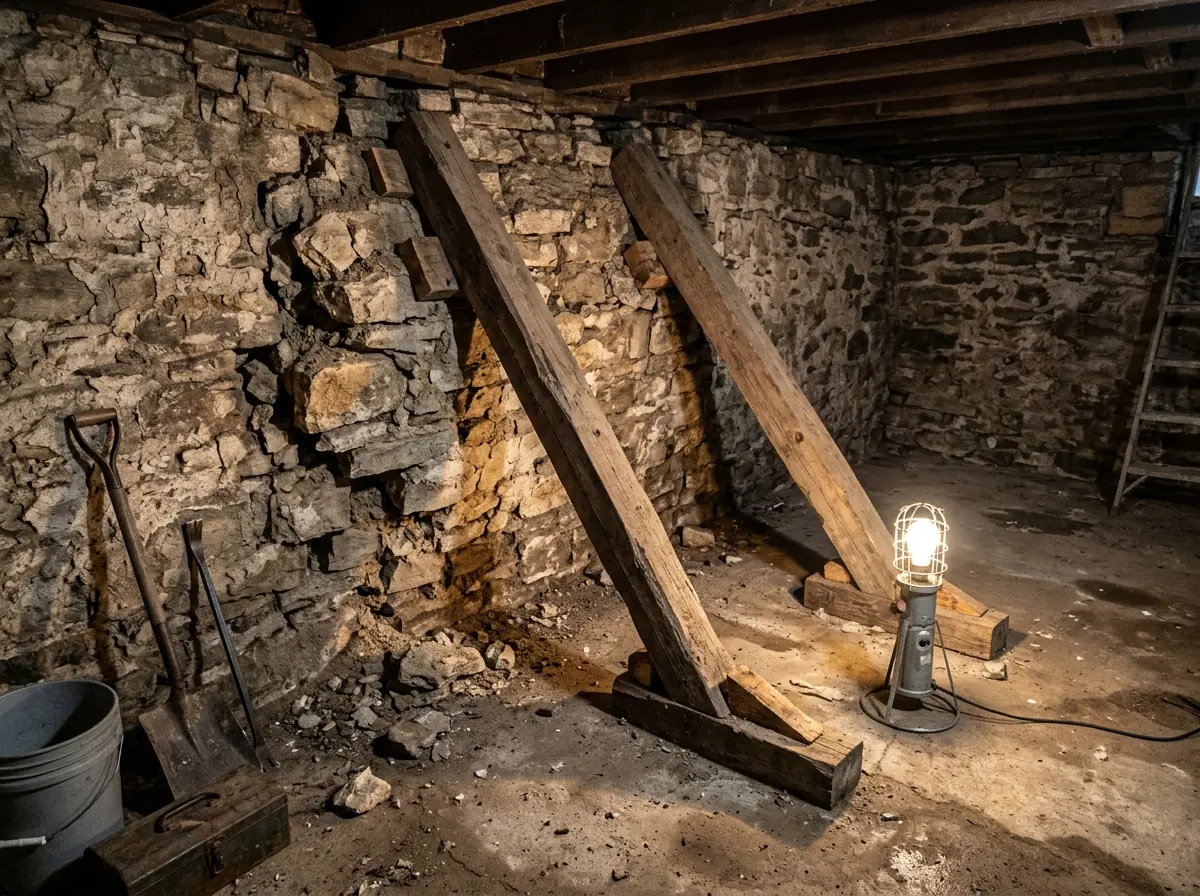
Loose stones and a wall that bellies inward are the signs that a stone foundation needs more than new mortar. HomeGuide notes that repairing stone walls means custom bracing and sometimes steel tiebacks, because of the wall's irregular structure. Sometimes the section has to come down and be relaid. Ask how the contractor will match the stone and the mortar, and how the house is carried while the section is out. The basement wall replacement page covers shoring.
Parging and Sealing Stone Walls
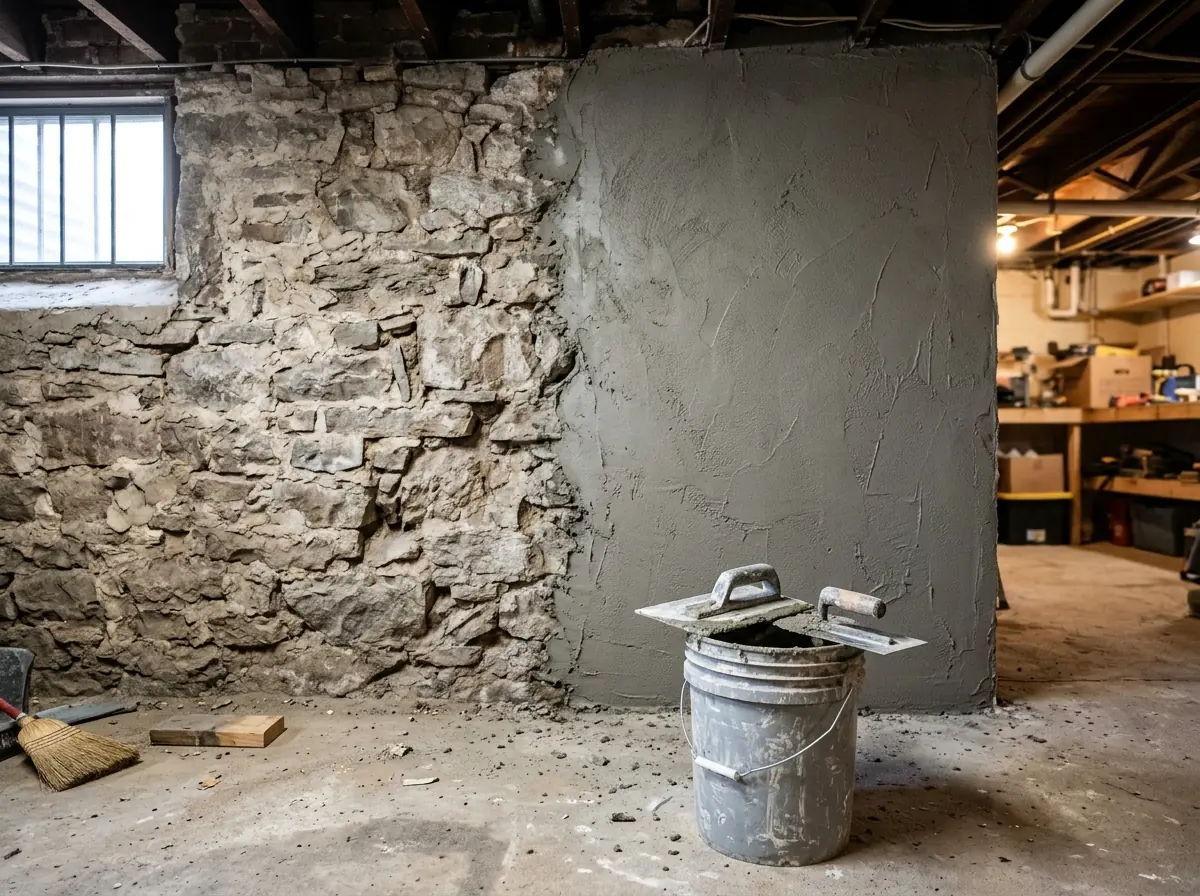
Parging is a coat of mortar troweled over the face of a wall. For new masonry foundation walls, the 2021 residential code Topeka uses calls for at least 3/8 inch of Portland cement parging on the outside, with a dampproofing coat over it. An old stone wall is a different case. The Park Service's test for repointing mortar (soft, permeable, no harder than the original) is a fair test for a parge coat too, so ask what the parge is made of. HomeGuide also points out that leaks and large cracks should be fixed before repointing or parging, not hidden under it.
Brick Foundations and Brick Piers
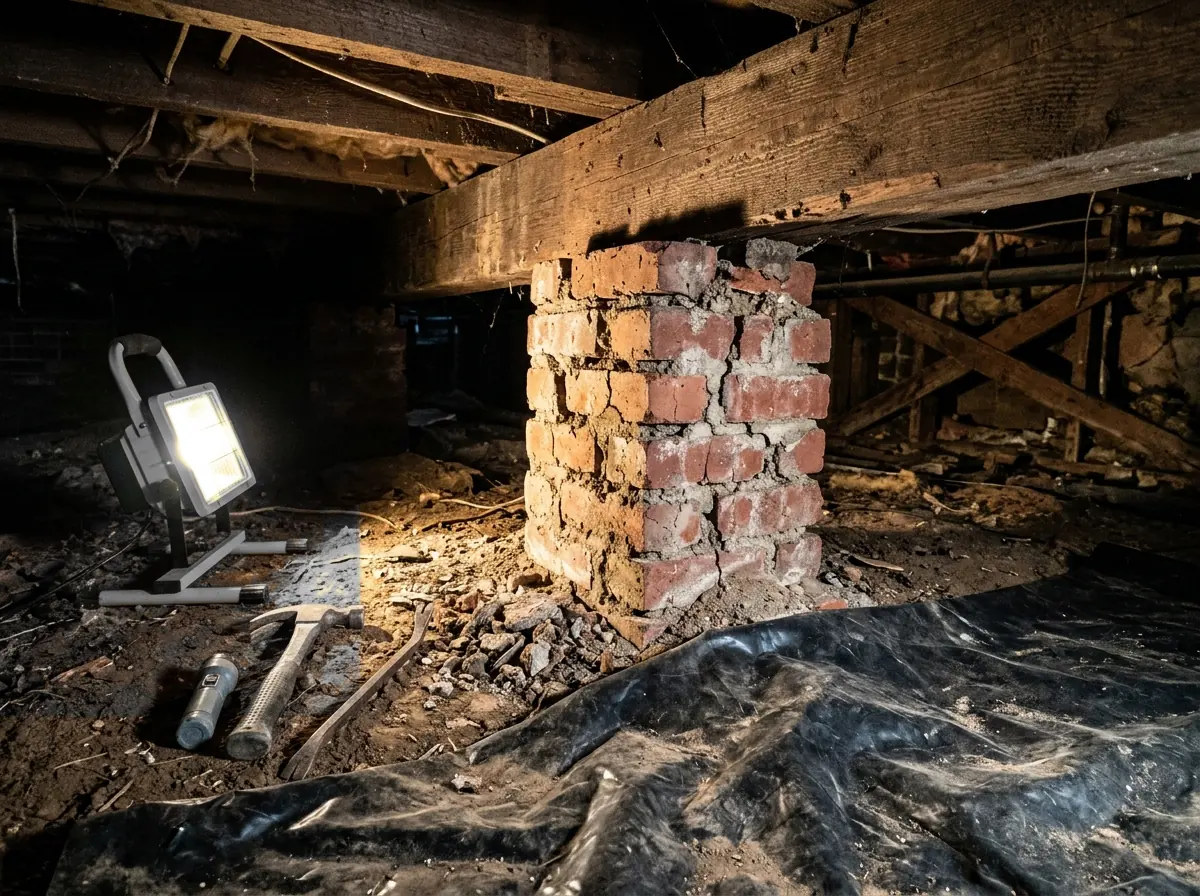
Brick foundations get the same treatment as stone: repointing, plus replacing bricks that have cracked. Brick piers under porches and crawl spaces are a separate cost line.
- Brick or stone piers: $2,500 to $5,000 to restore, because the new brick or stone has to match the old.
- Concrete block piers: $1,000 to $4,000, since blocks can be shimmed or swapped one at a time.
Steel support posts are the other route under a crawl space; the crawl space repair page covers them.
Why Topeka homeowners and property owners call Topeka Expert Foundation Repair
- The call and the inspection request cost you nothing
- Your details go to one Topeka contractor, never a lead list
- Ask for piers, anchors and price on paper before any digging
- Method explained first: piers, anchors, straps or mudjacking
Stone Foundation Repair: Questions for the Mason
Old foundations punish shortcuts. Before work starts, ask the contractor for:
The mortar mix
By type or by proportion, such as Type O (1:2:9) or Type K (1:3:11). "Matched to the existing" is not an answer.A test panel
In a hidden spot, cured, so you can see color and joint shape.What's behind the problem
Where the water or movement comes from, and what fixes it before the new joints go in.The pier or brace plan
If part of the wall is moving, which method holds it and how it fits the stone.The permit
Rebuilding a section is structural work; the homepage has Topeka's permit rules.
See basement wall replacement when a stone wall is too far gone to relay and has to be rebuilt in concrete.