
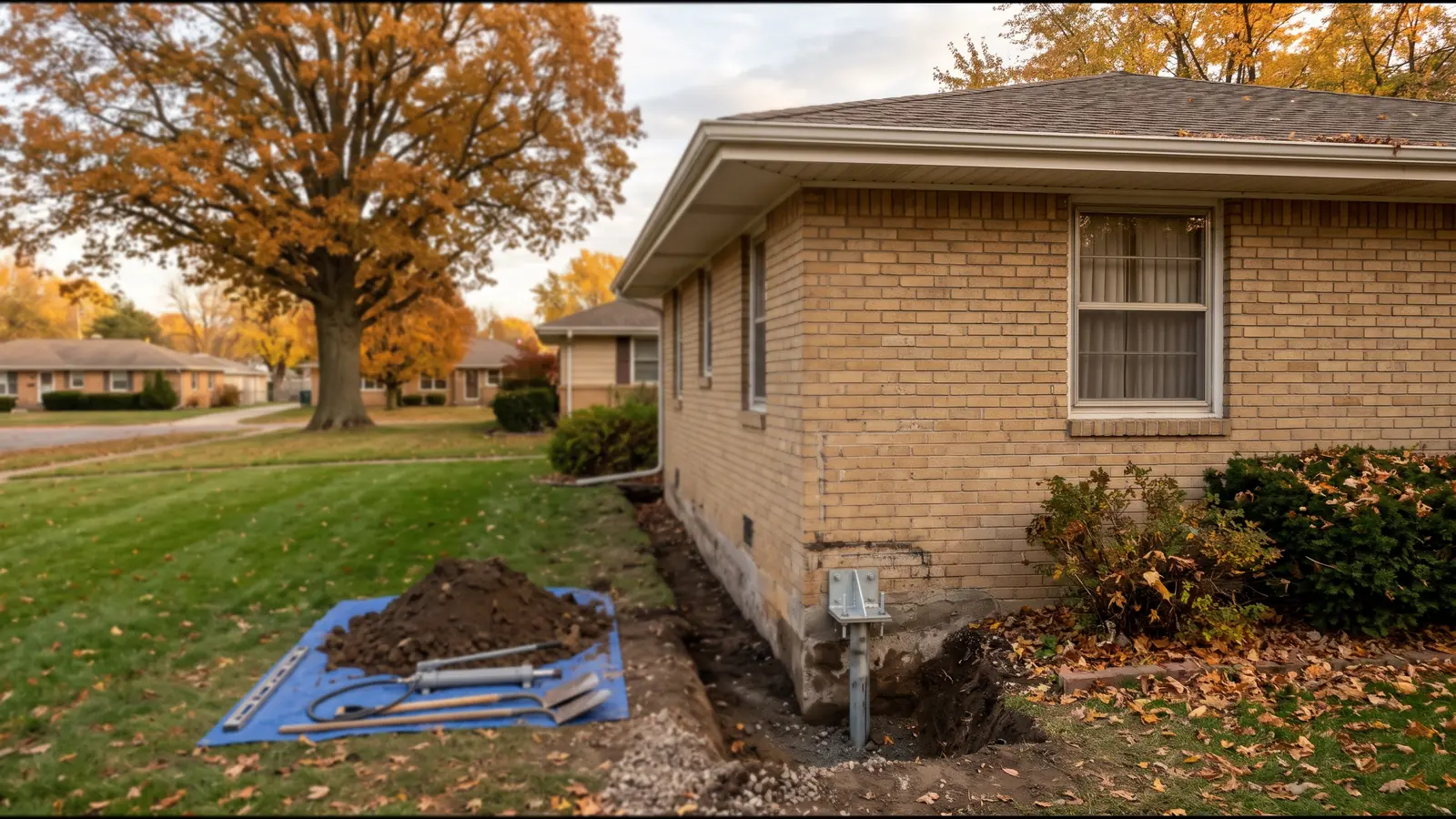
Retaining Wall Repair Types by Wall and Problem
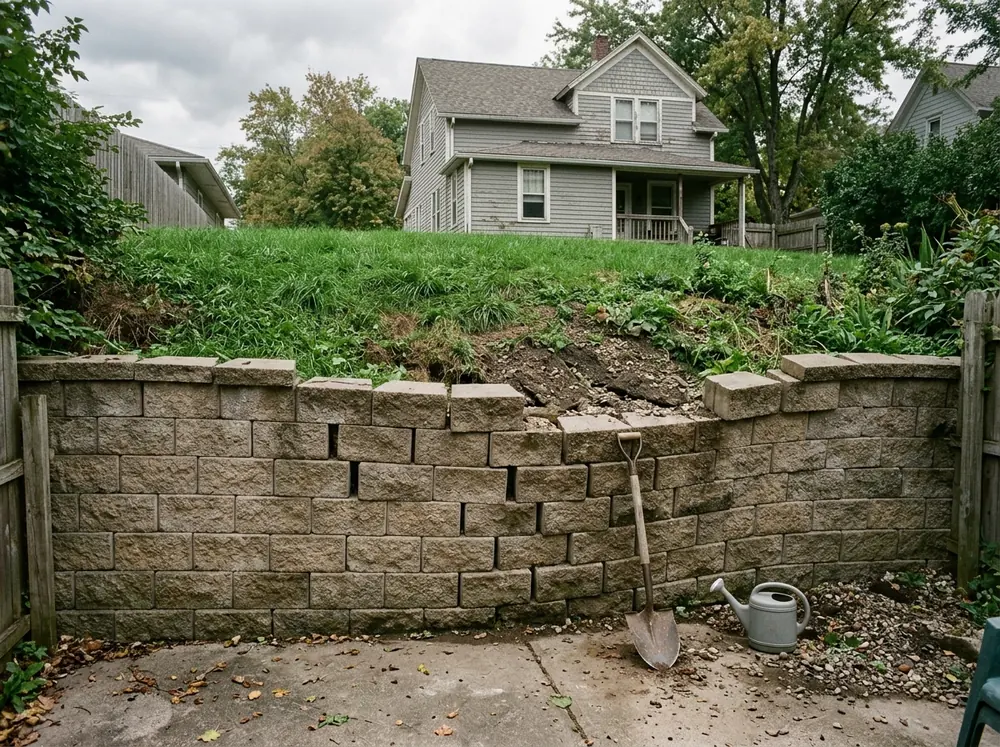
Leaning Block and Stone Walls
A block or stone wall that leans out at the middle has soil and water pushing harder than it was built for. Small sections can be reset, reinforced and straightened. Bigger ones get rebuilt. Cost guides suggest having an engineer look at a leaning wall before anyone fixes it, because the cause decides the repair.
- Reinforcing and straightening: $50 to $80 a square foot
- Replacing a block section: $15 to $55 a square foot
- Replacing a stone section: $10 to $85 a square foot
- Concrete or cinder block section: $20 to $45 a square foot
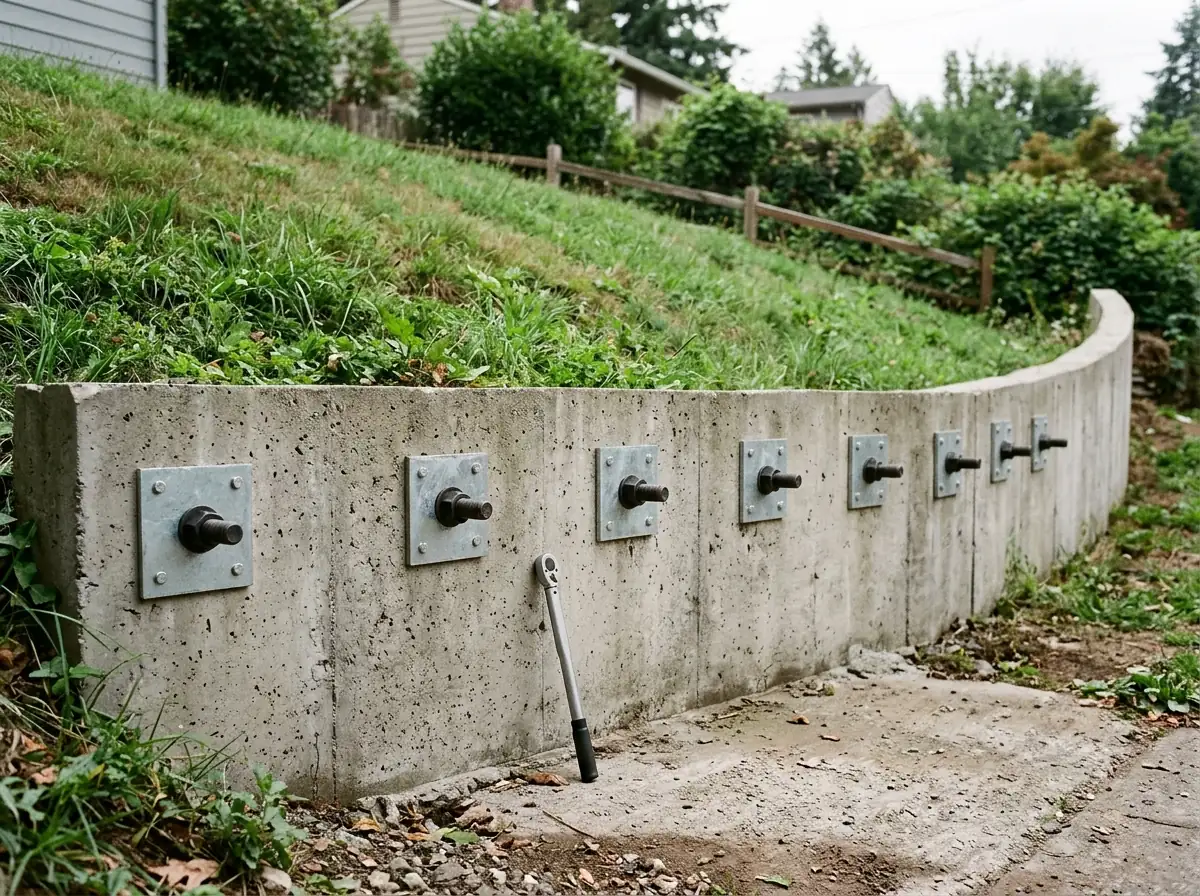
Tiebacks and Helical Anchors
Anchors stop a wall from tipping without tearing it down. Rods go through the wall into the soil behind it and lock onto an anchor out there, so the wall is held back from the slope it supports. Cost guides put this at $60 to $80 per square foot of wall. It works on a wall that's still in one piece. A wall that's coming apart block by block has nothing for the plate to hold. Any job that drills or digs behind the wall should start with a utility locate; the basement wall replacement page explains the call to make first.
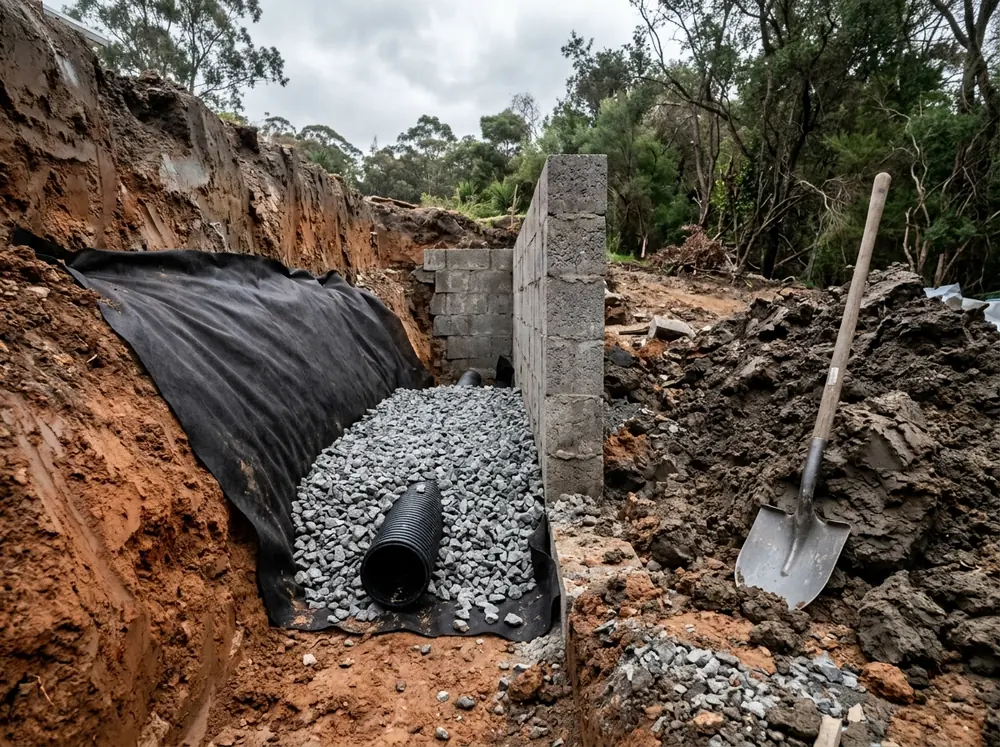
Drainage Behind the Wall
Cost guides list added drainage as a fix for nearly every retaining wall problem: leaning, seeping, cracking, white salt stains and footing trouble. Clay behind a wall holds rain and swells, and without a way out that water and soil press on the back of the wall. The fix is a drain pipe at the base, clean gravel backfill, and weep holes through the face so water can get out. Cost guides list adding drainage at $50 to $80 a square foot. If a quote straightens the wall and puts the same clay back behind it, expect to see it lean again.
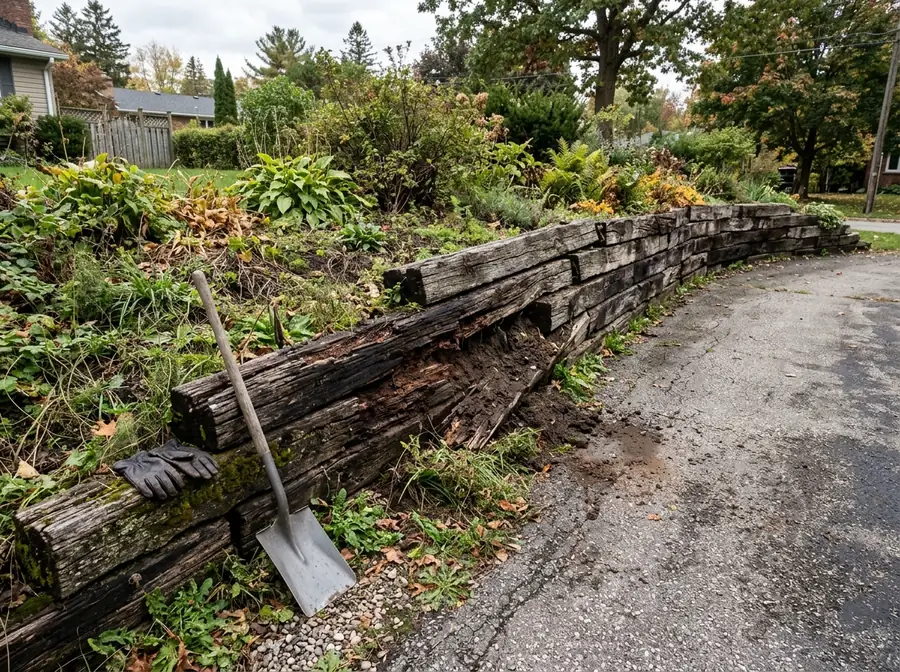
Timber and Railroad-Tie Wall Replacement
Timber and railroad-tie walls rot from the ground up. Once the bottom ties are soft there's little left to anchor, and the run gets replaced, in new timber or in block or concrete.
- New wood or tie section: $10 to $40 a square foot
- Demolition and hauling: $10 to $20 a linear foot
- New wall: $40 to $300 a linear foot, depending on material and height
Why Topeka homeowners and property owners call Topeka Expert Foundation Repair
- The call and the inspection request cost you nothing
- Your details go to one Topeka contractor, never a lead list
- Ask for piers, anchors and price on paper before any digging
- Method explained first: piers, anchors, straps or mudjacking
Retaining Wall Permits and Engineers in Topeka
Topeka's code exempts retaining walls from a permit only when they're 4 feet tall or less, measured from the bottom of the footing to the top of the wall, and not supporting a surcharge. A surcharge is extra load on the soil above the wall, such as a driveway, a parked car, a slope, or a building. Measured that way, a wall that shows 3 feet above the lawn can easily be over the line once you count the buried part and the footing. Over 4 feet, or holding up a driveway, plan on a permit. The city's general permit and contractor license rules are summarized on the homepage.
Footings for a rebuilt wall have to sit deep enough that frost doesn't lift them; Topeka's frost depth is on the homepage too. Cost guides put new concrete footings at $18 to $55 a linear foot and engineers at $100 to $220 an hour.
Retaining Wall Quotes: What to Ask For
The cause, in writing
Drainage, a surcharge above, a footing that's too shallow, or rotted material. The method should match it.Drainage line items
Pipe, gravel and weep holes, or a reason they aren't needed.Height from the footing
So you know whether a permit applies.Repair versus rebuild price
Fixing a wall is usually far cheaper than replacing it, but not always on a wall that's failing in several places.A follow-up look
One cost guide suggests a wall inspection every 3 to 5 years, at about $150 to $300.
See wall anchors for the same anchor-and-rod idea used on a basement wall that's being pushed in.