
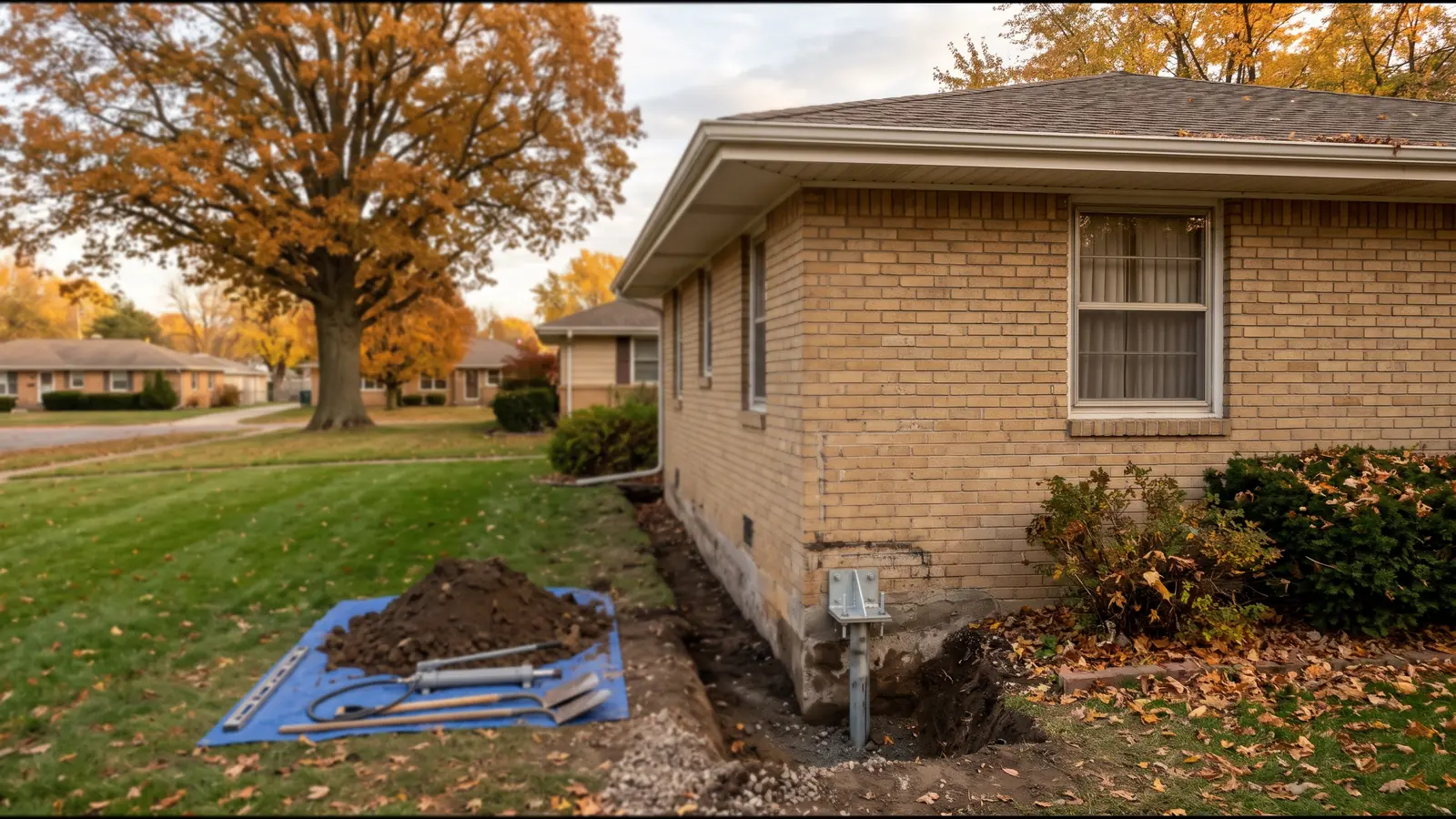
Leaning Chimney Repair Options, From Piers to Rebuild
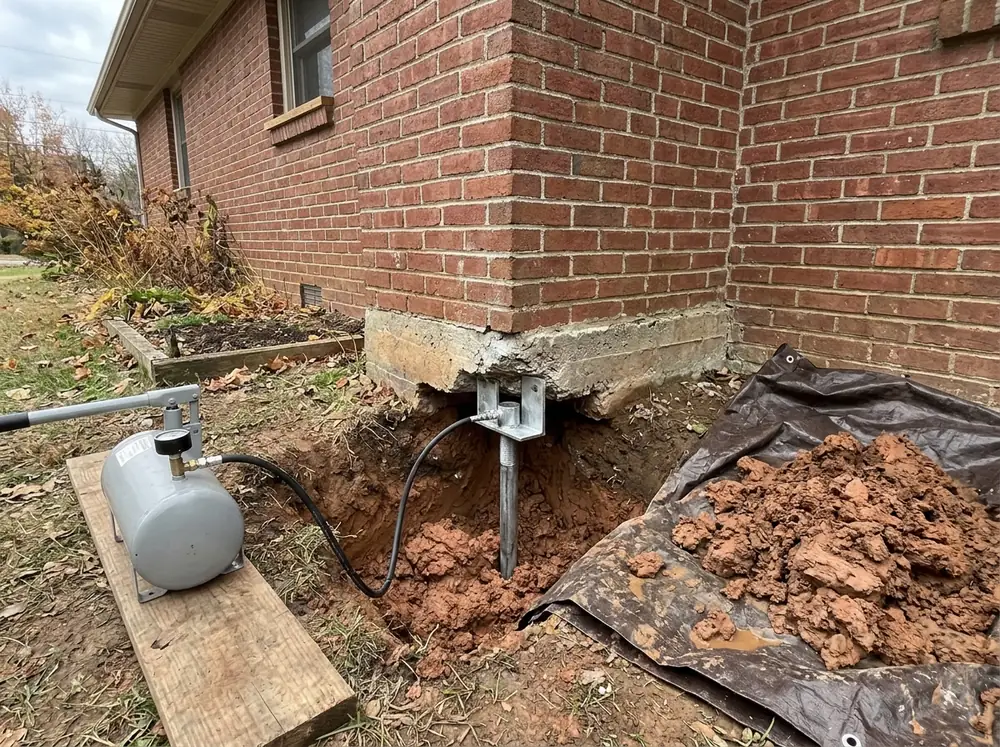
Piers Under the Chimney Footing
A masonry chimney puts its whole weight on a small concrete pad, often about 2 to 2-1/2 feet deep from the house wall and 5 to 6 feet wide. One side of that pad is tied to the house foundation. The outer side hangs on whatever soil is under it, and on Topeka clay that soil swells and shrinks with the seasons. Piers under the outer edge carry the footing down to firm ground. Digging under a loaded footing takes away some of the soil still holding it up, so ask for small pits and a pier crew that sets the piers the same day. Per-pier prices and depths are on the foundation piers page.
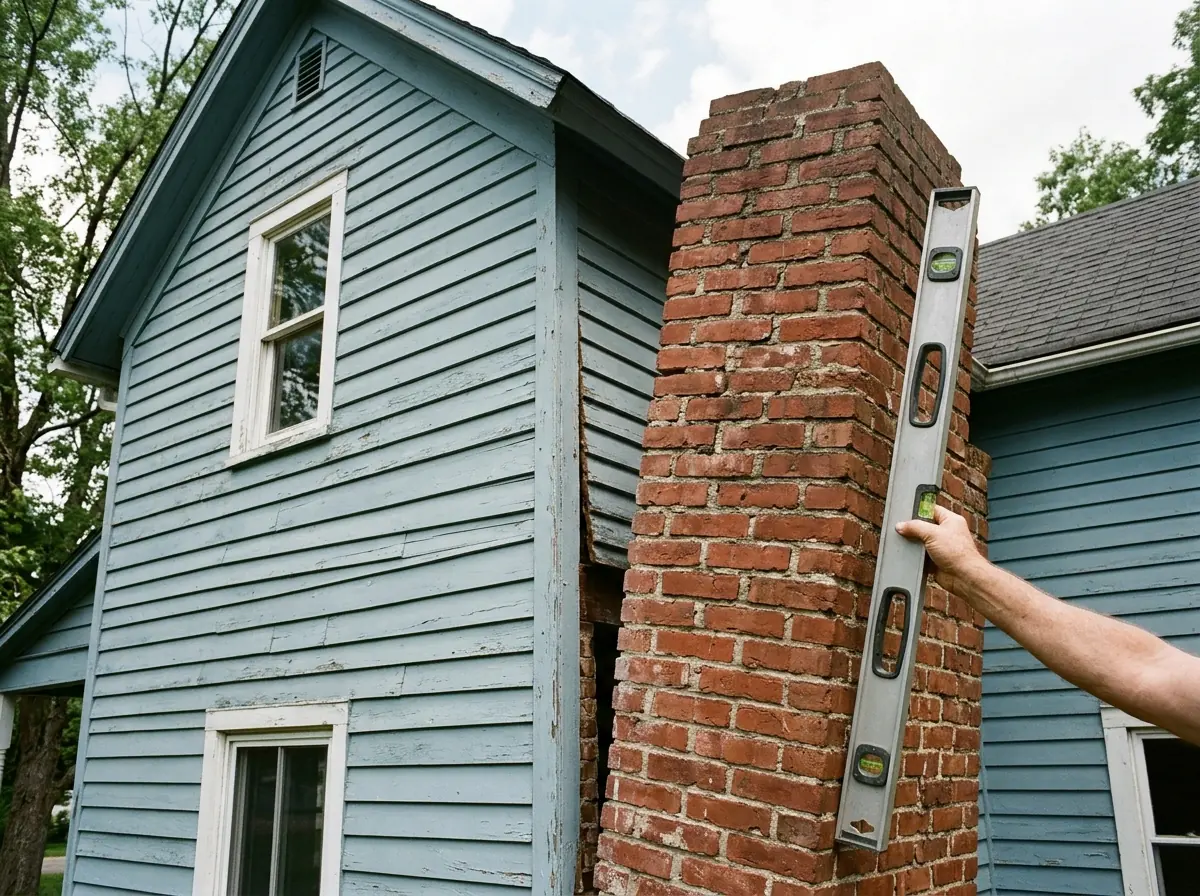
Pulling a Chimney Back to the House
Once the footing sits on piers, the outer edge can be lifted, which rotates the chimney back toward the wall and closes the gap. How many piers sit under it decides how that goes. Lift only the outer corners of a heavy chimney and its weight shifts back onto the house side of the footing, which is still on the old soil. That side can then settle, the chimney starts tipping inward, and the brick and flue crack horizontally. Ask the contractor to say in writing how the lift will be monitored and when they'll stop.
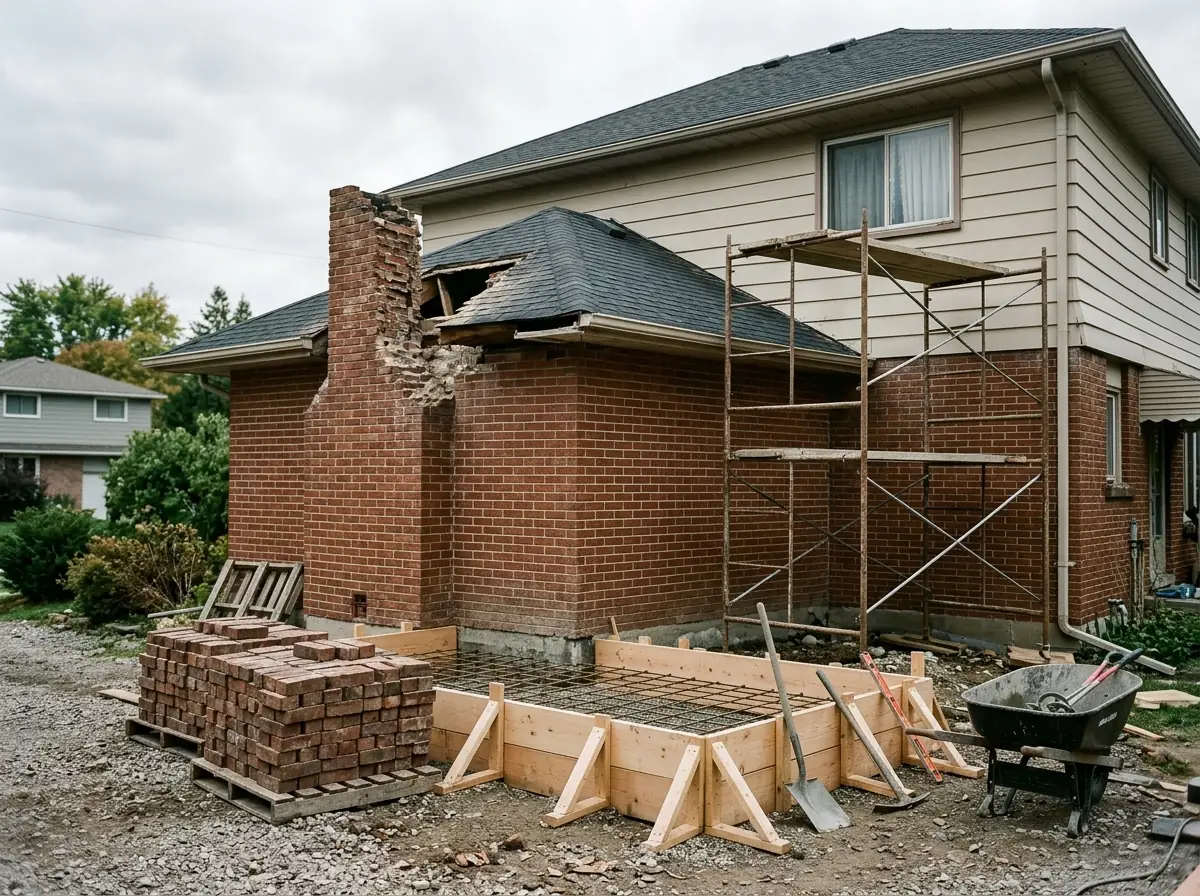
When the Chimney Has to Come Down Instead
A chimney that leans far, or whose mortar has washed out of the joints, may not survive a lift. Then it comes down and goes back up on a new footing.
- Partial rebuild: $1,000 to $5,000 or more
- Full rebuild or replacement: $4,000 to $15,000
A new footing must meet the code below. Ask whether the foundation contractor does the brickwork or brings in a mason, and who handles the flue liner and roof flashing.
Why Topeka homeowners and property owners call Topeka Expert Foundation Repair
- The call and the inspection request cost you nothing
- Your details go to one Topeka contractor, never a lead list
- Ask for piers, anchors and price on paper before any digging
- Method explained first: piers, anchors, straps or mudjacking
Leaning Chimney Piers: Two or Four
A footing that drops a quarter inch at its outer edge can tip a two-story chimney more than 3 inches at the top, according to one pier manufacturer's engineering notes. So a small settlement at the base shows up as a wide gap at the roofline.
Heavy all-masonry chimneys
Older two-story stacks with brick fireboxes and tile or firebrick flues are the heaviest. Engineers usually call for four piers.Chimney on its own footing
Look at the base for a cold joint, a seam where the chimney pad was poured separately from the house. If it's there, four piers regardless of height.One-story chimneys
Two piers at the outer corners can usually lift and rotate the stack in place.Lighter chimneys
A metal fireplace and steel flue inside a brick enclosure weighs far less. Two piers often do it.
A two-pier quote costs roughly half of a four-pier quote. On a tall solid-brick chimney it's the cheaper quote for a reason. Ask which type you have and why the pier count fits it.
Chimney Footing Code in Topeka
Topeka builds to the 2021 International Residential Code, and the city's amendments to the chimney chapter cover gas appliances and flue sizing, not footings. So the base rule stands: a masonry chimney footing is concrete or solid masonry at least 12 inches thick, extends at least 6 inches past the chimney on every side, and sits on undisturbed soil or engineered fill below frost depth. Topeka's frost depth and permit rules are on the homepage. On a rebuild, ask to see the footing dimensions on the plan before the concrete goes in.
See helical piers for the screw-in type that cost guides mention for chimneys with serious footing damage.