
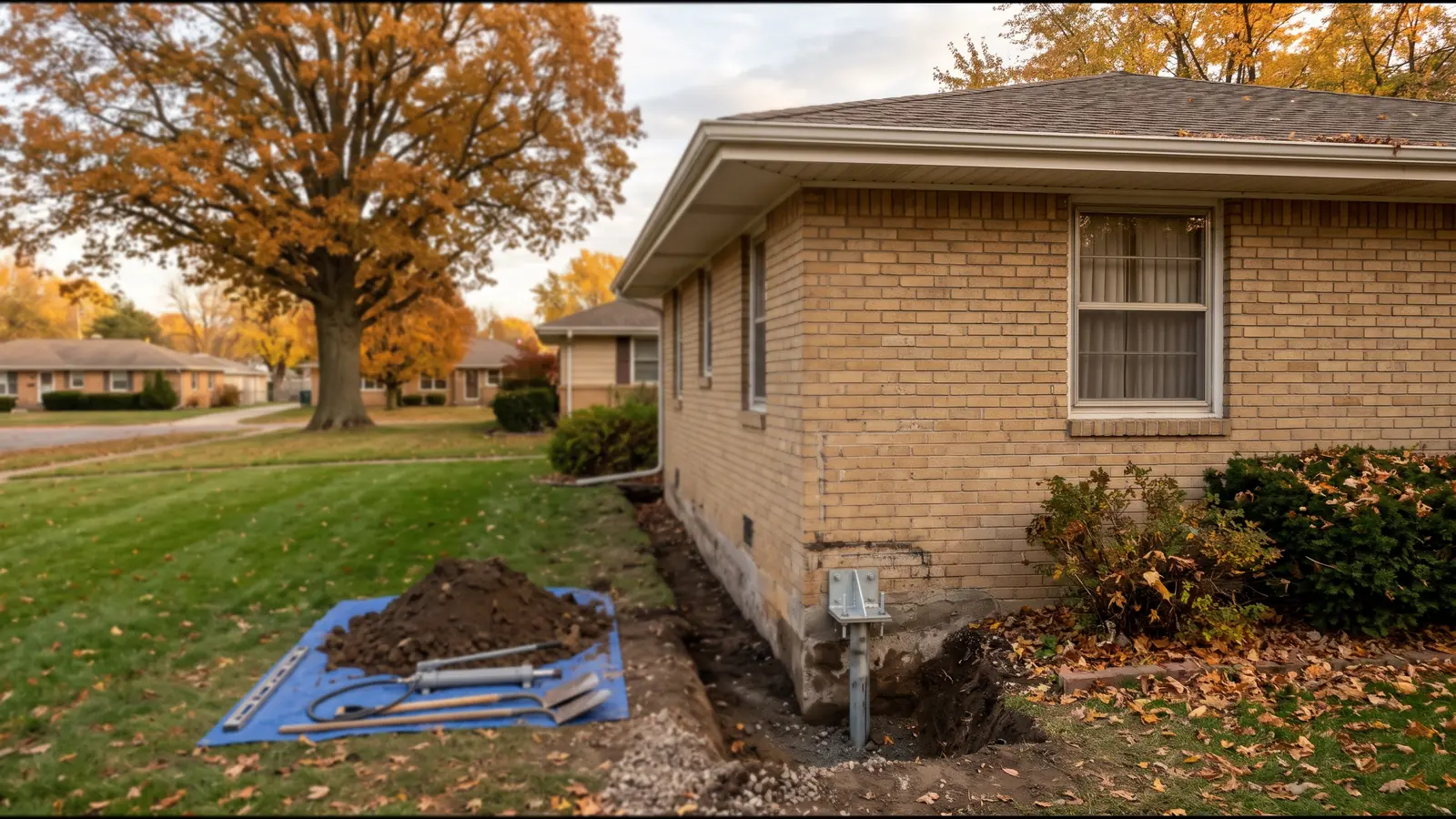
Carbon Fiber Strap Types for Block and Poured Walls
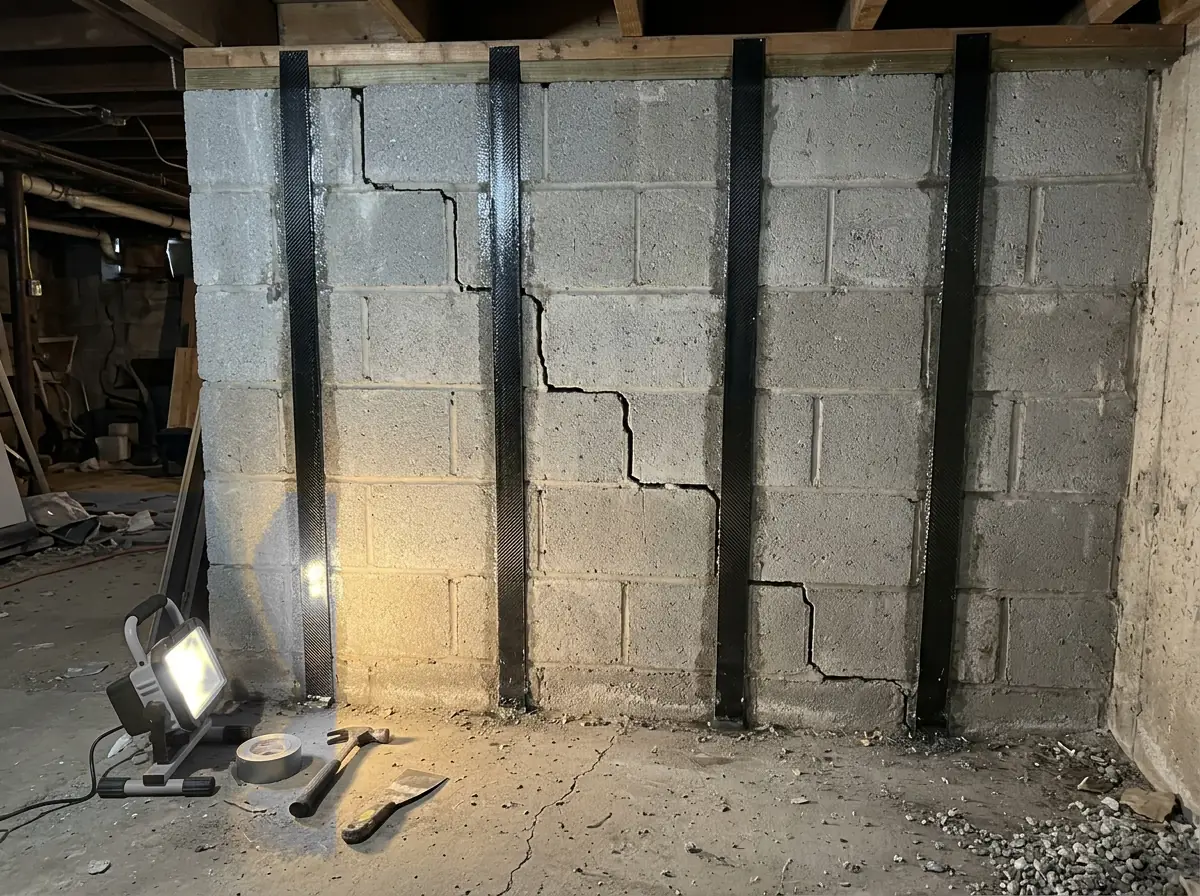
Straps on Concrete Block Walls
Block is the common case. A lot of Topeka's postwar basements are block (see the homepage for the housing numbers), and cost guides say block walls often need bracing to stop moving in. One strap maker specifies a bidirectional weave for block, with fibers running both ways, and has the installer round the top corner of the block to at least a 1/2-inch radius. Cracks and deep mortar joints get filled before any fabric goes on.
- Per strap: $350 to $1,000 installed.
- Per running foot of wall: about $85 to $280, depending on the guide.
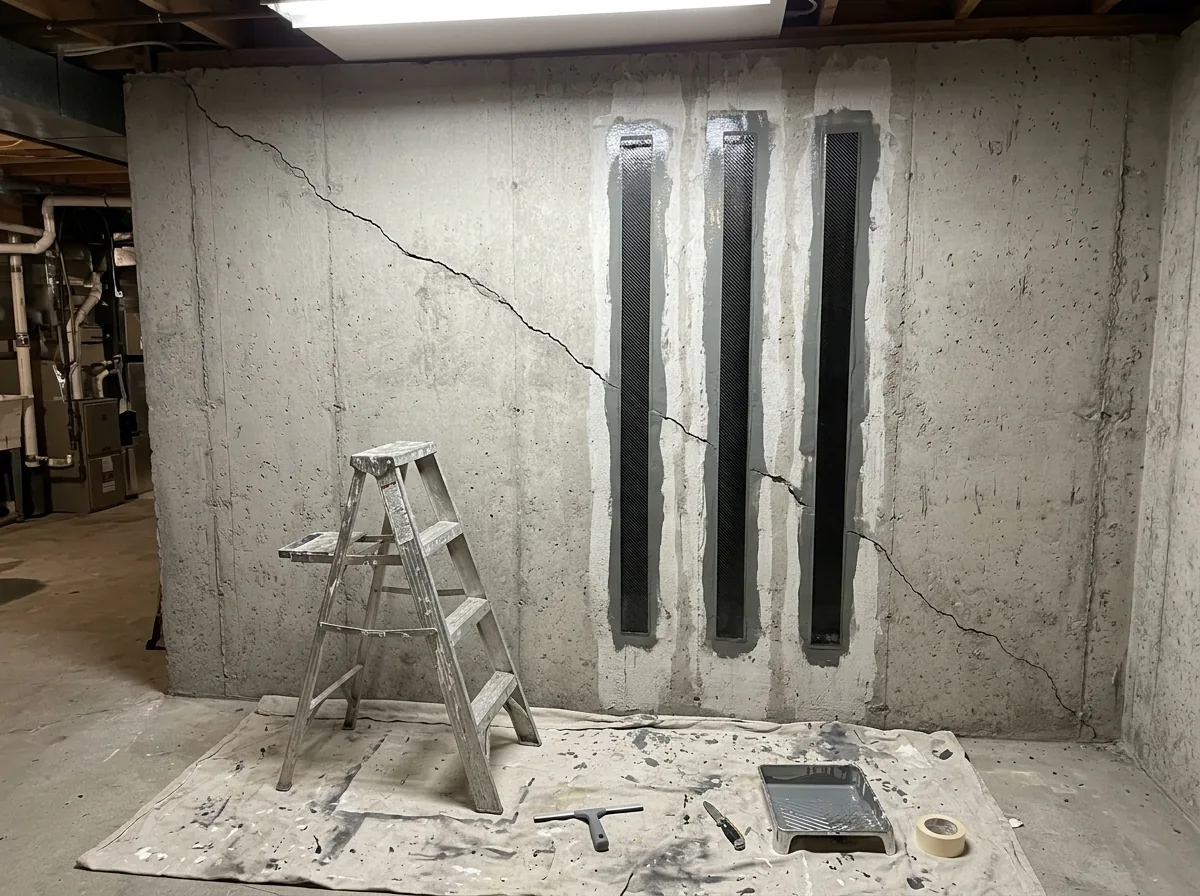
Straps on Poured Concrete Walls
Poured walls take reinforcement well, and the same maker uses a unidirectional strap here, with the fibers running top to bottom. The wall is ground to bare concrete along each strap line first, with paint and coatings taken off. Makers point out that flat straps can be painted or finished over, unlike steel beams that stick out into the room.
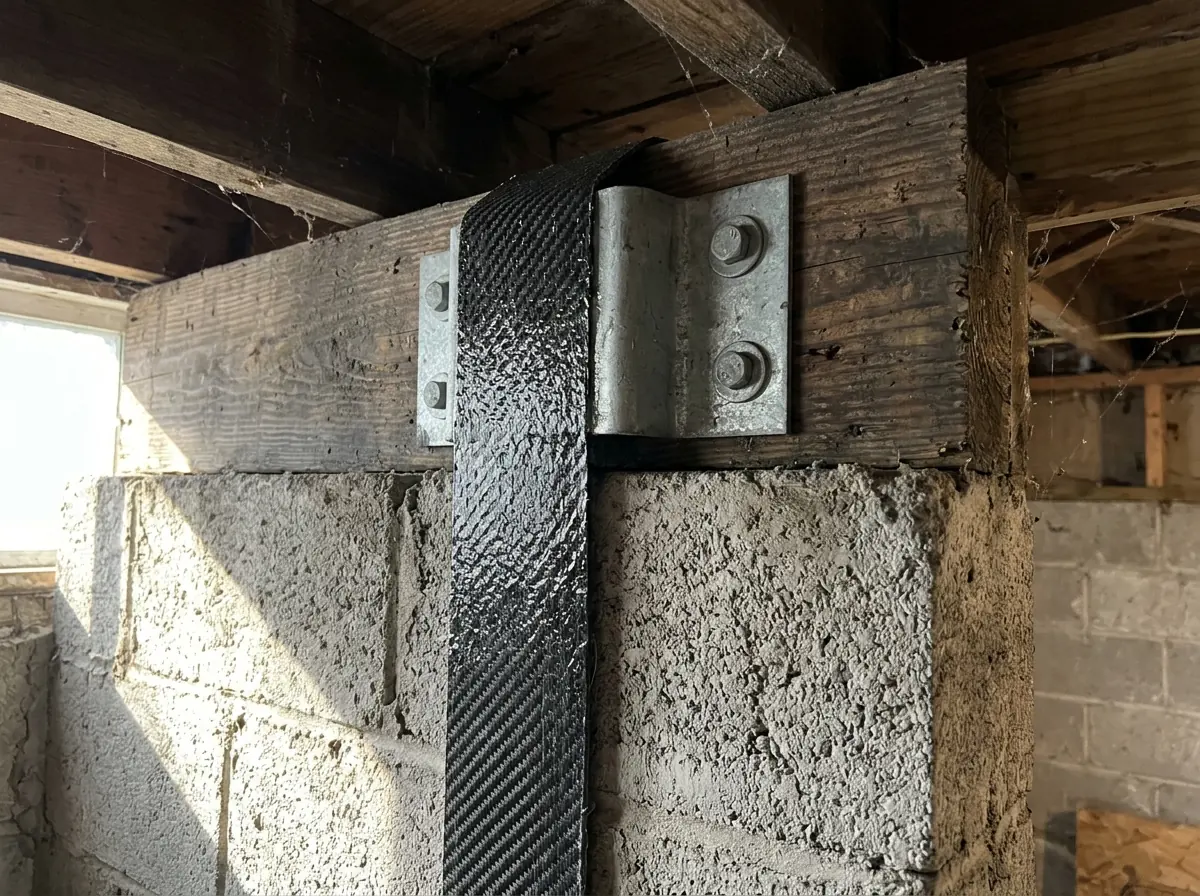
Top Brackets and Floor Anchoring
A strap is only as good as its two ends. At the top, the fabric wraps a steel bracket that bolts into the wood sill plate; one kit uses 3/8-inch by 2-inch lag bolts. At the bottom, a 3/4-inch hole is drilled at the base of the wall, filled with epoxy, and the twisted end of the strap is pinned into it. If the basement floor is sound the pin goes into the floor; if it's broken up, the pin goes into the footing.
One maker's point is that tying into the framing at the top and the footing or floor at the bottom is what puts the fiber's full strength to work. So ask how both ends tie in on your wall.
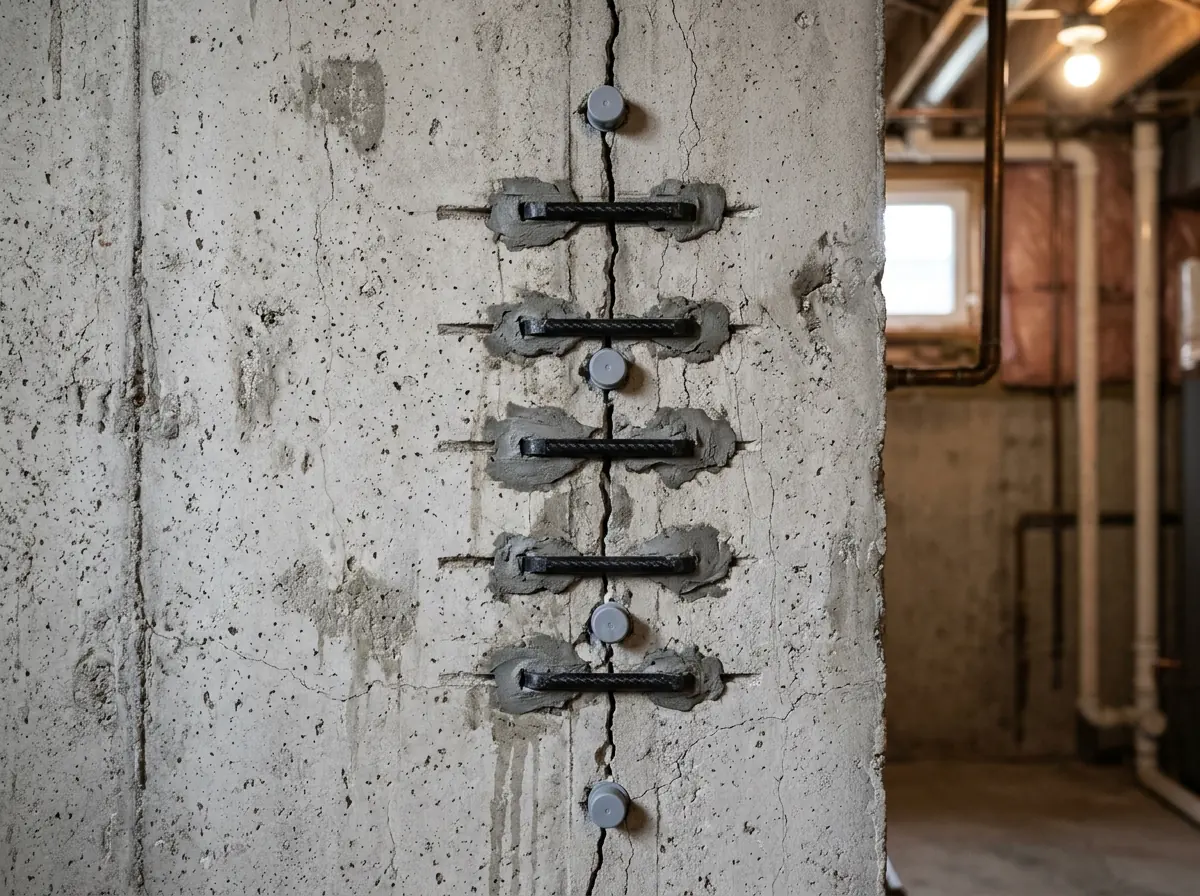
Carbon Fiber Crack Stitching
Stitching is the small version: short carbon fiber or steel staples set across a single crack, often with epoxy injected into the crack too. It's meant for a crack that has stopped moving, not a wall that is still coming in. Cost guides put it at $500 to $2,000 per crack, and wider carbon fiber strips over one crack at $900 to $2,000 or more. The foundation crack repair page covers which cracks need more than a stitch.
Why Topeka homeowners and property owners call Topeka Expert Foundation Repair
- The call and the inspection request cost you nothing
- Your details go to one Topeka contractor, never a lead list
- Ask for piers, anchors and price on paper before any digging
- Method explained first: piers, anchors, straps or mudjacking
Carbon Fiber Straps or Something Else: The Limits
Straps stop a wall from moving further. They don't close the cracks already there, and they don't pull the wall back. How far a wall can have moved before straps stop being the answer is set out on the basement wall repair page, along with steel I-beam braces.
Straps earn their place where the outside is the problem. If there's no room in the yard for the equipment, or the soil is too dense to drive anchors, Angi's guide says straps may be the only bracing option left. A house with a driveway tight against the wall is a strap house.
Before you sign, ask the contractor for:
The strap layout
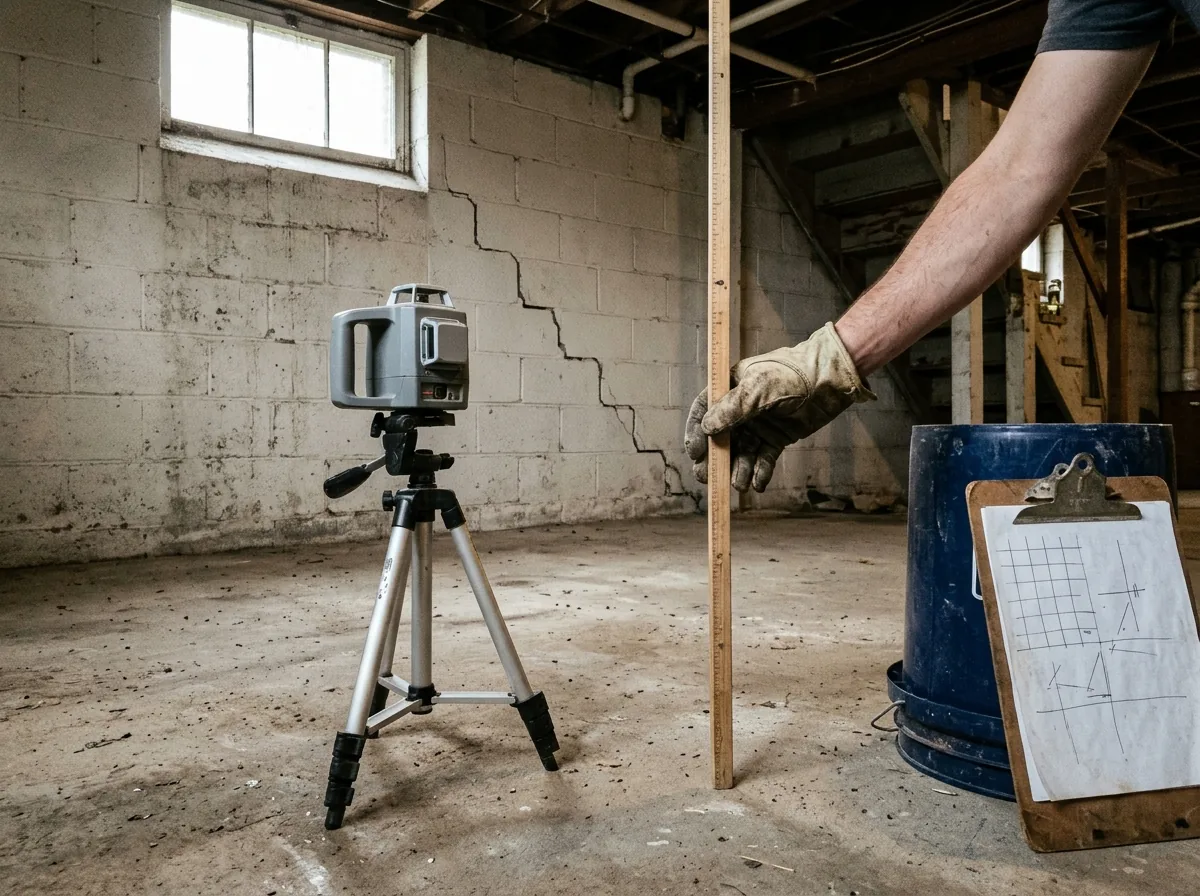
Count and spacing on a sketch of each wall, with 4 feet on center as the usual maximum. One kit maker says a licensed engineer should set spacing for the specific wall.The product's evaluation
Some strap systems carry an ICC-ES evaluation report; ask which one this is.Wall prep
Grinding, crack filling and how corners and windows are handled.The permit
Bracing a wall is structural work; the homepage has the City of Topeka permit rules.The warranty terms
Ask what it covers and whether it transfers to a buyer.
See wall anchors if there's yard to spare and you'd like the wall drawn back a little each dry season.