
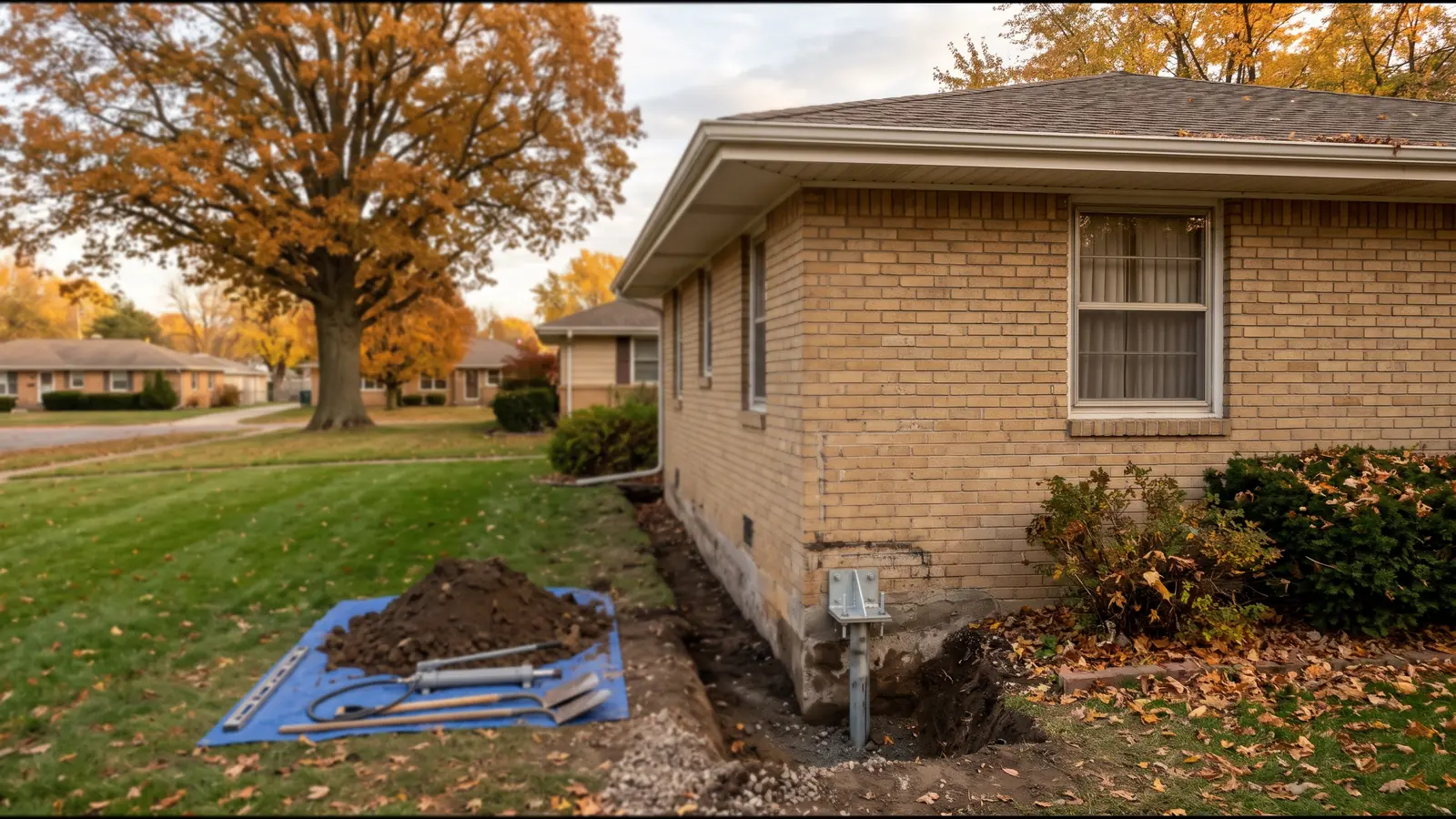
Basement Wall Anchor Types and Where Each One Fits
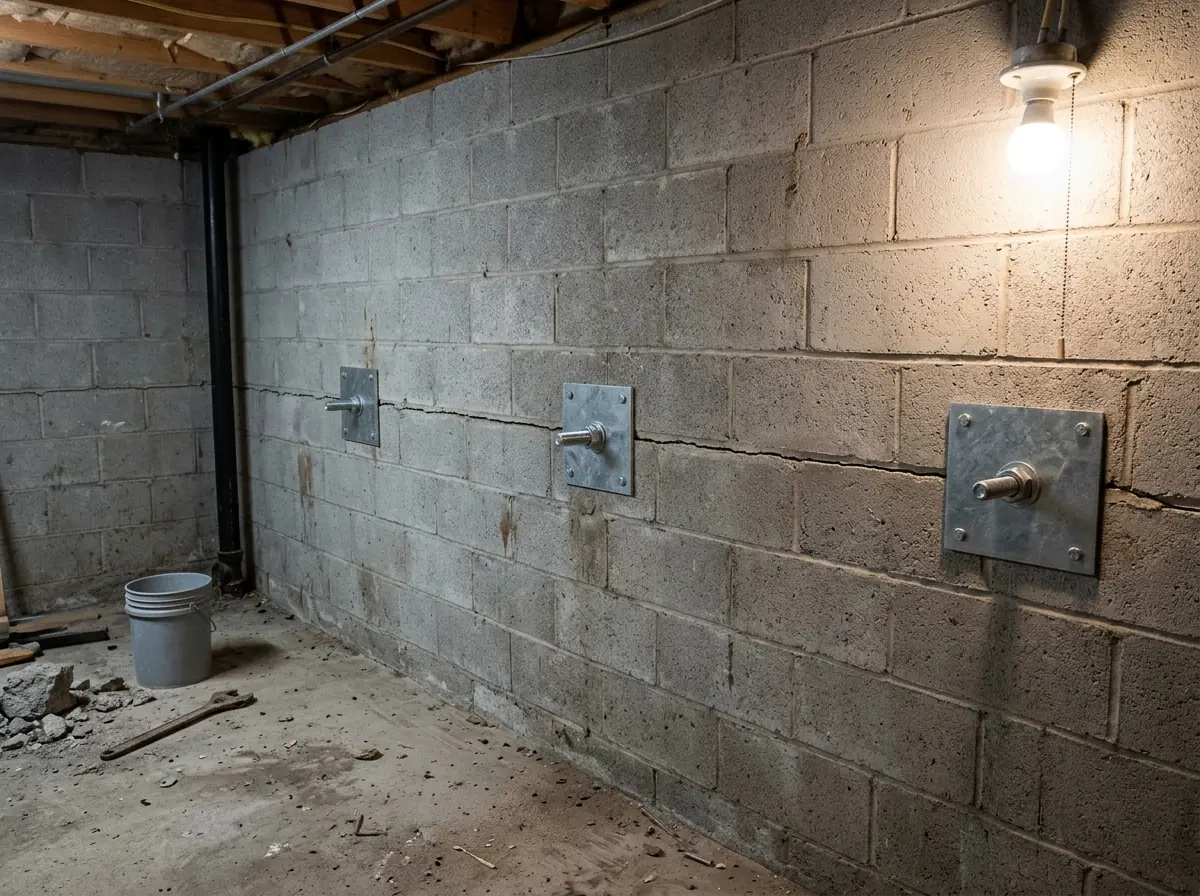
Plate (Earth) Anchors
Plate anchors have been holding up bowed walls since the 1970s. Two coupled threaded rods run from the basement plate out to the earth plate, and tightening the nut inside presses the wall plate hard against the wall. One manufacturer's technical manual gives the numbers for a typical system:
- Rods: two 3/4-inch rods, 80 inches each, for 13 feet 4 inches total, which puts the earth plate about 12 feet out.
- Spacing: 5 feet apart and 3 feet from corners on an 8-foot block wall; 6 feet and 3.5 feet on a 9-foot poured wall.
- Torque limit: no more than 80 ft-lb on block and 90 ft-lb on poured concrete.
- Plate depth: below the frost line and below the active zone of clay that shrinks and swells with the seasons.
The useful trick is retightening. Makers say the nuts can be snugged up in dry seasons to pull the wall back a little at a time. In Topeka that's late summer, when the clay outside has shrunk away from the wall (more on that on the homepage). Ask whether a retightening visit is part of the price.
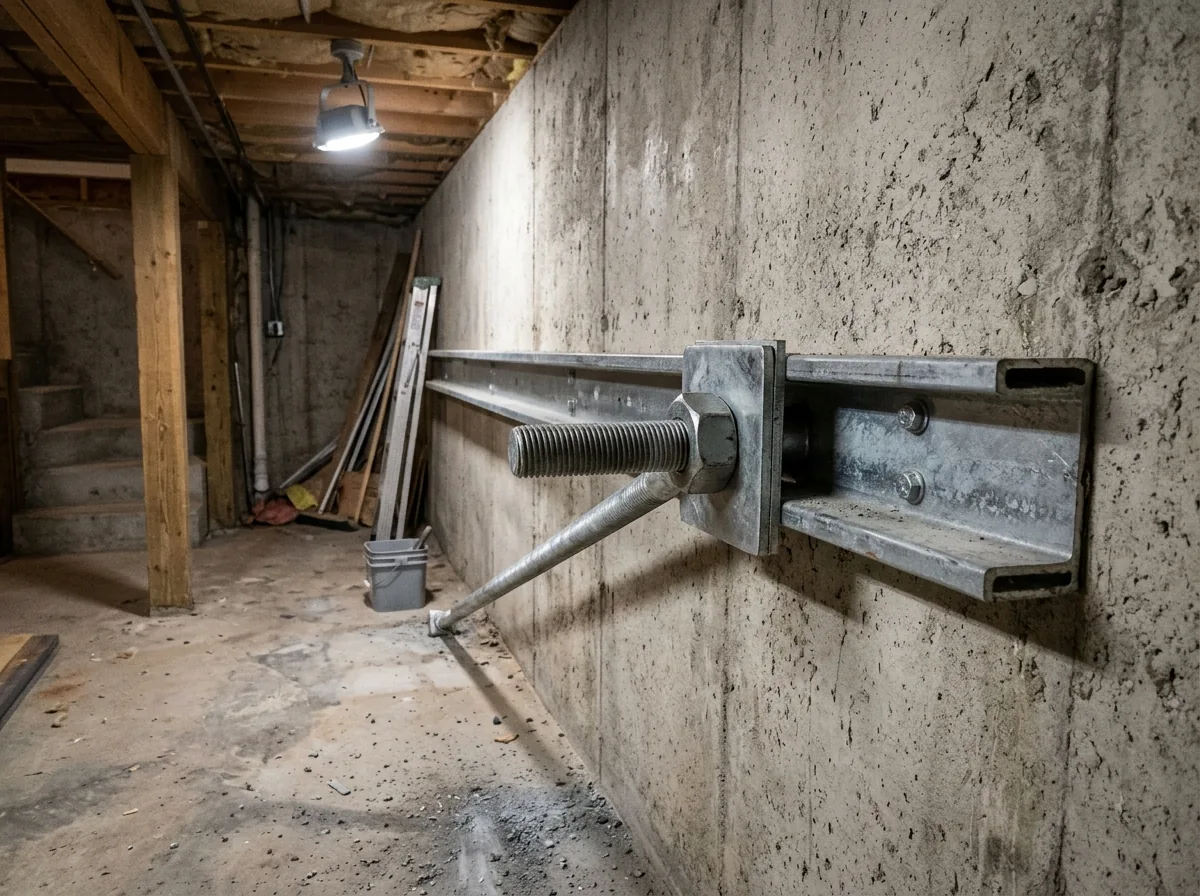
Helical Tieback Anchors
A helical tieback is a screw anchor turned through the wall into the soil outside, from inside the basement. It goes in anywhere from flat to 45 degrees downward, and the installer keeps turning until it hits a set torque. A steel plate or channel on the inside face takes the load. HomeGuide reserves tiebacks for walls that have moved too far for plain anchors; the cutoff is on the basement wall repair page.
- Cost: $1,500 to $1,800 per tieback, one every 5 feet, so about $300 to $360 a running foot.
- A 20-foot wall: roughly $6,000 to $7,200.
- Shafts: 1.5- or 1.75-inch solid square bar; one maker rates its two sizes at up to 29.8 and 50 kips of tension.
Tiebacks are read by torque the same way helical piers are, so ask for the final reading on each one.
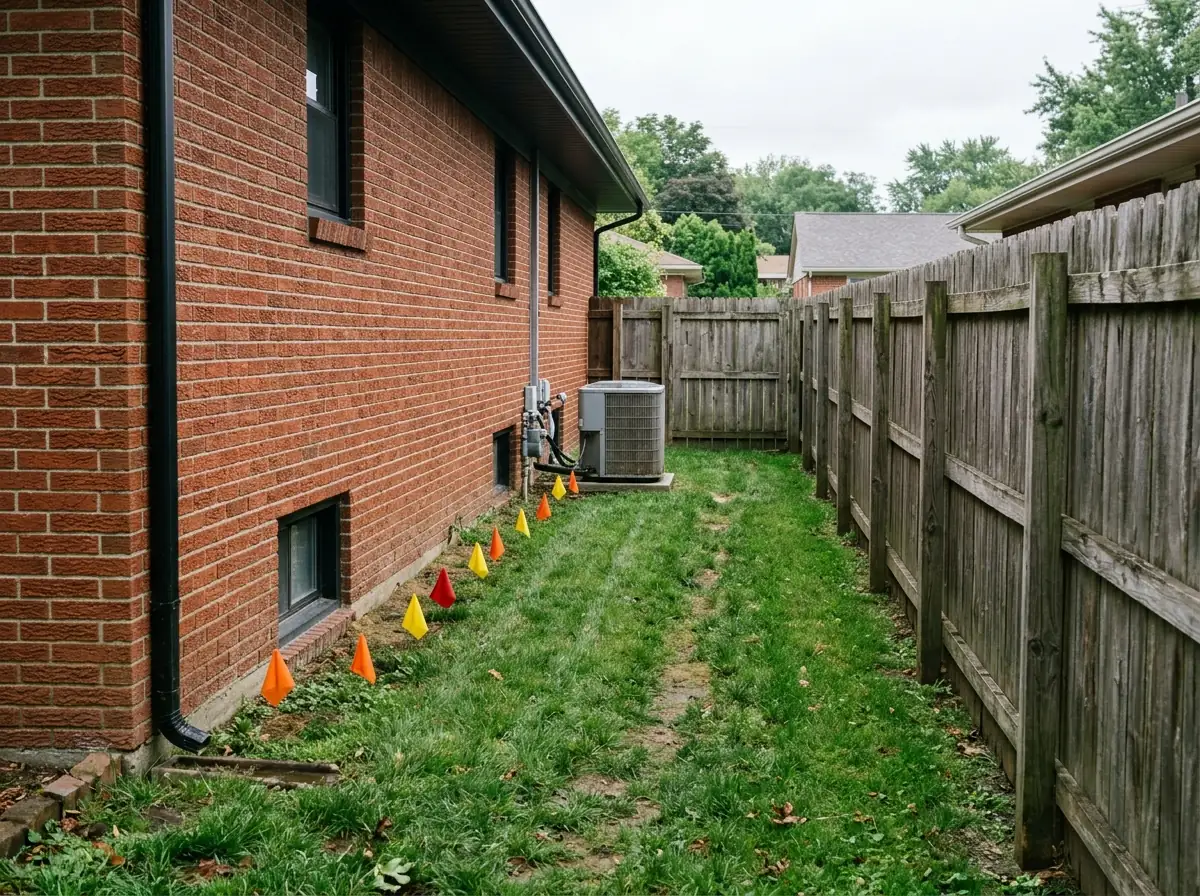
Anchors Where the Side Yard Is Tight
The earth plate has to land in soil far enough out that it isn't pushing back on the same wall. The maker's tables put that distance at about 8 to 17.5 feet, set mostly by backfill depth and how low the wall plate sits; soil type changes it only slightly. A driveway, a patio slab or the neighbor's fence inside that zone can rule plate anchors out.
If the side yard is a 6-foot strip to the neighbor's fence, plate anchors are out on that wall. Angi's guide makes the same point: without room for the equipment, anchors and tiebacks usually aren't an option, and dense soil can leave straps as the only choice. On those walls the answer is usually carbon fiber straps or steel braces inside. A good contractor will measure the clear distance before quoting anchors at all.
Why Topeka homeowners and property owners call Topeka Expert Foundation Repair
- The call and the inspection request cost you nothing
- Your details go to one Topeka contractor, never a lead list
- Ask for piers, anchors and price on paper before any digging
- Method explained first: piers, anchors, straps or mudjacking
Wall Anchor Cost in Topeka: What Moves the Quote
Wall length
Angi puts anchors on a 15-foot wall at $1,200 to $2,100 and on a 30-foot wall at $2,400 to $4,200.Block or poured
HomeGuide says block walls are the ones that most often end up anchored or braced; poured walls can take wider anchor spacing.Digging in the yard
Each earth plate means a small hole outside, so Kansas 811 has to mark the lines before anyone digs (timing is on the basement wall replacement page).Finished basements
Drywall has to come off the wall and go back up, which guides put at $1.50 to $3 a square foot.Permit
Anchors are structural work. Ask who pulls the city permit; the homepage has Topeka's rules.Warranty
Ask whether it covers retightening and whether it transfers to a buyer.
See carbon fiber straps when there's no room in the yard for anchors.