
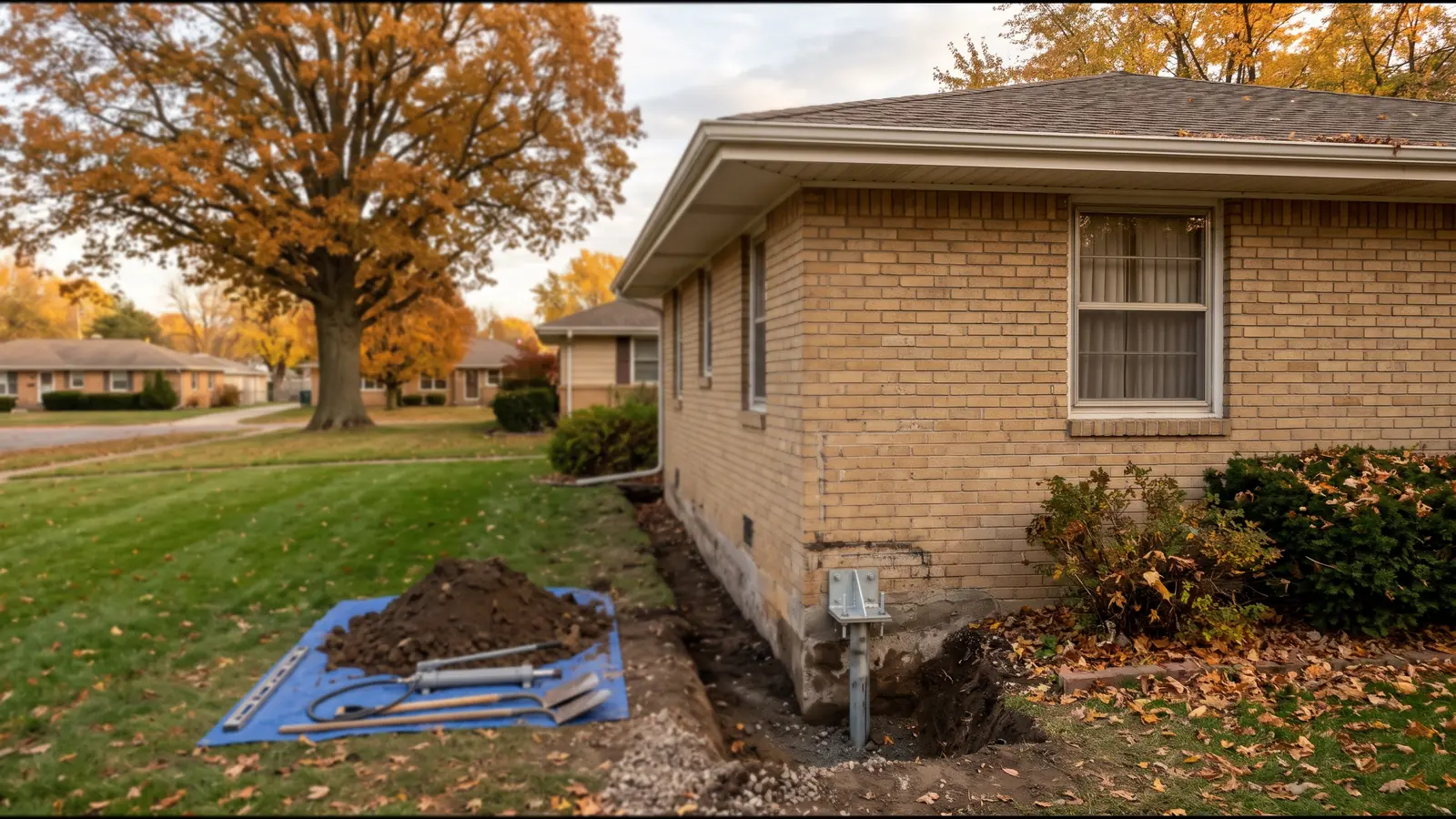
Basement Waterproofing Types, Outside In
Most leaks follow the same path: roof water and runoff soak the clay against the wall, and the water finds the easiest way through. Topeka's clay holds water against a basement wall after a wet spring (the homepage explains the soils). The fixes below are in the order to try them.
Grading, Gutters and Downspout Extensions
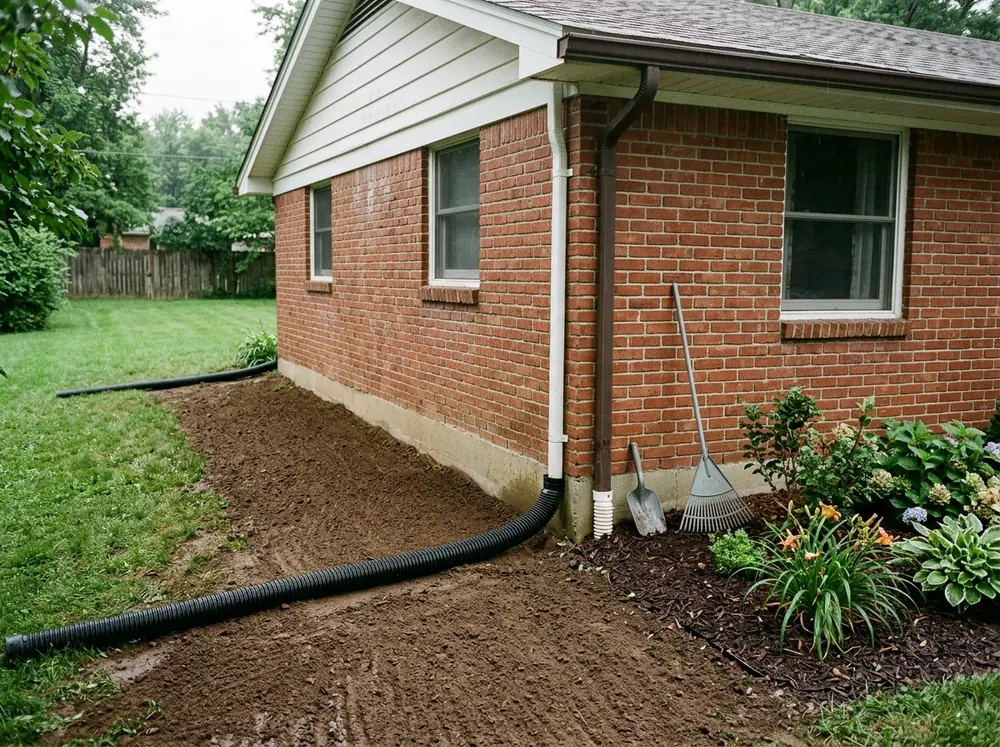
The cheapest waterproofing happens outside. The 2021 International Residential Code, which Topeka adopted, sets two numbers for new houses that are worth meeting on an old one:
- Grade: the ground should fall at least 6 inches within the first 10 feet from the wall.
- Roof water: where soils are expansive, downspouts should discharge at least 5 feet from the foundation or into an approved drain.
- Cost: Angi puts yard grading at $500 to $3,000 and buried downspout lines at $200 to $2,000. HomeGuide puts replacing the downspouts at $220 to $625.
Engineers' foundation guidelines add one detail: run the extension past any planting bed, not into it. A downspout that empties into mulch against the wall is just a slower leak.
Interior Drain and Sump Systems
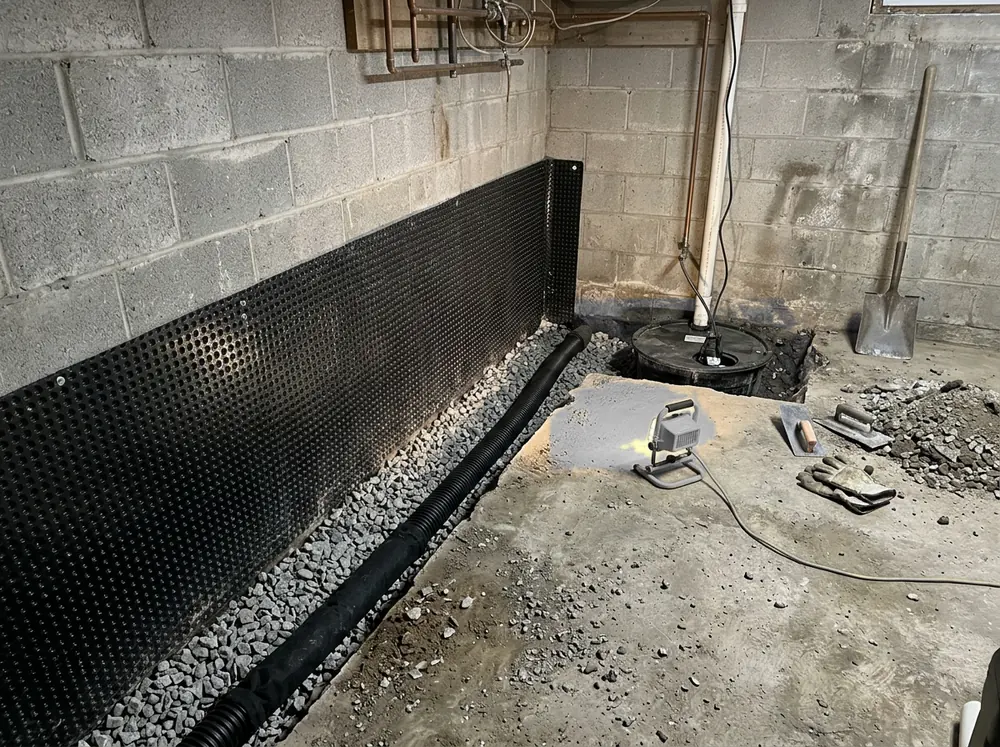
When the outside is right and water still comes in, an interior system is the usual answer. A strip of floor is cut out along the walls, a perforated pipe in gravel goes in at the footing, and it carries water to a sump pit. HomeGuide prices complete interior waterproofing at $6,000 to $12,000, and Angi's interior average is about $3,000. Per-foot drain pricing is on French drain installation, and pumps and backups are on sump pump installation.
Exterior Excavation and Membrane
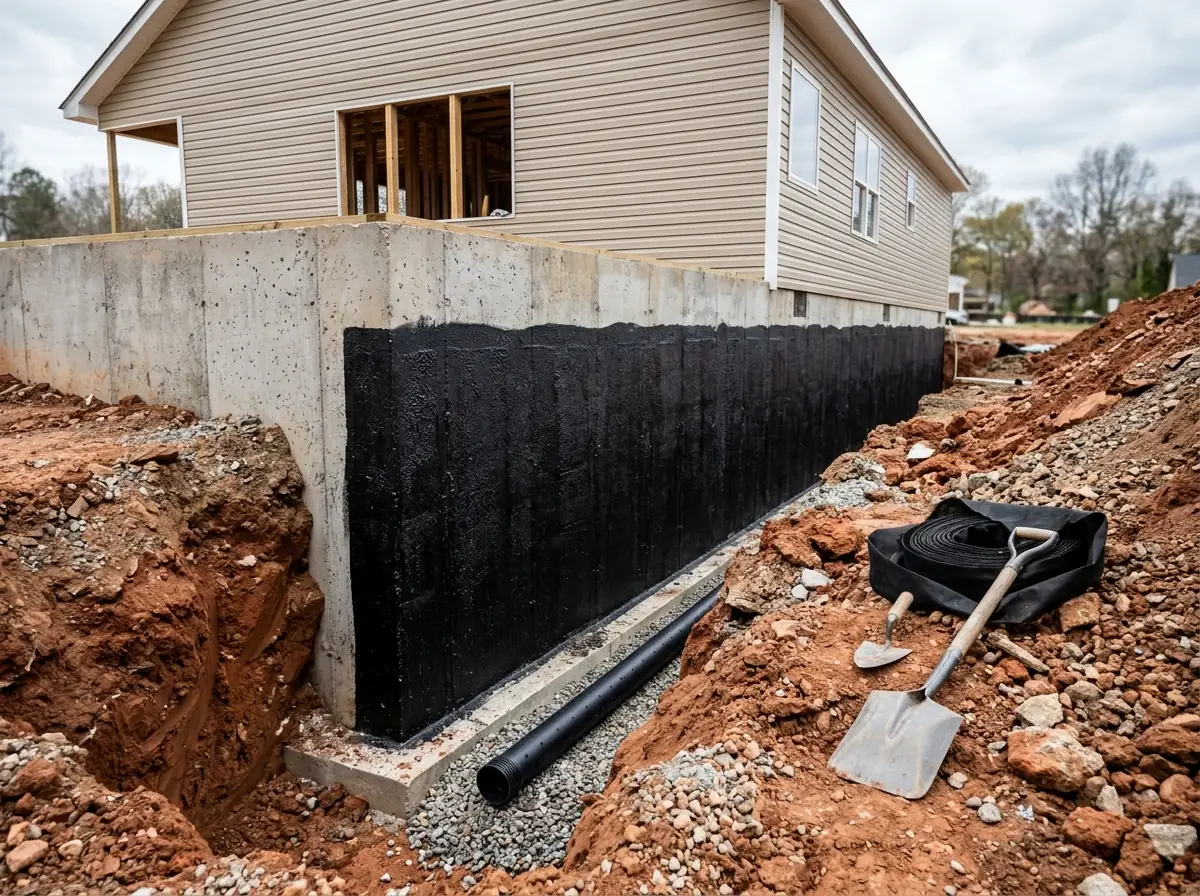
Digging the wall out lets the contractor seal it from the outside and lay a drain at the footing, which is how the code wants new basements built. It's the most thorough fix and the most disruptive one: plantings, walks and sometimes a driveway edge come out.
- Membrane: $4 to $7 per square foot installed (HomeGuide); liquid membranes $3 to $6 (Angi).
- Whole job: $10,000 to $18,000 in HomeGuide's ranges; Angi's exterior average is about $7,000.
- Paperwork: Angi notes that excavation often triggers a permit (Topeka's rules are in the homepage's permit section), and buried lines have to be marked before the digging starts, as basement wall replacement explains.
Wall-Floor Joint and Pipe Leaks
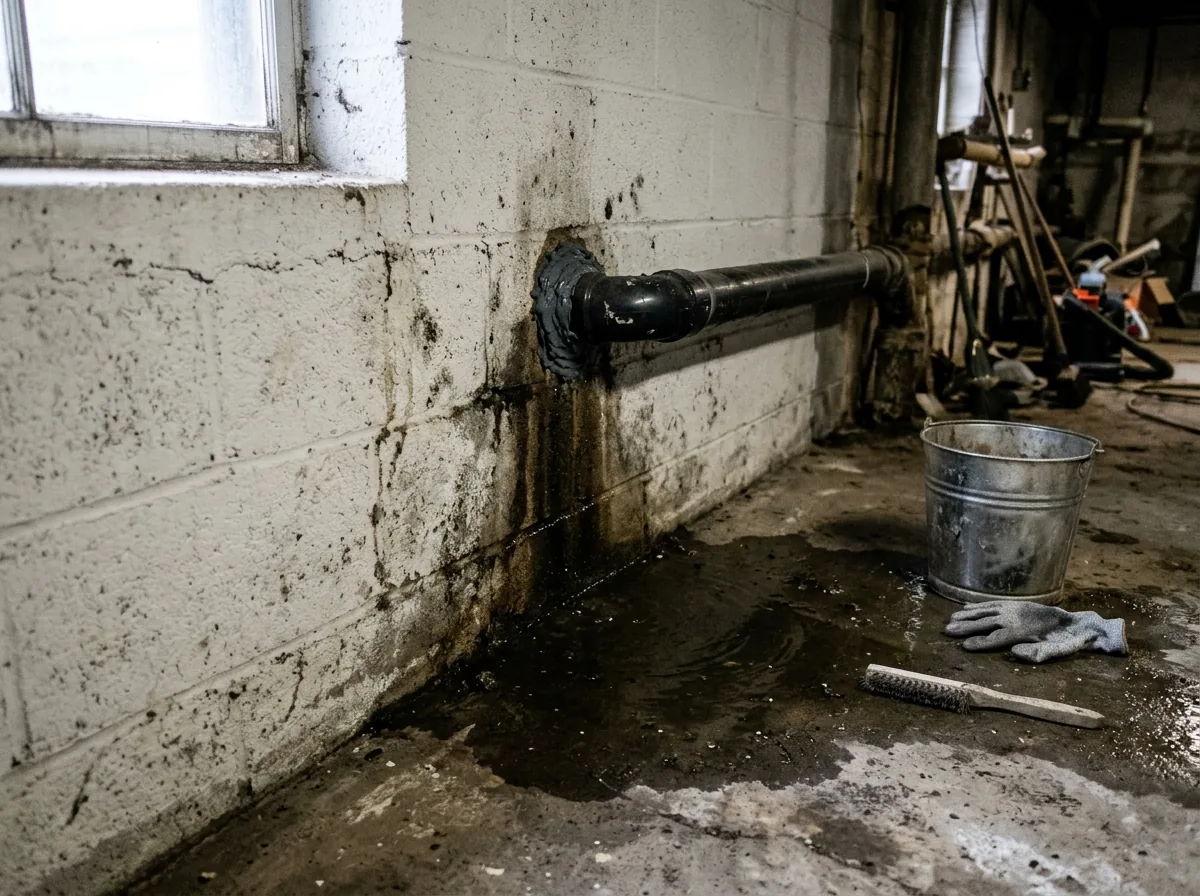
A line of water along the bottom of the wall after rain is seepage at the joint between the floor and the wall. HomeGuide names the usual entry points as cracks, gaps around pipes and worn mortar joints. Block walls give water more seams and joints to find, HomeGuide adds. A coating or sealer helps with damp, not with water under pressure. Small fixes include sealing a pipe penetration or a single crack (foundation crack repair covers injection). For a long leaking joint, Angi lists baseboard channels at about $30 a linear foot, which collect seepage without cutting the whole floor.
Why Topeka homeowners and property owners call Topeka Expert Foundation Repair
- The call and the inspection request cost you nothing
- Your details go to one Topeka contractor, never a lead list
- Ask for piers, anchors and price on paper before any digging
- Method explained first: piers, anchors, straps or mudjacking
Basement Waterproofing Cost: Inside or Outside
The method sets the price more than basement size does. Here's how the two national guides compare:
| Angi (2026) | HomeGuide (2026) | |
|---|---|---|
| Typical range | $2,460 to $8,205 | $6,000 to $18,000 |
| Interior work | about $3,000 average | $6,000 to $12,000 |
| Exterior work | about $7,000 average | $10,000 to $18,000 |
| Per square foot | $3 to $10 | varies by method |
Both guides say poured concrete is cheaper to waterproof than block, and HomeGuide adds that stone foundations are the hardest. Standard homeowners insurance generally doesn't pay for any of it, according to HomeGuide, so this is out of pocket.
Before You Pay for a Waterproofing System
Watch where the water shows up
Water at one corner after storms often traces to a downspout or a low spot outside. Seepage along the whole floor joint usually means the soil is saturated all the way around.Fix the roof water first
Downspouts 5 feet out and soil sloping away cost little next to a drain system.Ask what the quote treats
Interior drain, exterior membrane, a crack, or a pipe seal: one wet corner rarely needs all four walls done.Ask where the sump discharges
and how the line is kept from freezing.Ask what happens if water returns at the same spot,
and whether that coverage passes to the next owner (the homepage covers warranty basics).
See French drain installation for drain layouts inside and around the house.