
Basement Wall Repair Types: Braces, Anchors, Straps and Straightening
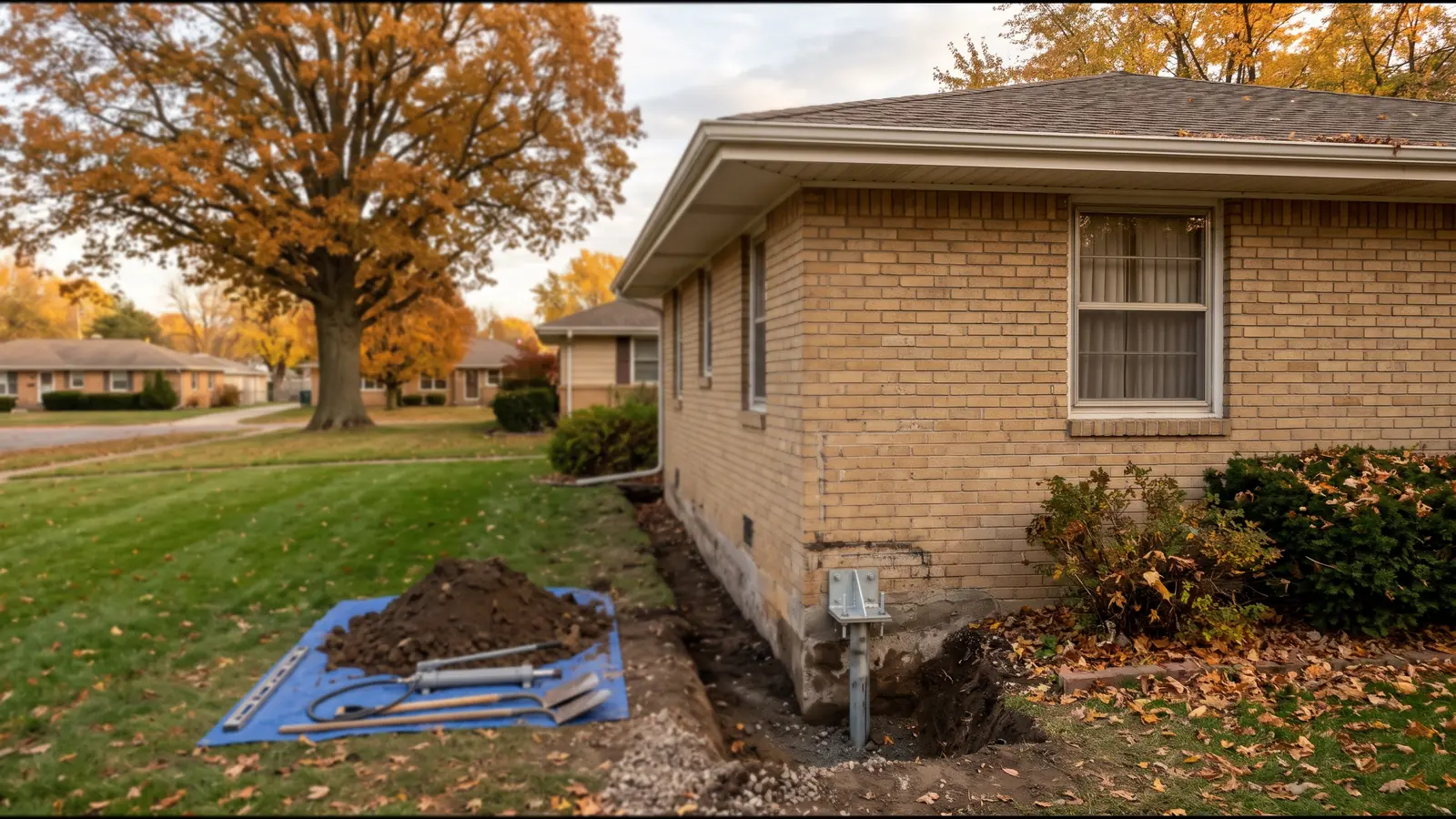
A wall that's moving in is held by something inside the basement, something buried in the yard, or both. Which one fits comes down to the bow, the wall material and how much room there is outside.
Bowing Block Walls With Horizontal or Stair-Step Cracks
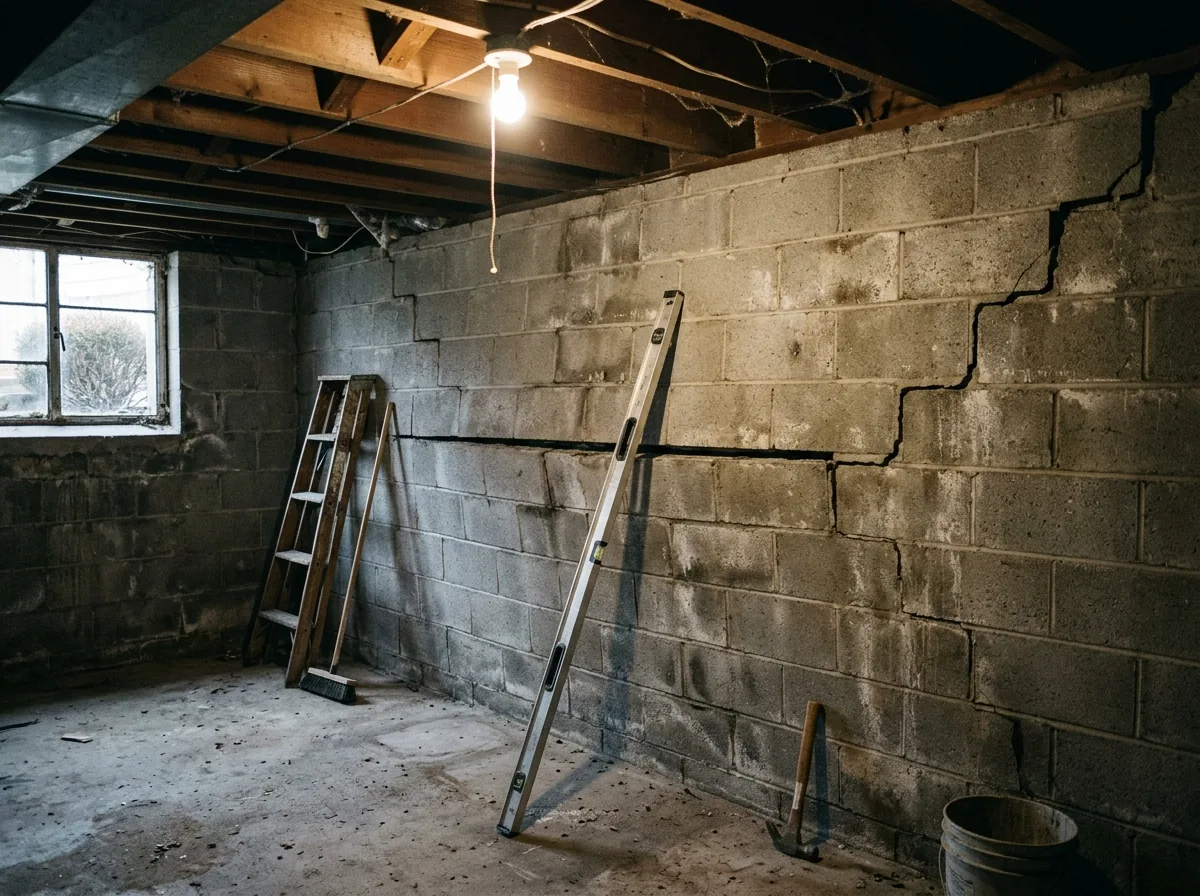
Hollow block walls usually fail in the middle. Clay outside pushes on the wall, a mortar joint near mid-height often opens into a long horizontal crack, and the wall bulges inward along it. Stair-step cracks in the mortar are the other pattern to watch; Angi lists zigzag cracks among the clear signs of foundation trouble. Poured concrete walls act differently: they more often tip in at the top, where the sill connection lets go. HomeGuide notes that block walls often need anchors or steel bracing to stop the inward movement. One cause people miss is a heavy concrete front stoop that has settled and is shoving soft backfill against the wall.
Steel I-Beam Wall Braces
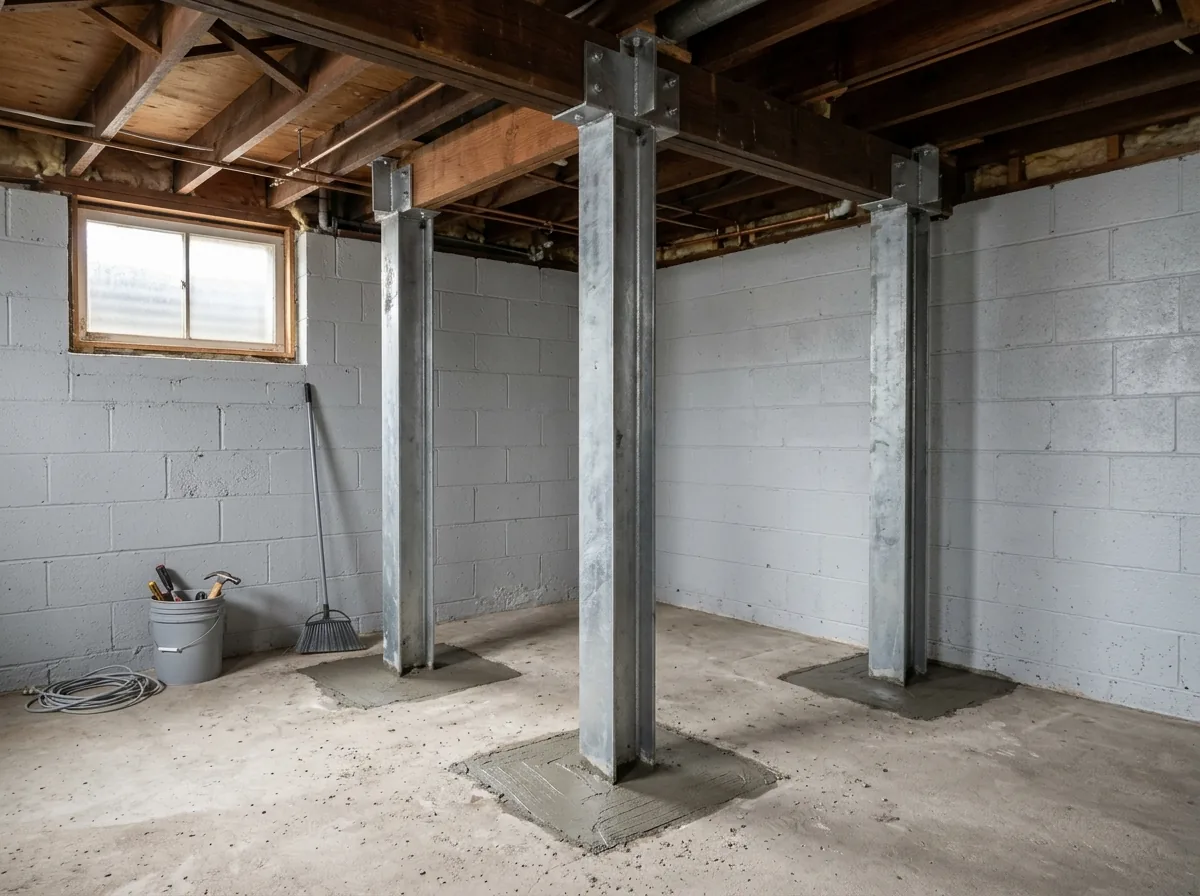
I-beam braces are vertical steel beams set against the inside of the wall. Each one sits in a concrete pad broken into the basement floor and is bolted to the joists overhead, so the house frame holds the top and the floor holds the bottom. Nothing goes into the yard, which is why braces make sense when the neighbor's fence is 6 feet away. One contractor working in clay soil, writing in a trade magazine, gives these spacings and limits:
- Spacing: 4 to 5 feet apart on poured walls, 3 to 4 feet on block or stone.
- Footing for each beam: floor and footing broken out and dug at least 12 to 16 inches, then filled with concrete around the beam.
- Limit: he braces walls in place up to about 3 inches of bow. A block or stone wall bulged past that, in his view, should be rebuilt.
The national cost guides used on this site don't price I-beam braces separately, so get them quoted per beam with the floor patching included.
Anchors or Carbon Fiber: Choosing by Yard Space and Bow
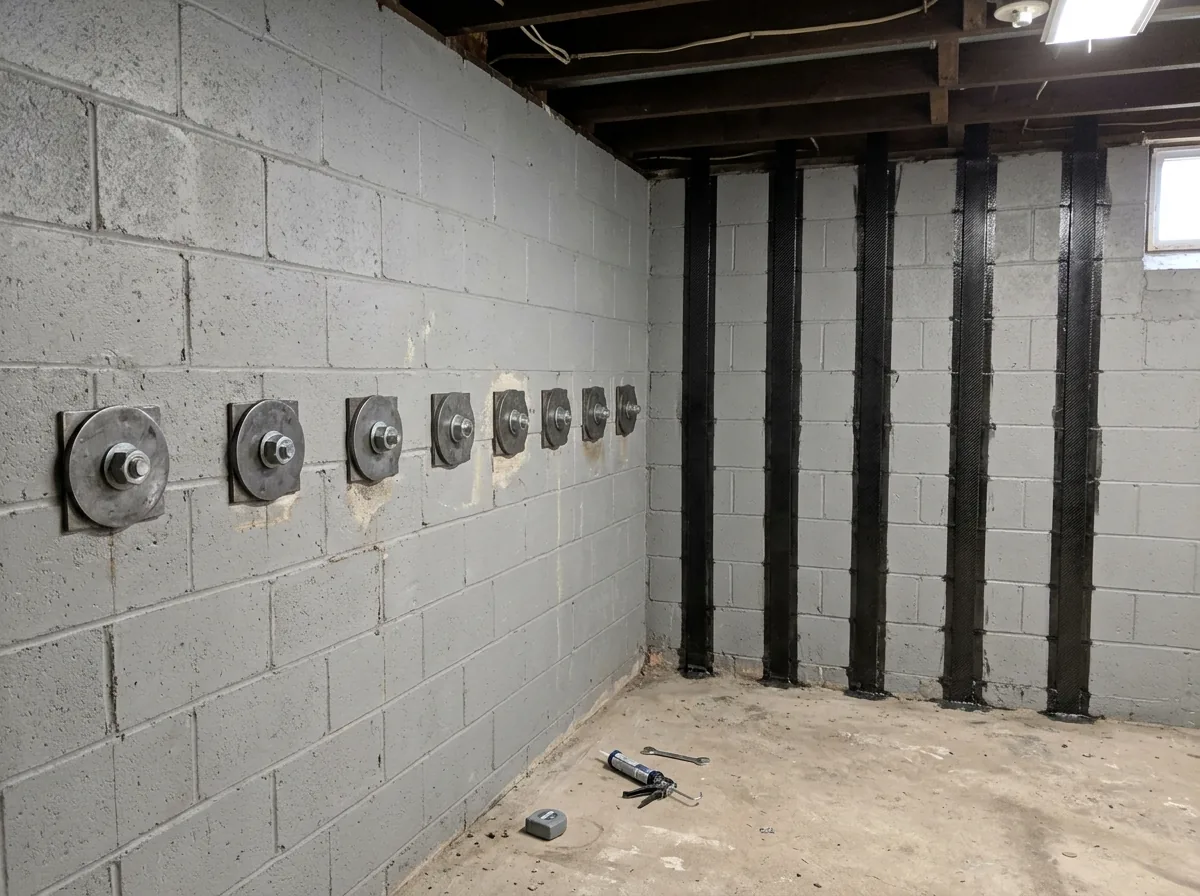
Wall anchors tie the wall to steel plates buried in the yard, so they need open ground beside the house; wall anchors covers the yard clearance and per-anchor cost. Carbon fiber straps are bonded to the inside face and need no digging; carbon fiber straps covers spacing and price. HomeGuide sorts them by bow: anchors for walls bowed less than 2 inches, straps for mild to moderate bowing, and helical tiebacks once the bow reaches 2 inches or more.
Straightening a Wall From Outside
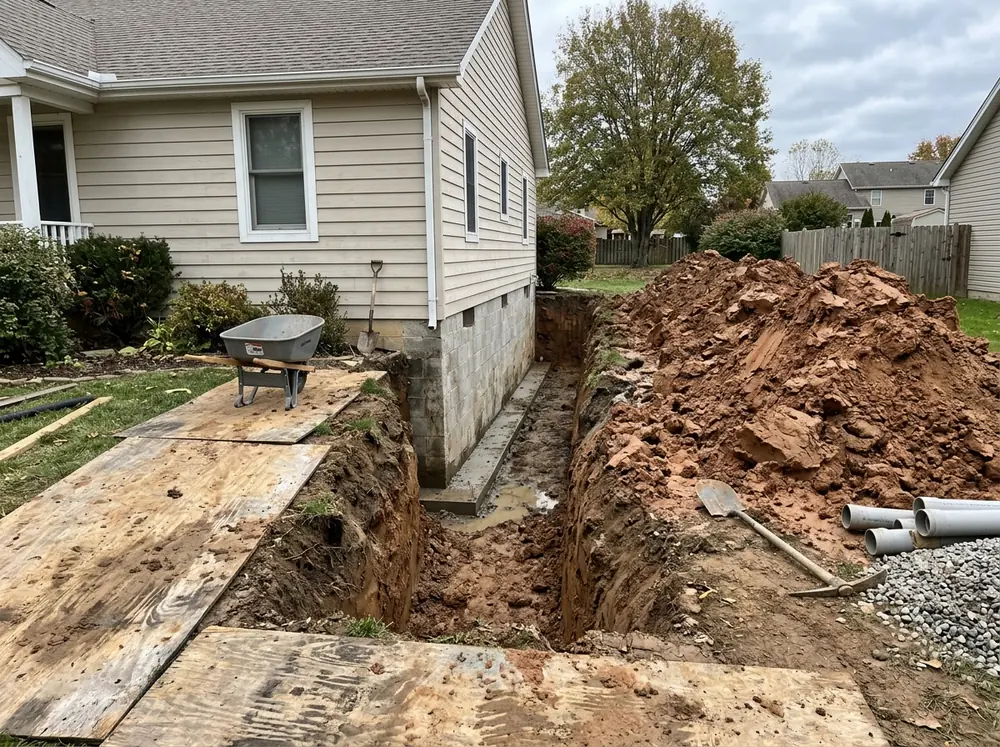
Bracing holds a wall where it is. To get the bow out, the soil has to come off the outside so the wall can be pushed back, then braced so it stays. Angi adds $250 to $300 per foot for straightening, over and above the strap cost, and HomeGuide's straightening range is $340 to $550 per foot. On a 20-foot wall, Angi's straightening total is $6,800 to $11,000. Nobody should dig along the house before the buried lines are marked; basement wall replacement explains how that request works. When the block is too far gone to push back, rebuilding is the next step.
Why Topeka homeowners and property owners call Topeka Expert Foundation Repair
- The call and the inspection request cost you nothing
- Your details go to one Topeka contractor, never a lead list
- Ask for piers, anchors and price on paper before any digging
- Method explained first: piers, anchors, straps or mudjacking
Basement Wall Bow Limits: Brace, Straighten or Rebuild
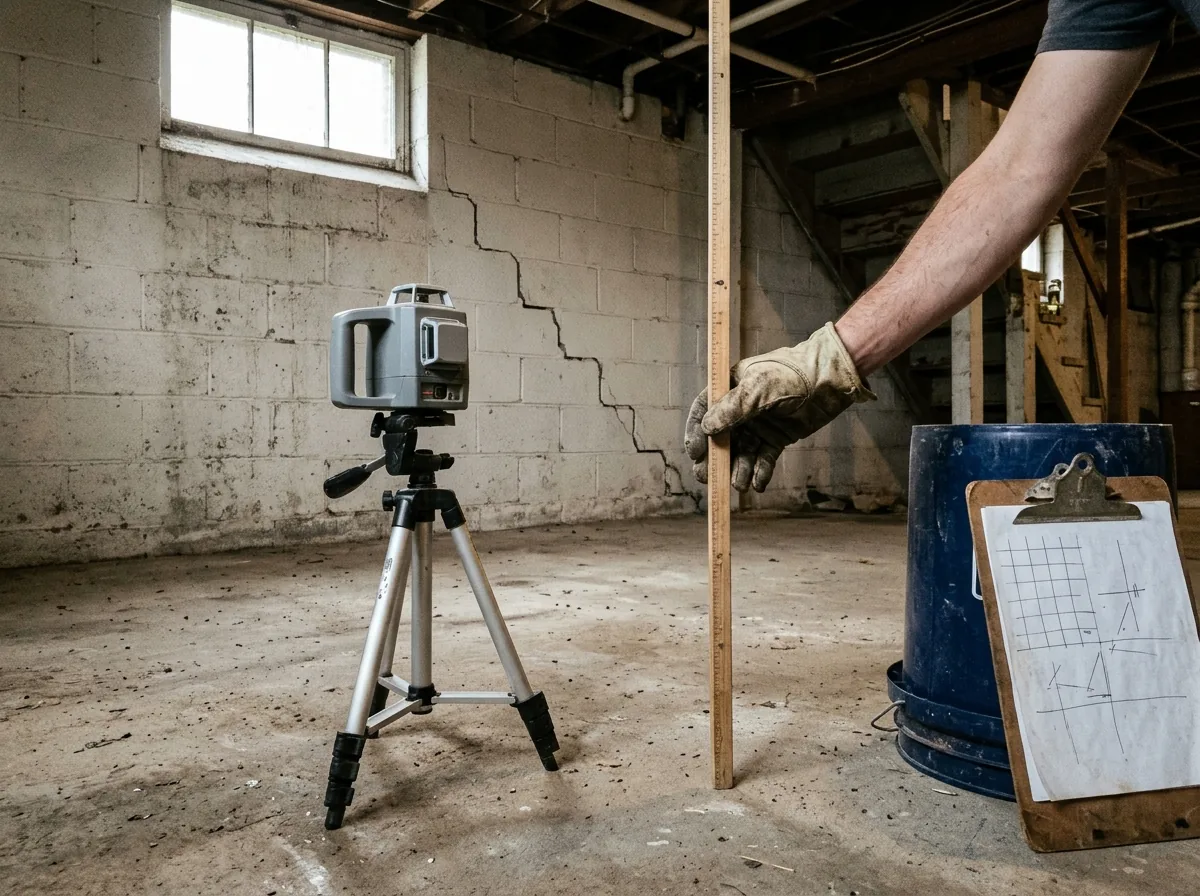
The bow is measured at the worst point, from a straight line or level held top to bottom against the wall. These are the cut-offs the national guides and one experienced contractor use:
| Inward bow | What guides say |
|---|---|
| Under 2 inches | Bracing in place usually works (anchors, straps or braces). |
| 2 to 4 inches | Often still repairable, but costs more; tiebacks or straightening come into play. |
| Over about 3 inches, block or stone | One contractor's rule: rebuild instead of bracing. |
| Over about 3 inches, poured concrete | Push back from outside first, then brace. |
Ask for the bow in inches at the worst point, and ask whether the method on the quote is meant to hold the wall where it is or bring it back. Bracing that's sold as a fix for a 4-inch block bulge deserves a second opinion. Foundation inspection explains when an engineer's report is worth paying for.
What to Ask Before Basement Wall Repair Starts
Ask for the measured bow
Written in inches, with the spot it was taken. It's the number that decides the method.Ask what the price covers
Per-beam, per-anchor or per-strap counts, floor patching, and whether finished walls or shelving have to come down first.Ask about the outside
A good contractor will look at grading, gutters and any settled stoop before quoting the inside; basement waterproofing covers the drainage side.Ask about the permit
Structural wall work in Topeka needs one, pulled by a city-licensed contractor (see the homepage's permit section).Ask whether the warranty transfers to a buyer
Get the answer on paper; the homepage covers what pier and wall warranties usually include.
See wall anchors when the yard beside the bowed wall has room to dig.